
Free tool · VB-MAPP goal mapper
VB-MAPP goals: turn any milestone into practice goals.
Pick a level, a domain and the milestone area your learner is working on. You get plain-language practice goals, everyday activities and a sign of when to move on, ready to share with the people who run the practice.
By Ab Advany, founder of SuperChild · Published · Updated
Independent tool by SuperChild, not affiliated with AVB Press. Score with the official VB-MAPP protocol.
Written from the publishers’ own materials and published research. Spotted an error? Email contact@superchild.ai and we’ll fix it.
Level 1 · Mand (requesting) · milestones 1–2
Asking for favorite things, with help at first
The child learns that a word, sign or picture gets them the thing they want right now, starting with a few strong favorites and fading adult help.
Practice goals
- 1Requests 3 different highly preferred items with a word, sign or picture exchange when the item is in view, with no more than a model prompt, on 4 of 5 opportunities.
- 2Requests 3 different preferred items without any prompt on 80% of opportunities across 2 consecutive sessions.
- 3Uses the same request form for a favorite item with 2 different adults in 2 different rooms.
Activities
- Blow bubbles once, then hold the wand and wait for the child to sign, say or hand you a picture for “bubbles” before blowing again.
- At snack time, give crackers in tiny pieces so the child gets many chances to ask for “more” or “cracker.”
- Keep a favorite wind-up toy in a clear container the child can see but not open, and reward any request form with a turn.
Ready to move on? Move on when the child asks for favorites without help from different adults and does not need the item held up as a cue.
Matching SuperChild trainings
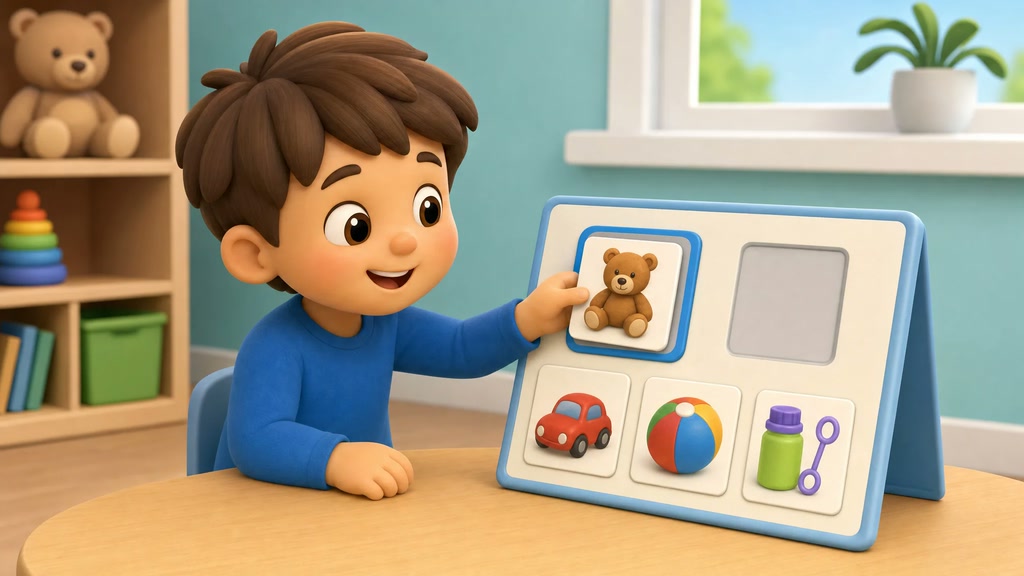
Requesting: Preferred Items
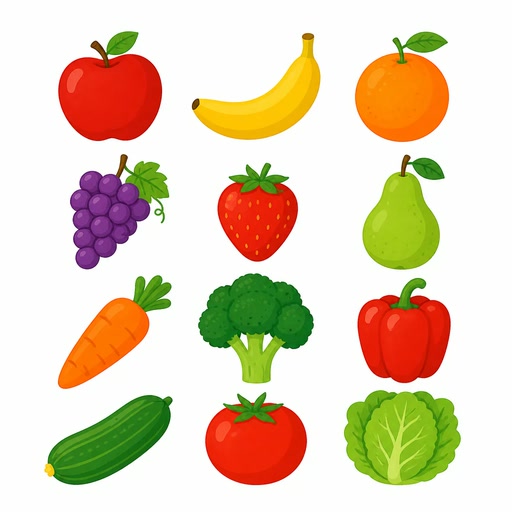
Requesting: Fruit and Vegetables
Each has 10 levels: 6 teaching, 3 generalization, 1 assessment. See all on the VB-MAPP page.
Paste this HTML into any page on your website or blog. The tool runs right on your page, free.
How to use it
How to write VB-MAPP goals from your scores
- 01Score the VB-MAPP with the official protocol and note half-scored and next-up milestones. This tool doesn’t score anything; our VB-MAPP assessment guide explains how scoring works.
- 02Pick the level and domain of a milestone your learner is working on, then the milestone area closest to it.
- 03Read the practice goals and activities, and adjust them to the learner, their materials and how they communicate.
- 04Write each goal as a countable target (the response, the setting, how often) and copy it into the treatment plan, IEP or EHCP.
- 05Send the link to the parent, teacher or RBT who runs the practice, and track every trial on free ABA data sheets.
VB-MAPP domains by level
- Level 1 · 0–18 months · 9 domains
- Mand (requesting), Tact (labeling), Listener responding, Visual perceptual & matching-to-sample (VP-MTS), Independent play, Social behavior & social play, Motor imitation, Echoic (repeating sounds and words), Spontaneous vocal behavior
- Level 2 · 18–30 months · 12 domains
- Mand (requesting), Tact (labeling), Listener responding, Visual perceptual & matching-to-sample (VP-MTS), Independent play, Social behavior & social play, Motor imitation, Echoic (repeating sounds and words), LRFFC (listener by function, feature & class), Intraverbal (conversation and answering), Classroom routines & group skills, Linguistic structure
- Level 3 · 30–48 months · 13 domains
- Mand (requesting), Tact (labeling), Listener responding, Visual perceptual & matching-to-sample (VP-MTS), Independent play, Social behavior & social play, LRFFC (listener by function, feature & class), Intraverbal (conversation and answering), Classroom routines & group skills, Linguistic structure, Reading, Writing, Math
More on milestones, the barriers and transition assessments and scoring in our VB-MAPP assessment guide. Writing goals for a school plan? See our IEP goals for autism guide and goal bank.
From score to session
What are VB-MAPP goals?
A scored grid tells you where a learner is. It doesn’t tell the parent at the kitchen table or the RBT on a Tuesday afternoon what to practice. These goals put it in everyday words, and SuperChild runs the practice itself for teams that want every trial recorded.
VB-MAPP goals are teaching targets written from a learner’s VB-MAPP scores: usually the half-scored milestones and the next milestone up in each domain, written as something you can count. A good VB-MAPP goal names the response, the setting, the level of help and how often the learner must show it before it counts as mastered.
Example for a Level 1 mand area: “Given a preferred item in sight but out of reach, Sam will request it with a word, sign or picture card, without prompts, in 8 of 10 opportunities across two adults and two days.” The goal mapper drafts goals like this for every milestone area, with everyday activities to practice them.
Practice materials help the goals happen between sessions: PECS book printables for early mands, teaching body parts for tacts and listener skills, receptive language activities and feature, function and class activities for LRFFC.
All milestone areas
VB-MAPP goals by level and domain
Level 1 · 0–18 months
Mand (requesting)
Asking for what you want or need, with words, signs or pictures, so communication gets the child something real.
M 1–2Asking for favorite things, with help at first
The child learns that a word, sign or picture gets them the thing they want right now, starting with a few strong favorites and fading adult help.
- Requests 3 different highly preferred items with a word, sign or picture exchange when the item is in view, with no more than a model prompt, on 4 of 5 opportunities.
- Requests 3 different preferred items without any prompt on 80% of opportunities across 2 consecutive sessions.
- Uses the same request form for a favorite item with 2 different adults in 2 different rooms.
- Blow bubbles once, then hold the wand and wait for the child to sign, say or hand you a picture for “bubbles” before blowing again.
- At snack time, give crackers in tiny pieces so the child gets many chances to ask for “more” or “cracker.”
- Keep a favorite wind-up toy in a clear container the child can see but not open, and reward any request form with a turn.
M 3–5Asking spontaneously and for missing pieces
Requests start to happen without anyone setting them up, and the child asks for the part that is missing from something they are already doing.
- Makes at least 8 requests without a prompt or a question from an adult during a 30-minute play or snack routine, on 3 consecutive days.
- Requests the missing item in 4 different routines (for example a puzzle piece, a spoon, a shoe) on 4 of 5 opportunities.
- Uses at least 10 different request words, signs or pictures across a week of home and session data.
- Serve yogurt without a spoon and wait for the child to ask for it before handing one over.
- Hand over a shape puzzle with one piece held back, then pause so the child asks for the last piece.
- Use a tablet requesting training where the child picks the item they want, then practice the same items at the table with real objects.
Tact (labeling)
Naming the things, actions and features the child sees, hears or notices, for the sake of sharing them rather than getting them.
M 1–2Naming familiar people and favorite things
The child starts to name a few well-known people and favorite objects with a word, sign or picture, first with an echo model and then without it.
- Labels 3 familiar people or favorite items when shown and asked “what’s that?”, with no more than an echo prompt, on 4 of 5 trials.
- Labels 3 items without any prompt on 80% of trials across 2 sessions.
- Labels the same 3 items with 2 different adults and in 2 settings.
- Look at a family photo album and pause on each familiar face for the child to name.
- Pull favorite toys one at a time out of a “surprise bag” and wait for the child to name each one before playing.
- Practice spoken labels with the team; the tablet trainings that pair pictures with spoken words can support listening for the names first.
M 3–5Growing a first naming vocabulary
The child’s set of names for objects, animals and pictures grows steadily, and new names start to stick faster.
- Labels 15 common objects and pictures (animals, foods, toys) without prompts on 80% of trials across 2 sessions.
- Labels 5 new objects or pictures within 3 teaching sessions each.
- Labels at least 5 items spontaneously during play or book reading without being asked, over a week.
- Read a picture book about farm animals and pause on each page so the child names the animal before you turn the page.
- Play “feed the puppet”: the child names each food picture before the puppet eats it.
- Use a tablet naming-prerequisite training on animals, then hold up matching toy animals for the child to name out loud with the team.
Listener responding
Understanding what other people say: noticing voices, responding to their name, finding things and following directions.
M 1–2Noticing voices and responding to their name
The child orients to people’s voices and starts to look up or come over when their name is called.
- Turns toward an adult who calls their name from 1 meter away on 4 of 5 trials across 2 sessions.
- Responds to their name while engaged with a toy on 70% of trials with 2 adults.
- Looks toward a voice or familiar sound (a parent singing, a door) at least 5 times in a session.
- Call the child’s name once while they play, and when they look, blow a bubble or start a favorite song right away.
- Play peekaboo behind a scarf, calling the child’s name before you pop out.
- Use the tablet’s name-call and eye-gaze trainings, then practice name response in the kitchen and the playground with family.
M 3–5Finding familiar people and things by name
The child looks at, touches or picks the right person or object when it is named, and follows a few simple action instructions.
- Touches the named item from a group of 3 for 10 familiar objects on 80% of trials.
- Looks at or points to 3 named family members or pets on 4 of 5 trials.
- Follows 4 one-step action instructions (clap, stand up, wave) without a gesture on 80% of trials.
- Put 3 favorite toys on a tray and ask “give me the ball,” then play with the one they hand you.
- At bath time, ask the child to find the duck, the cup or the sponge.
- Use the tablet’s first-object listener trainings, then ask for the same items from the toy box with the team.
Visual perceptual & matching-to-sample (VP-MTS)
Looking carefully, matching what goes together, sorting and completing visual puzzles.
M 1–3Watching moving things and handling objects
The child follows things with their eyes, reaches for and handles objects, and stays visually interested in toys for a little longer.
- Follows a moving toy with their eyes across their visual field on 4 of 5 trials.
- Reaches for, grasps and explores 5 different objects in a session.
- Watches a visual toy (light-up or spinning) for at least 30 seconds at a time on 3 occasions.
- Roll a ball slowly across the table or drive a toy car in an arc and let the child watch and grab it.
- Offer a treasure basket with a spoon, a scarf, a block and a shaker and let the child explore.
- Use the tablet’s tracking and reveal trainings for short turns, then follow the same pattern with real toys.
M 4–5Putting things in and first identical matching
The child puts objects into containers, stacks simple pieces, and starts to match an object or picture to one that is exactly the same.
- Puts blocks or rings into a container or on a peg without help on 4 of 5 trials.
- Matches identical objects from a field of 2 for 5 different items on 80% of trials.
- Completes a simple put-in or stacking activity with 2 different materials.
- Drop pom-poms into a tissue box with a hole cut in the top.
- Hand the child a spoon and ask them to put it with the other spoon on a tray of 2 items.
- Use the tablet’s identical-matching training, then match real socks or cups at home.
Independent play
Playing with toys and materials on their own, from simple exploring to pretend play and creative projects.
M 1–3Exploring toys and cause-and-effect play
The child explores toys by touching, shaking and moving them, and enjoys toys that do something when you press, pull or push.
- Explores 5 different toys for at least 1 minute each without adult prompting in a session.
- Activates 4 cause-and-effect toys (pop-up, light-up, sound) on their own on 4 of 5 opportunities.
- Moves between toys and explores a new one at least 3 times in a 10-minute free-play period.
- Set out a pop-up toy, a drum and a light-up ball and let the child explore while you stay nearby.
- Play with a ball run: drop a ball in at the top and wait for the child to do it next.
- Use the tablet’s busy-toy and cause-and-effect trainings for short turns, then offer the real toy versions.
M 4–5Playing on their own for a few minutes
The child plays with movement toys and simple construction toys like nesting cups and blocks for short stretches on their own.
- Plays independently with a toy for 2 minutes without adult help on 3 consecutive days.
- Completes a nesting-cup or ring-stack toy on their own on 4 of 5 opportunities.
- Engages in active play (climbing, swinging, rolling) for at least 5 minutes per day.
- Give nesting cups and let the child stack, nest and knock them down while you watch.
- Visit a playground or soft-play area and let the child choose the slide, swing or tunnel.
- Use the tablet’s nesting-cups training, then keep a set of real cups in the play area; active play stays with the team and family.
Social behavior & social play
Connecting with other people: eye contact, responding to others, joining play and talking with peers.
M 1–3Eye contact, smiles and responding to people
The child looks at people, smiles back, and responds to an adult’s playful approach.
- Makes eye contact during a social game at least 5 times in a 5-minute session.
- Smiles or reacts when an adult initiates play on 4 of 5 opportunities.
- Responds to a familiar adult’s greeting with a look, wave or sound on 80% of opportunities.
- Play “Row, Row, Row Your Boat” face to face, pausing until the child looks at you to continue.
- Hide a toy under your shirt and pull it out with a big smile to invite eye contact.
- Use the tablet’s social-response and attention trainings, then practice greetings with real people at drop-off.
M 4–5Seeking out people and noticing peers
The child starts to approach adults for attention, shows interest in other children and enjoys playful contact.
- Approaches an adult to start a game or share something at least 3 times per session.
- Watches or stays near a peer during play at least 3 times in a 15-minute group period.
- Uses a gesture or sound to get an adult’s attention on 4 of 5 opportunities.
- Start a tickle game and then pause, so the child comes to you to ask for more.
- Sit near a peer at a sand table and copy simple actions back and forth.
- Use the tablet’s attention-getting training, then practice tapping a parent’s arm at home.
Motor imitation
Copying what other people do with their body and with objects, a key way young children learn new skills.
M 1–3Copying simple body movements
The child copies simple, big movements like clapping or waving when an adult shows them, first with help and then on their own.
- Copies 5 gross motor actions (clap, wave, arms up) after a model, with no physical prompt, on 80% of trials.
- Copies 3 actions with 2 different adults across 2 sessions.
- Copies a movement during a song (“If You’re Happy”) on 4 of 5 opportunities.
- Sing “If You’re Happy and You Know It” and model clapping and stomping for the child to copy.
- Play a mirror game with simple moves like touching your head or patting the table.
- Gross motor imitation stays with the team; the tablet’s touch-imitation training can add practice copying simple patterns on screen.
M 4–5Copying actions with objects
The child copies what an adult does with an object, like banging a drum or pushing a car, and copies more movements overall.
- Copies 8 different actions with objects (stir with spoon, push car) on 80% of trials.
- Copies at least 15 different movements across body and object actions over 2 weeks.
- Copies a new object action on the first model on 3 of 5 trials.
- Set out 2 identical drums and model hitting fast, slow and loud for the child to copy.
- Use 2 toy cars: push yours down a ramp and hand the child theirs.
- Use the tablet’s object-action copying training, then copy the same actions with real household items.
Echoic (repeating sounds and words)
Repeating sounds, words and phrases that someone else says, which helps the child learn new words to use.
M 1–3Repeating early sounds and syllables
The child repeats simple sounds and syllables after an adult, starting with sounds they already make on their own.
- Repeats 5 different vowel or consonant-vowel sounds (ma, ba, ee) after a model on 4 of 5 trials.
- Repeats an adult’s sound within 3 seconds on 80% of trials across 2 sessions.
- Repeats sounds with 2 different adults during play routines.
- Sit face to face and copy the child’s own babbles, then pause for them to copy you back.
- Use animal sounds in a farm game: “the cow says moo”, then pause.
- Echoic practice stays with the team (BCBA or SLP); use songs and toys with clear, short sounds to keep it fun.
M 4–5Repeating syllable combinations and first words
The child repeats combinations of different syllables and short words, with closer and closer pronunciation.
- Repeats 10 two-syllable combinations (“ba-da”, “mama”) after a model on 80% of trials.
- Repeats 10 simple words with a recognizable approximation on 4 of 5 trials.
- Repeats words during natural routines (snack, bath) at least 5 times per session.
- Name each snack piece with a short word and pause for the child to say it before handing it over.
- Play with toy cars and say “go” and “stop”, waiting for the child to repeat each.
- Echoic practice stays with the team; pair repetitions with requests the child is motivated for.
Spontaneous vocal behavior
The sounds, babbling and early words a child makes on their own, which form the base for speech.
M 1–3Making a variety of sounds
The child makes more sounds and more different kinds of sounds on their own, including vowels and consonants.
- Makes sounds on their own at least 10 times in a 10-minute play session.
- Produces at least 5 different vowel and consonant sounds during a week of play observations.
- Makes sounds back when an adult talks or sings to them on 3 of 5 opportunities.
- Narrate play with lots of sound effects (vroom, pop, wee) and pause to leave room for the child’s sounds.
- Sing simple songs and leave gaps where the child can add a sound.
- Vocal development stays with the team and family; a speech-language pathologist can guide the sound targets.
M 4–5Babbling with intonation and first word-like sounds
Babbling starts to sound like speech, with rhythm and tone, and some word approximations appear without a model.
- Produces babble with varied tone and rhythm at least 5 times in a session.
- Says at least 5 word approximations on their own (without hearing them right before) over 2 weeks.
- Uses sounds to get attention or comment during play at least 3 times per session.
- Play “talking” on a toy phone and respond to every babble as if it were a real sentence.
- Look at a picture book and react with excitement to any word-like sound.
- Vocal development stays with the team; keep a list of new sounds and words to share with the SLP.
Level 2 · 18–30 months
Mand (requesting)
Asking for what you want or need, with words, signs or pictures, so communication gets the child something real.
M 6–7Asking for missing items and for actions
The child asks for a wider range of things that are out of sight and starts asking people to do something, like push, open or tickle.
- Requests 15 different items that are out of sight during real routines, without prompts, over 2 weeks of data.
- Asks an adult to do 5 different actions (for example open, push, spin, tickle, help) without prompts on 80% of opportunities.
- Asks for help when a container or toy is too hard to open on 4 of 5 opportunities across 2 adults.
- Put favorite snacks in a jar with a tight lid and wait for the child to ask you to open it.
- On a swing or a rolling chair, stop after each push and wait for the child to ask for “push” or “go.”
- Use a tablet training for requesting actions, then match the same actions in a tickle or chase game with the team.
M 8–10Longer requests and new requests on their own
Requests get longer (two words or more) and more frequent, and new request words start to appear without being taught one by one.
- Uses 2-word requests (for example “more juice” or “open door”) on 70% of requesting opportunities across 3 sessions.
- Makes at least 20 spontaneous requests in a 1-hour session or home routine on 3 days.
- Uses at least 5 new request words that were only taught as labels or heard in play, logged over a month.
- Offer two cups of juice in different colors and wait for “red cup” or “blue juice” before handing one over.
- During block play, keep the block bin and wait for “more blocks” or “big block” before giving pieces.
- Rotate a box of new toys weekly and note any new request words the child uses without teaching.
Tact (labeling)
Naming the things, actions and features the child sees, hears or notices, for the sake of sharing them rather than getting them.
M 6–7Naming actions and parts of things
The child names what people are doing and the parts of objects or bodies, not just whole objects.
- Labels 10 actions (jumping, eating, sleeping) in pictures or live demonstrations on 80% of trials across 2 sessions.
- Labels 8 parts or features of objects (wheel, door, tail, nose) on 80% of trials.
- Labels actions during real play at least 5 times in a session without being asked.
- Act out actions with a doll (sleep, eat, wash) and ask “what is she doing?” after each one.
- Explore a toy car together and name its parts: wheels, door, window, lights.
- Use the tablet’s action and part trainings, then label the same actions during a walk outside with the team.
M 8–10Two-word labels and a much larger vocabulary
The child combines words in labels (“red car”, “boy running”) and their naming vocabulary grows into the hundreds.
- Uses 2-word labels combining an object with an action or a color for 20 different pictures across 3 sessions.
- Keeps adding new labels for objects, pictures and actions each week, tracked on a cumulative target list.
- Labels new items in a picture book without teaching on 7 of 10 pages.
- Play “I see” with a busy picture scene and take turns naming “blue car” or “dog running.”
- Sort a bag of mixed household items and name each one as it goes in its basket.
- Pair a tablet phrase-matching training with live narration during play, such as “baby sleeping” and “big truck.”
Listener responding
Understanding what other people say: noticing voices, responding to their name, finding things and following directions.
M 6–7Picking items from bigger groups
The child finds named items among more choices and in more categories, including body parts and everyday objects.
- Selects the named picture from a field of 6 for 30 targets on 80% of trials.
- Points to 8 body parts on themselves and on a doll on 4 of 5 trials.
- Selects named clothing and household items from a mixed basket for 10 items with 2 adults.
- Lay out 6 animal cards and ask the child to feed the named animal to a toy dinosaur.
- Sing a body-part song while dressing a doll and ask the child to point to each part.
- Use the tablet’s field-of-six trainings, then ask for items from a cluttered toy shelf at home.
M 8–10Following directions and finding items in scenes
The child follows a wider range of action directions and finds items in books, pictures and the room, building a large listening vocabulary.
- Follows 20 different action directions (jump, hide, wash hands) on 80% of trials across 2 sessions.
- Finds named items in busy picture scenes for 15 targets on 4 of 5 trials.
- Keeps adding new named items they can find each week, tracked on a cumulative listener target list.
- Play Simon Says with simple actions like clap, spin and touch your nose.
- Read a “seek and find” picture book and ask the child to find the dog, the ball or the cup.
- Use the tablet’s items-in-scenes and listen-and-respond trainings, then hide named items around the room.
Visual perceptual & matching-to-sample (VP-MTS)
Looking carefully, matching what goes together, sorting and completing visual puzzles.
M 6–8Matching in bigger groups and simple puzzles
The child matches identical items from larger groups, finishes simple inset puzzles and copies small block designs.
- Matches identical pictures from a field of 6 or more for 25 items on 80% of trials.
- Completes 3 inset puzzles of 4 or more pieces without help.
- Copies a 3-block design from a model on 4 of 5 trials.
- Play a memory-style game face up: find the matching animal card from a spread of 6.
- Work through a wooden puzzle with knobs, then a simple jigsaw.
- Use the tablet’s field-of-eight matching training, then copy a small block tower the adult builds.
M 9–10Sorting by color and shape, matching non-identical
The child sorts by color and shape and matches things that look different but are the same kind (a photo of a cup to a drawing of a cup).
- Sorts mixed items into 3 color groups and 3 shape groups on 4 of 5 trials.
- Matches non-identical pictures (photo to drawing) for 15 items on 80% of trials.
- Sorts real household items by color during a chore on 2 occasions.
- Sort colored blocks into matching colored bowls, then switch to sorting by shape.
- Match a photo of a real dog to a cartoon dog in a set of picture cards.
- Use the tablet’s color and shape sorting trainings, then sort laundry by color at home.
Independent play
Playing with toys and materials on their own, from simple exploring to pretend play and creative projects.
M 6–8Early pretend play and play sequences
The child starts to pretend with realistic toys (feeding a doll, driving a car) and links a few play actions together.
- Performs 5 different pretend actions with realistic toys without a model on 80% of opportunities.
- Links 2 or 3 play actions in a sequence (fill the cup, stir, give to the doll) on 3 occasions.
- Plays independently with a play set for 5 minutes on 3 consecutive days.
- Set up a toy kitchen with a doll and model feeding her, then hand the spoon to the child.
- Build a road with blocks and drive cars to a toy garage.
- Use the tablet’s scripted pretend and play-sequence trainings, then act out the same sequences with real toys.
M 9–10Creative play: drawing, coloring and building
The child plays with art materials and construction toys in more varied ways and keeps busy for longer.
- Colors or scribbles on paper for 3 minutes without prompts on 3 occasions.
- Builds a structure with at least 6 blocks or building pieces on their own.
- Chooses from 3 play activities and stays with the chosen one for 5 minutes.
- Tape a big sheet of paper on the table and offer chunky crayons for free coloring.
- Give building bricks and a picture of a simple tower to build together.
- Use the tablet’s coloring-reveal training, then color the same shapes on paper.
Social behavior & social play
Connecting with other people: eye contact, responding to others, joining play and talking with peers.
M 6–8Playing next to and with peers
The child plays alongside peers, imitates their play, and starts short interactions like taking turns or handing over a toy.
- Plays next to a peer with the same materials for 5 minutes without problem behavior on 3 occasions.
- Responds to a peer’s request or invitation on 3 of 5 opportunities.
- Takes 3 turns with a peer in a simple game with adult support.
- Set up a shared play-dough station with 2 sets of tools for the child and a peer.
- Roll a ball back and forth with a peer and an adult nearby to coach turns.
- Use the tablet’s opening-bids training, then practice the same bids in small-group play.
M 9–10Asking peers for things and cooperating
The child makes requests to peers, shares, and joins simple cooperative play such as building something together.
- Makes at least 3 requests to a peer during a 15-minute play session on 3 days.
- Shares or hands over a toy when a peer asks on 3 of 5 opportunities.
- Completes a short cooperative task with a peer (building a tower together) on 2 occasions.
- Give a peer all the train tracks so the child must ask them for pieces.
- Play a parachute game where the whole group lifts and lowers together.
- Use the tablet’s help-and-share training, then set up sharing during snack with a peer.
Motor imitation
Copying what other people do with their body and with objects, a key way young children learn new skills.
M 6–8Copying fine motor actions and drawing strokes
The child copies small hand and finger movements and simple drawing strokes, and copies 2 actions in a row.
- Copies 5 fine motor actions (thumbs up, pinch, point) on 80% of trials.
- Copies vertical, horizontal and circular strokes with a crayon on 4 of 5 trials.
- Copies a 2-action sequence (clap then touch nose) on 80% of trials.
- Sing finger-play songs like “Itsy Bitsy Spider” with slow, clear hand movements.
- Draw a line on a whiteboard and hand the child the marker to copy it.
- Use the tablet’s stroke-imitation and block-copying trainings, then copy strokes in sand or shaving foam.
M 9–10Copying new actions and sequences on their own
The child copies new actions and longer sequences without teaching, and imitates peers and adults during real play.
- Copies 10 brand-new actions on the first model across 2 sessions.
- Copies a 3-step action sequence on 4 of 5 trials.
- Imitates a peer’s play action without adult prompting at least 3 times in a session.
- Play follow-the-leader in a line with a peer leading simple moves.
- Build 3-piece block models side by side and let the child copy each one.
- Use the tablet’s novel-sequence and 3-piece model trainings, then copy movement sequences in a dance game with the team.
Echoic (repeating sounds and words)
Repeating sounds, words and phrases that someone else says, which helps the child learn new words to use.
M 6–8Repeating longer words and short phrases
The child repeats multi-syllable words and short phrases more clearly.
- Repeats 15 multi-syllable words (banana, elephant) with a recognizable approximation on 80% of trials.
- Repeats 2- and 3-word phrases after a model on 4 of 5 trials.
- Repeats new words immediately during book reading at least 5 times per session.
- Read a repetitive picture book and pause for the child to repeat the repeating line.
- Use a toy microphone and take turns saying short phrases like “I see a dog.”
- Echoic practice stays with the team, often together with an SLP for sound accuracy.
M 9–10Copying rhythm, loudness and speed
The child copies how something is said (loud or soft, fast or slow, rising tone) as well as the words themselves.
- Repeats a phrase in a loud and a quiet voice after a model on 4 of 5 trials.
- Copies a fast or slow rhythm in a chant on 80% of trials.
- Repeats new phrases from songs with matching intonation on 3 occasions.
- Play “big voice, tiny voice” with a toy bear and a toy mouse.
- Chant nursery rhymes with claps, changing speed and loudness.
- Echoic and voice work stays with the team; songs and chants make practice natural.
LRFFC (listener by function, feature & class)
Finding things when they are described by what they do, what they look like or what group they belong to.
M 6–7Finding items by what they do
The child picks an item when asked about its use (“what do you drink?”) or when a familiar phrase is started (“find your shoes and…”).
- Selects the correct item when asked about its use for 10 items from a field of 4 on 80% of trials.
- Completes a fill-in listener task (“find something you sleep in”) for 10 items on 4 of 5 trials.
- Selects items by function from real objects in the kitchen or bathroom with 2 adults.
- At snack time, set out a cup, spoon and plate and ask “what do you drink with?”
- At bath time, ask “show me what you wash with” and “show me what you dry with.”
- Use the tablet’s eat-and-drink and fill-in listener trainings, then ask the same questions at home.
M 8–10Finding items by feature and group
The child picks items by a feature (“which one has wheels?”) or a group (“find an animal”) and handles a bigger range of questions.
- Selects items by feature for 10 targets from a field of 5 on 80% of trials.
- Selects items by category for 5 categories on 4 of 5 trials.
- Responds correctly to at least 50 different function, feature or class questions across a target list.
- Lay out toy vehicles and animals and ask “find something with wings.”
- Play “I spy something you can eat” around the kitchen.
- Use the tablet’s function, feature and class clue trainings, then play the same guessing games during clean-up.
Intraverbal (conversation and answering)
Answering questions and filling in words when there is nothing to see, the building blocks of conversation.
M 6–8Filling in songs, sounds and fun phrases
The child finishes lines of songs, animal sounds and familiar phrases (“ready, set…”) without a picture or object to help.
- Fills in the missing word in 10 familiar songs or rhymes on 80% of trials.
- Says or signs the sound for 8 animals when asked, without a picture, on 4 of 5 trials.
- Completes 10 everyday phrases (“shoes and…”, “ready, set…”) on 80% of trials.
- Sing “Twinkle Twinkle Little…” and pause for the child to finish the line.
- Play “ready, set…” before rolling a ball, waiting for “go.”
- Use the tablet’s song and phrase fill-in trainings, then practice the same fill-ins vocally with the team.
M 9–10Answering simple questions about themselves
The child answers simple what and who questions, including their own name and everyday facts, without visual help.
- Answers “what’s your name?” and 4 other personal questions on 80% of trials with 2 adults.
- Answers 15 simple what questions (“what do you sleep in?”) without a picture on 4 of 5 trials.
- Responds to at least 25 different fill-in or question targets across a cumulative list.
- During circle time, ask each child “what’s your name?” and “how old are you?”
- In the car, play a question game: “what do you eat with?”, “what says moo?”
- Use the tablet’s home-and-kitchen fill-in training, then ask the same questions vocally at dinner.
Classroom routines & group skills
Joining classroom routines, sitting in a group, waiting and learning alongside other children.
M 6–7Everyday routines and transitions
The child follows simple routines like hanging up a coat or washing hands, and moves between activities with little support.
- Completes 3 daily routines (coat, bag, hand washing) with no more than a gesture prompt on 4 of 5 days.
- Transitions between activities using a picture schedule with no problem behavior on 80% of transitions.
- Sits at snack or lunch with peers for 5 minutes without leaving on 3 consecutive days.
- Use a visual arrival routine by the door: hang coat, put bag in cubby, wash hands.
- Show a “first, then” card before each transition, like first clean up, then playground.
- Use the tablet’s picture-schedule and line-up trainings, then follow the real schedule in the classroom.
M 8–10Sitting in a group and waiting for a turn
The child sits for short group activities, responds to group instructions and waits for a turn.
- Sits in a small group for 10 minutes with no more than 2 prompts on 3 consecutive days.
- Responds to a group instruction (“everyone stand up”) on 4 of 5 opportunities.
- Waits for a turn in a group game for up to 1 minute without problem behavior on 80% of turns.
- Run a short circle time with a song, a book and a movement break.
- Play a turn-taking game with a shared shape sorter, passing it around the group.
- Use the tablet’s group-time and waiting trainings, then practice turns in a real small group.
Linguistic structure
How the child puts words together, from clear words and 2-word phrases to grammar like plurals and past tense.
M 6–8Clearer words and a growing vocabulary
The child’s words become clearer and more varied, and speech has natural rhythm and intonation.
- Produces at least 20 words that an unfamiliar listener can understand, logged over 2 weeks.
- Uses varied intonation (questions, excitement) in speech at least 3 times per session.
- Uses at least 50 different words across a week of home and session data.
- Keep a running word list on the fridge and add every new word the child says.
- Read books with lots of feeling and voices, and let the child copy the excitement.
- Speech clarity and vocabulary work stays with the team, often with an SLP.
M 9–10Combining words into short phrases
The child puts 2 or more words together, such as an action with an object or a person with an action.
- Uses 2-word phrases in 20 different combinations over 2 weeks.
- Builds an action-object phrase (“eat apple”) for 10 pictures on 80% of trials.
- Uses phrases of 2 or more words in at least 30% of utterances during a 10-minute play sample.
- Play with a doll and narrate in 2-word phrases (“baby eat”, “baby sleep”) for the child to copy.
- Use a photo of each snack and model “want apple” or “more juice.”
- Use the tablet’s 2-word phrase and agent-action sentence trainings, then use the same phrases out loud with the team.
Level 3 · 30–48 months
Mand (requesting)
Asking for what you want or need, with words, signs or pictures, so communication gets the child something real.
M 11Asking questions to get information
The child starts to ask what, where, who and similar questions because they want to know something, not just to get an item.
- Asks a “where” question when a favorite item is hidden on 4 of 5 opportunities across 2 adults.
- Asks “what’s that?” or “who is that?” about something new at least 5 times in a session without prompts.
- Uses at least 4 different question words in real requests for information over 2 weeks of data.
- Hide a favorite toy in one of 3 boxes and wait for the child to ask “where is it?” before giving clues.
- Bring a mystery bag with a new object inside and wait for “what’s in there?” before opening it.
- Use the tablet’s question trainings, then set up the same questions at home with family photos and household items.
M 12–13Refusing and describing what they want
The child refuses or asks to stop in their own way, and the refusal is always respected. They also use describing words (big, red, under, fast) to make requests more exact.
- Refuses an item or activity in their own way (word, sign, gesture, AAC or pushing it away), and the refusal is honored, on 80% of opportunities.
- Requests with describing words (color, size, position or speed) for 8 different targets across 3 sessions.
- Asks for a specific item from a set by a feature (for example “the big one”) on 4 of 5 opportunities with 2 adults.
- Offer a non-preferred snack alongside a favorite and take it away as soon as the child refuses it in any way. As a later, optional step, model “no thank you”.
- Set out the same toy car in 2 colors and 2 sizes and wait for “big red car” before handing it over.
- During a marble run (large marbles, adult nearby), ask the child to choose “fast” or “slow” and “up” or “down” before each turn.
M 14–15Directing others and joining talk with requests
The child gives other people instructions in play and uses requests as part of back-and-forth conversation, not only to get things.
- Gives a peer or adult at least 5 different play directions (for example “you build the tower”) in a 15-minute play session.
- Asks for information to keep a conversation going at least 3 times in a 5-minute chat, across 3 sessions.
- Requests attention to something they made or noticed (“look at my drawing”) at least 3 times per day at home or school.
- Play “be the teacher”: the child tells you which shape to put where while building a block design.
- During a picture-book chat, pause and coach the child to ask you a question about your favorite page.
- Set up a cooking task where the child tells the adult each step (pour, stir, add) from a picture recipe.
Tact (labeling)
Naming the things, actions and features the child sees, hears or notices, for the sake of sharing them rather than getting them.
M 11–12Describing with colors, shapes and positions
The child describes what they see with colors, shapes, sizes and position words, and names things by category or use.
- Labels 6 colors and 5 shapes on new objects on 80% of trials across 2 sessions.
- Describes where an item is using 4 position words (in, on, under, next to) on 4 of 5 trials.
- Names the category of 10 items (food, animal, clothing) when asked “what kind of thing is it?”
- Hide a toy bear around the room and ask the child to tell you where it is: under the table, in the box.
- Sort colored shapes into bowls and describe each piece out loud, “a red circle.”
- Use the tablet’s color, shape and class trainings, then practice describing real snacks and toys with the team.
M 13–14Naming feelings, people, places and features
Labels extend to emotions, community helpers, places, and the features and uses of things.
- Labels 5 feelings in pictures or video clips on 80% of trials.
- Labels 8 community helpers and 8 places on 80% of trials across 2 sessions.
- Describes a feature or use of 10 items (“it has wheels”, “you eat with it”) on 4 of 5 trials.
- Look at a feelings book and talk about each face: “he’s sad, his toy broke.”
- On a walk or car ride, name the places you pass (park, shop, school) and the people working there.
- Use the tablet’s feelings, people and places trainings, then name feelings that come up during real play.
M 15Full-sentence descriptions
The child describes pictures, events and experiences in sentences with several parts, the way a preschooler comments on the world.
- Describes a picture scene with sentences of 4 or more words on 4 of 5 trials.
- Tells an adult about something that just happened (“the ball went under the couch”) at least 3 times per session.
- Uses at least 5 different describing words in a 5-minute picture-book conversation.
- Look at a busy picture book together and take turns telling “what is happening on this page.”
- After a short cooking activity, look at photos of each step and ask the child to describe them.
- Use the tablet’s feature and function phrase trainings, then ask for full-sentence descriptions with the real items.
Listener responding
Understanding what other people say: noticing voices, responding to their name, finding things and following directions.
M 11–12Understanding colors, shapes and size words
The child picks items by color, shape and size, and understands combinations like a person doing an action.
- Selects items by 6 colors and 5 shapes from a field of 4 on 80% of trials.
- Selects the big or little version of 8 items on 4 of 5 trials.
- Picks the picture that matches a person-plus-action phrase (“the girl is eating”) for 10 targets.
- Build a block tower and ask for “the blue square” or “the big red one” for each piece.
- Act out actions with family photos or figures and ask “show me mom sleeping.”
- Use the tablet’s color, shape and size trainings, then ask for colors while coloring with crayons.
M 13–15Position words and multi-step directions
The child understands position words, pronouns and other word classes, and follows directions with several steps.
- Places an item in, on, under, next to and behind a container on 80% of trials.
- Follows 3-step directions (“get your cup, put it in the sink, then sit down”) on 4 of 5 trials.
- Responds to directions with pronouns and describing words (“give me her shoe”) for 10 targets across 2 adults.
- Play “hide the teddy”: ask the child to put the teddy under the chair, on the bed or behind the door.
- During clean-up, give 3-step directions with a picture strip as support, fading the pictures over time.
- Use the tablet’s preposition and 3-step trainings, then practice the same steps in real routines like getting dressed.
Visual perceptual & matching-to-sample (VP-MTS)
Looking carefully, matching what goes together, sorting and completing visual puzzles.
M 11–13Matching by category and what goes together
The child matches and sorts by category, matches items that go together (sock and shoe), and spots the one that does not belong.
- Sorts 3 categories of mixed pictures (food, animals, clothing) without a model on 80% of trials.
- Matches 15 associated pairs (cup and plate, toothbrush and toothpaste) on 4 of 5 trials.
- Picks the item that does not belong from a set of 4 on 80% of trials.
- Sort a basket of toy food, animals and clothes into 3 boxes.
- Play “what goes together?” with real items: a sock and a shoe, a spoon and a bowl.
- Use the tablet’s associated matching and odd-one-out trainings, then sort groceries after a shop.
M 14–15Patterns, sequences and complex matching
The child continues simple patterns, puts picture sequences in order, and matches from complex or crowded displays.
- Continues an AB or ABC pattern with beads or blocks on 4 of 5 trials.
- Orders a 3-picture sequence (seed, sprout, flower) on 80% of trials.
- Matches non-identical pictures from a crowded array of 10 or more for 10 targets.
- String beads in a red, blue, red, blue pattern and let the child finish the string.
- Lay out 3 photos of making a sandwich out of order and put them in the right sequence together.
- Use the tablet’s picture-model and across-class matching trainings, then copy a pattern on a pegboard.
Independent play
Playing with toys and materials on their own, from simple exploring to pretend play and creative projects.
M 11–13Pretending with substitutes and play plans
The child uses one object to stand for another (a block as a phone), plans what to play and follows a play idea through.
- Uses 3 different objects as pretend substitutes during play on their own.
- Plans and carries out a 3-step play idea (build a house, put animals inside, close the door) on 4 of 5 opportunities.
- Plays independently for 10 minutes with a play set on 3 consecutive days.
- Play pretend phone calls with a banana or block, then let the child find their own “phone.”
- Before play, ask the child to choose a plan from 2 picture cards and then carry it out.
- Use the tablet’s object-substitute and play-plan trainings, then follow the same plans with real toys.
M 14–15Drawing, building from pictures and longer projects
The child draws recognizable shapes, builds from a picture model, and finishes longer projects on their own.
- Draws 3 recognizable shapes or pictures (circle, sun, face) on 4 of 5 trials.
- Builds a block design from a picture model on 80% of trials.
- Completes a 15-minute art or building project on their own on 3 occasions.
- Draw faces together on paper plates, adding eyes, nose and mouth.
- Build a tower or house from a picture card of a block design.
- Use the tablet’s guided drawing and longer-project trainings, then repeat the same project with paper and crayons.
Social behavior & social play
Connecting with other people: eye contact, responding to others, joining play and talking with peers.
M 11–13Starting play and talking with peers
The child starts play with peers, responds when peers talk to them, and keeps a short exchange going.
- Starts a play interaction with a peer at least 2 times in a 20-minute play period.
- Answers a peer’s question or comment on 4 of 5 opportunities.
- Keeps a back-and-forth exchange of 3 turns with a peer on 3 occasions.
- Practice a play invitation (“want to play blocks?”) with an adult, then use it with a peer.
- Play a board game with a peer and coach the child to comment on each turn.
- Use the tablet’s opening-bids training, then plan a play date with one familiar peer.
M 14–15Pretend play and cooperation with peers
The child joins shared pretend play, takes on roles, and cooperates with peers on a common goal.
- Takes on a role in pretend play with a peer (shopkeeper, customer) for 5 minutes on 3 occasions.
- Helps or comforts a peer in a real situation at least once a week.
- Cooperates with a peer to finish a shared project (a puzzle, a mural) on 2 occasions.
- Set up a pretend shop with toy food, a cash register and play money for 2 children.
- Make a group mural where each child adds part of the picture.
- Use the tablet’s help-and-share training, then praise real helping during classroom routines.
LRFFC (listener by function, feature & class)
Finding things when they are described by what they do, what they look like or what group they belong to.
M 11–13Combining clues to find the right item
The child uses 2 or more clues at once (“an animal that lives on the farm”) and finds items in books and larger groups.
- Selects items using 2 combined clues (feature plus class) for 15 targets on 80% of trials.
- Finds items in a busy picture by function, feature or class for 10 targets on 4 of 5 trials.
- Answers “which one” questions about a picture book with 2 adults.
- Lay out pictures and ask “find a fruit that is yellow.”
- Read a farm book and ask “show me an animal that gives milk.”
- Use the tablet’s feature-and-class and feature-conjunction trainings, then play a combined-clue guessing game at home.
M 14–15Answering who, what and where with selection
The child answers more varied questions by pointing or picking, across everyday topics, and keeps adding new ones.
- Selects the answer to who, what and where questions for 20 targets from a picture array on 80% of trials.
- Responds correctly to new function, feature and class questions without teaching on 7 of 10 trials.
- Answers selection questions in a small group setting on 4 of 5 opportunities.
- During a picture-book read, ask “who fixes cars?” and “where do we sleep?” and let the child point.
- Set out household items and ask “which one do we use in the bathroom?”
- Use the tablet’s everyday clue and household clue trainings, then practice in the real rooms at home.
Intraverbal (conversation and answering)
Answering questions and filling in words when there is nothing to see, the building blocks of conversation.
M 11–13Answering wh-questions and naming members of a group
The child answers what, where and who questions on many topics and can name several things that belong to a group (“tell me some animals”).
- Answers 25 different what, where and who questions without visual help on 80% of trials.
- Names 3 members of 5 different categories when asked on 4 of 5 trials.
- Gives 2 different answers to the same question (“what can you eat?”) on 80% of trials.
- Play a category game in the car: take turns naming animals until someone runs out.
- At dinner, ask “where do you sleep?” and “who drives the bus?”
- Use the tablet’s two-part answer training, then practice vocal answers in conversation with the team.
M 14–15Why and how questions and short conversations
The child answers why and how questions, describes past events and keeps a short conversation going.
- Answers 10 why and how questions (“why do we wear coats?”) on 4 of 5 trials.
- Tells an adult 2 things about an event from earlier that day on 3 occasions.
- Keeps a 4-turn conversation going on a familiar topic on 80% of opportunities.
- At pick-up, ask “what did you play today?” and follow up with “and then what?”
- During a picture-book read, ask “why is the boy sad?” and “how did they fix it?”
- Use the tablet’s why/how and conversational-question trainings, then hold short chats during snack with the team.
Classroom routines & group skills
Joining classroom routines, sitting in a group, waiting and learning alongside other children.
M 11–13Longer group lessons and learning in a group
The child takes part in longer group lessons, answers when called on and learns new things from group teaching.
- Participates in a 15-minute group lesson with no more than 1 prompt on 4 of 5 days.
- Answers a question or follows a direction directed at the group on 80% of opportunities.
- Shows a new skill learned only in group teaching on 3 occasions.
- Run a group lesson with a shared picture book and ask each child a question in turn.
- Do a group art activity where all children follow the same steps.
- Use the tablet’s sustained group-time training, then build group time up gradually in class.
M 14–15Working on their own and multi-step class directions
The child works on a task on their own for a while and follows multi-step classroom directions.
- Completes an independent seatwork task for 10 minutes without adult prompts on 3 consecutive days.
- Follows a 3-step classroom direction (“get your scissors, cut the shape, glue it”) on 4 of 5 trials.
- Gets materials and cleans up on their own on 80% of activities.
- Set up a work box with 3 short tasks in order, and a finished basket for each one.
- Give the group a craft with 3 clear steps and a picture of each step on the table.
- Use the tablet’s seatwork and multi-step direction trainings, then use the same work-box routine in class.
Linguistic structure
How the child puts words together, from clear words and 2-word phrases to grammar like plurals and past tense.
M 11–13Plurals, -ing and small grammar words
The child adds grammar to their phrases: plurals, -ing verbs, articles like a and an, and position words.
- Uses regular plurals correctly for 10 targets on 80% of trials.
- Uses -ing verbs to describe ongoing actions for 10 pictures on 4 of 5 trials.
- Uses 3- and 4-word sentences with articles and prepositions in 50% of utterances during a play sample.
- Play with 1 car and then 3 cars, modeling “car” and “cars.”
- Act out actions with toy figures and describe them: “the dog is running.”
- Use the tablet’s plural, ongoing-action and article trainings, then practice the same forms in spoken play.
M 14–15Past tense, possessives and longer sentences
The child uses past tense, possessives, irregular forms and joins ideas into longer sentences.
- Uses past tense for 10 regular and 5 irregular verbs on 80% of trials.
- Uses possessives (“mom’s shoe”, “his hat”) for 10 targets on 4 of 5 trials.
- Joins 2 ideas with “and” or “because” at least 3 times in a 10-minute conversation.
- After an outing, look at photos and talk about what you did: “we walked, we jumped.”
- Sort family members’ shoes and say whose each one is.
- Use the tablet’s past tense, possessive and compound sentence trainings, then build longer sentences in conversation with the team.
Reading
Early reading skills: enjoying books, recognizing letters and their own name, and matching words to pictures.
M 11–13Enjoying books and recognizing letters
The child attends to books, matches and identifies letters, and starts to know some letter names.
- Attends to a picture book read aloud for 5 minutes on 3 consecutive days.
- Matches all 26 uppercase letters on 80% of trials.
- Selects 10 named uppercase letters from a field of 4 on 4 of 5 trials.
- Read a short alphabet book together and let the child turn the pages and point to letters.
- Hide magnetic letters in a sensory bin and match each one to a letter board.
- Use the tablet’s letter matching and letter selection trainings, then find the same letters on signs during a walk.
M 14–15Recognizing their name and first words
The child picks out their own written name and matches a few written words to pictures.
- Selects their own written name from a field of 3 names on 4 of 5 trials.
- Matches 10 written words to the matching pictures on 80% of trials.
- Finds their name on a cubby, chair or cup in the classroom on 4 of 5 opportunities.
- Label the child’s cup, chair and cubby with their name and ask them to find each one.
- Make word cards for 5 favorite foods and match them to the real items at snack time.
- Use the tablet’s name-recognition and word-picture trainings, then label household items at home.
Writing
Early writing: making marks, copying strokes and shapes, tracing, and forming letters and numbers.
M 11–12Making marks and copying strokes
The child holds a crayon to make marks and copies lines and circles after an adult shows them.
- Copies a vertical line, a horizontal line and a circle after a model on 4 of 5 trials.
- Holds a crayon or marker with a functional grip for 2 minutes of drawing.
- Makes marks on paper on their own during free drawing on 3 occasions.
- Draw roads on a big sheet of paper for a toy car, then let the child add their own.
- Make lines in shaving foam or sand on a tray with one finger.
- Use the tablet’s mark-making and stroke trainings, then repeat the same strokes with chunky crayons.
M 13–15Tracing shapes, letters and numbers
The child traces shapes, letters and numbers, staying close to the lines, and starts to copy some letters.
- Traces a circle, square and cross staying mostly within the guide on 4 of 5 trials.
- Traces 10 uppercase letters on 80% of trials.
- Copies the first letter of their name from a model on 3 of 5 trials.
- Trace shapes on laminated cards with a dry-erase marker.
- Write the child’s name in highlighter and let them trace over it.
- Use the tablet’s shape, letter and number tracing trainings, then practice on paper at the table.
Math
Early number sense: recognizing numbers, counting objects, and comparing amounts.
M 11–12Recognizing numbers 1 to 5
The child identifies and names the numbers 1 to 5, and starts to understand that they stand for amounts.
- Selects numbers 1 to 5 when named from a field of 3 on 80% of trials.
- Matches numbers 1 to 5 to the correct quantity of items on 4 of 5 trials.
- Names numbers 1 to 5 in books or on signs on 3 occasions.
- Hop on number mats on the floor when you call out a number.
- Find numbers on a calendar, a clock or a remote control.
- Use the tablet’s numeral identification and selection trainings, then play a number-hunt game around the house.
M 13–15Counting and comparing amounts
The child counts objects one by one, gives a requested amount and compares which group has more or fewer.
- Counts up to 10 objects with one-to-one correspondence on 80% of trials.
- Gives a requested number of items (1 to 5) on 4 of 5 trials.
- Identifies which of 2 groups has more or fewer on 80% of trials.
- At snack, ask “give me 3 grapes” (cut in quarters) and count them together.
- Count steps out loud on the way up the stairs.
- Use the tablet’s counting, give-quantity and comparison trainings, then compare piles of blocks at the table.
Go deeper by level and domain
VB-MAPP levels and domains, one page each.
What a learner looks like at each level, and for the core verbal operants: what counts, the milestone areas with practice goals and activities, how to teach and measure it.
Levels
- Level 1The 0 to 18 month band: 45 milestones in 9 domains, built around first requests, looking, listening and copying.
- Level 2The 18 to 30 month band: 60 milestones in 12 domains, where conversation, group learning and early grammar begin.
- Level 3The 30 to 48 month band: 65 milestones in 13 domains, with conversation, peer play and early academics.
Domains
- MandRequesting: asking for items, actions, help and information so communication gets the child something real.
- TactLabeling: naming people, things, actions and features the child can see, hear or touch.
- Listener respondingUnderstanding spoken words: turning to a name, finding things and following directions.
- EchoicVocal imitation: repeating sounds, words and phrases right after hearing them.
- IntraverbalAnswering words with words: fill-ins, questions and conversation.
- Motor imitationCopying what others do with their body, hands and objects.
FAQ
Questions teams and parents ask
- What are examples of VB-MAPP goals?
- A Level 1 mand goal: “Sam will request 10 different preferred items with a word, sign or picture, without prompts, across two adults.” A Level 2 LRFFC goal: “Sam will pick the right picture from a group of six when told what it does, such as ‘find the one you drink from’, in 8 of 10 trials.” The goal mapper gives goals like these for every milestone area.
- How do you write VB-MAPP goals for an IEP or treatment plan?
- Start from half-scored milestones and the next milestone in each strong domain, then write each goal as a countable target: the response, the setting, the level of help and the mastery criterion. Pick two to four priorities, with manding and listener skills first if they are weak, and track every trial on ABA data sheets.
- Is this an official VB-MAPP tool?
- No. It’s a free tool by SuperChild and doesn’t contain the VB-MAPP protocol or milestone wording.
- Can I use these goals in a treatment plan or IEP?
- Use them as a starting point. The behavior analyst or clinician who assessed the learner decides the targets, the mastery criteria and how the goals are written for the plan.
- Why does the tool show milestone areas instead of each milestone?
- The milestone wording belongs to the VB-MAPP protocol, so we group milestones into skill areas and describe them in plain language. The numbers next to each area tell you roughly which milestones in that domain it covers.
- Which VB-MAPP domains are in each level?
- Level 1 has 9 domains, Level 2 has 12 and Level 3 has 13, with 5 milestones per domain per level, 170 in total. Some domains, such as reading, writing and math, start in Level 3. The list under the tool shows which domains each level includes.
- Can I use these goals in an EHCP or NDIS plan?
- Yes, as a starting point. In England, VB-MAPP based goals often become measurable outcomes in an Education, Health and Care Plan (EHCP); in Australia, NDIS-funded early intervention providers use them as plan goals. The behaviour analyst, speech and language therapist or speech pathologist who assessed the learner decides the final wording.
- How does SuperChild fit in?
- SuperChild has 159 practice trainings built from VB-MAPP milestones. The team picks the targets, the child practices in short sessions with an AI coach, and every trial is recorded so the professional keeps oversight. SuperChild doesn’t score the VB-MAPP and doesn’t replace the team.
Keep exploring
- Assessment guideVB-MAPP Level 1The 0 to 18 month band: 45 milestones in 9 domains, built around first requests, looking, listening and copying.
- Assessment guideVB-MAPP mand goalsRequesting: asking for items, actions, help and information so communication gets the child something real.
- Assessment guideVB-MAPP tact goalsLabeling: naming people, things, actions and features the child can see, hear or touch.
- Assessment guideVB-MAPP assessment guideThe 170 milestones, three levels, barriers and transition scoring, and how to turn results into daily practice.
- Free printablePicture exchange bookA free printable PECS-style book: 48 picture exchange cards, “I want” sentence strips, a cover and a request log, with a short guide for parents and SLPs.
- Free printableBody partsFree body parts worksheets and flashcards for autism and speech therapy: you say the label and your child points, from nose and knee to elbow and thumb.
- Free printableReceptive languageReceptive language goals and examples, written the way SLPs and BCBAs write them, plus nine free printable activities for autism, from objects to colors.
- Free printableLRFFC activitiesWhat LRFFC means in ABA, with feature, function and class examples and nine free printable packs: the words to say, answer guides and a log for each.
- Practice testFree RBT practice testA free RBT practice test: a timed 85-question mock exam and practice questions by domain, built on the 2026 RBT Test Content Outline. Every answer explained, with a score per domain.
More assessment guides
- VB-MAPPThe 170 milestones, three levels, barriers and transition scoring, and how to turn results into daily practice.
- VB-MAPP vs ABLLS-R vs PEAK vs AFLSFive ABA assessments side by side, with a clear pick for each learner profile and worked examples.
- ABLLS-RThe 25 skill areas, who it fits, how scoring and the tracking grid work, and how it relates to the AFLS.
- PEAKMark Dixon’s four-module ABA curriculum and assessment, from direct training to derived relational responding.
- All assessment guides
Next step
Want the daily practice handled, with you in charge of the targets?
SuperChild turns VB-MAPP targets into short daily practice with an AI coach, in small steps, with every trial recorded for the professional who oversees it.