What is inside every free ABA printable pack
Every pack follows the same layout. Page one is the cover with the skill in plain words, such as "Select an object from its spoken name." Then come two pages for you: the materials to gather, what counts as a response, how to start small and how to fade your help.
After that you get six practice rounds and six check rounds for your child, one round at a time. The adult guide sits on separate pages with the exact words to say and the expected answer. In Recognize Everyday Objects, for example, practice round 1 is "Give me the hat." and the expected answer is the hat. The check rounds mix in other targets in a different order.
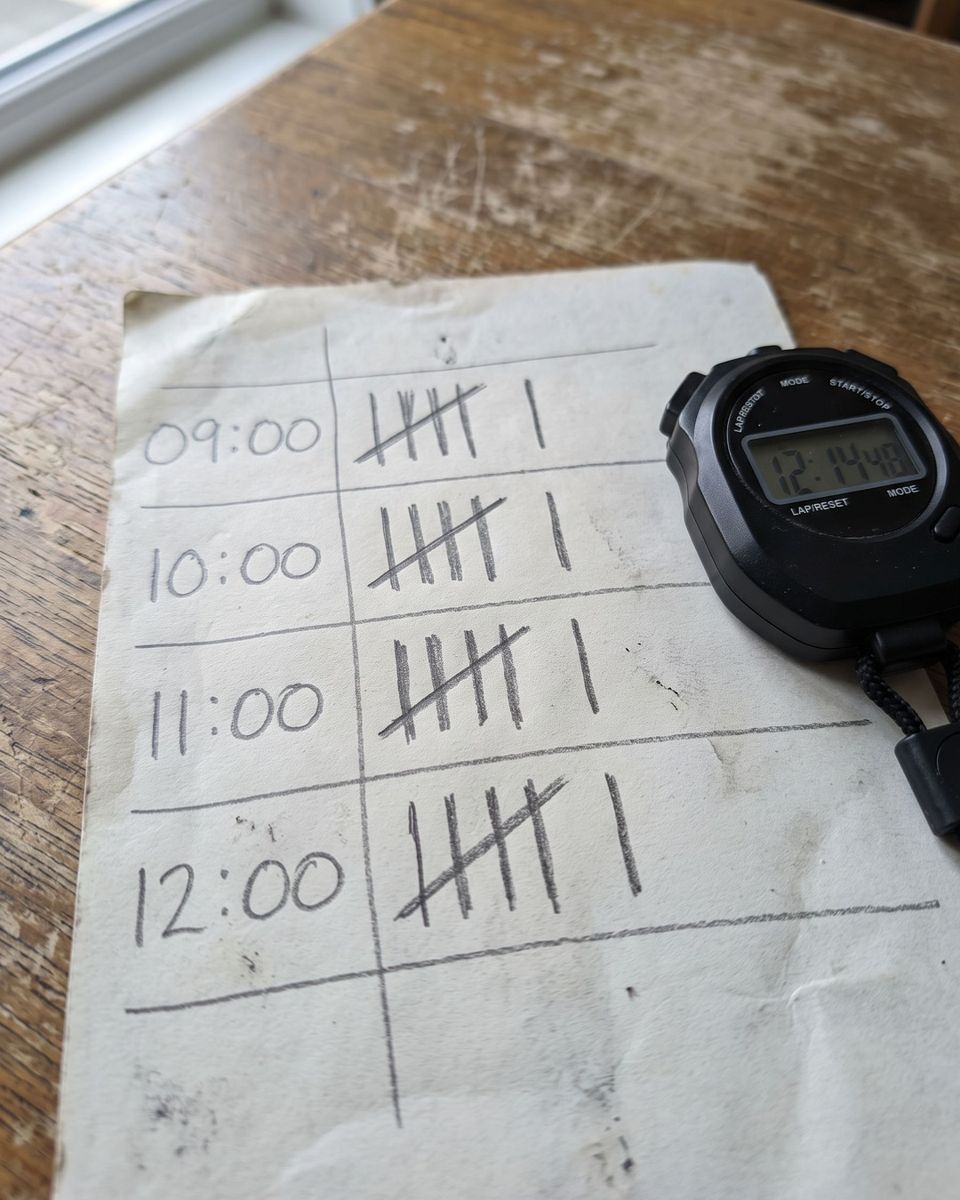
The last pages are a practice log and a short note on what to do next. The log has columns for date, minutes, turns and three codes: I for independent correct, H for correct with help, X for incorrect or no response. If your child declines, you stop and write that down instead of forcing a score.
The five skill areas in the collection
The 94 packs are grouped into five areas. Treat the list as a menu, not a required order. Pick a skill that shows up in your child's day and that they are ready to try.
- Listener Responding (33 packs): listening to names, actions and directions, then pointing to a picture or doing a simple placement. Speech is not required.
- Visual Perception and Matching (21 packs): matching the same picture, matching different examples of one object, sorting, patterns, block designs and puzzles.
- Function, Feature and Class (22 packs): choosing a picture from a clue about what it does, what it looks like or which group it belongs to, such as "You eat..."
- Math (13 packs): number names, numbers and quantities, making a requested quantity, more and fewer, and comparing length, height, width and thickness.
- Reading (5 packs): matching letters, recognizing letters in different styles, uppercase to lowercase, and linking written words to pictures.
How to run a short session with ABA worksheets
Try 3 to 5 minutes. One easy success first, then 3 to 6 practice turns, then finish with something your child enjoys. If your child wants to stop, stop. A few turns at breakfast and a few at playtime often go better than one long sitting, so add opportunities across the day before you add minutes.
Begin with two clearly different choices. When your child is responding comfortably, add one choice at a time. Do not jump straight to a full page of pictures. Read the instruction once, then give a calm pause. During teaching you can repeat the direction or show the right picture. On the next turn, wait a little longer and help a little less. Avoid guiding your child's hand.
The easiest way to spoil the data is by accident. Your eyes drift to the right card, or your voice goes up on the answer. Say the direction once, keep your gaze and finger neutral, and shuffle the picture positions between turns.
Teaching first, then a separate check
Each pack keeps teaching and checking apart. While you teach, praise effort and help when needed. During the check, you record the first response only: no pointing, no naming the answer, no correcting between attempts. Helped answers go in the H column, never in the I column.
Then the log tells you what to do next. Mostly independent: try a different example or a different adult next time. Some help needed: keep the same skill and make one thing easier. Repeated errors: go back to fewer choices and teach again.
Be honest with yourself about what a printed check shows. It uses familiar teaching material, so it is a practice snapshot. It does not replace an assessment by your child's BCBA or therapist. Several packs say this outright too: pointing to a picture of an action is not the same as doing the action with real objects. Follow Two-Step Directions, for instance, uses a real cup, book and box: "Put the book in the box, then put the cup under the table."
Free autism printables that move into the day
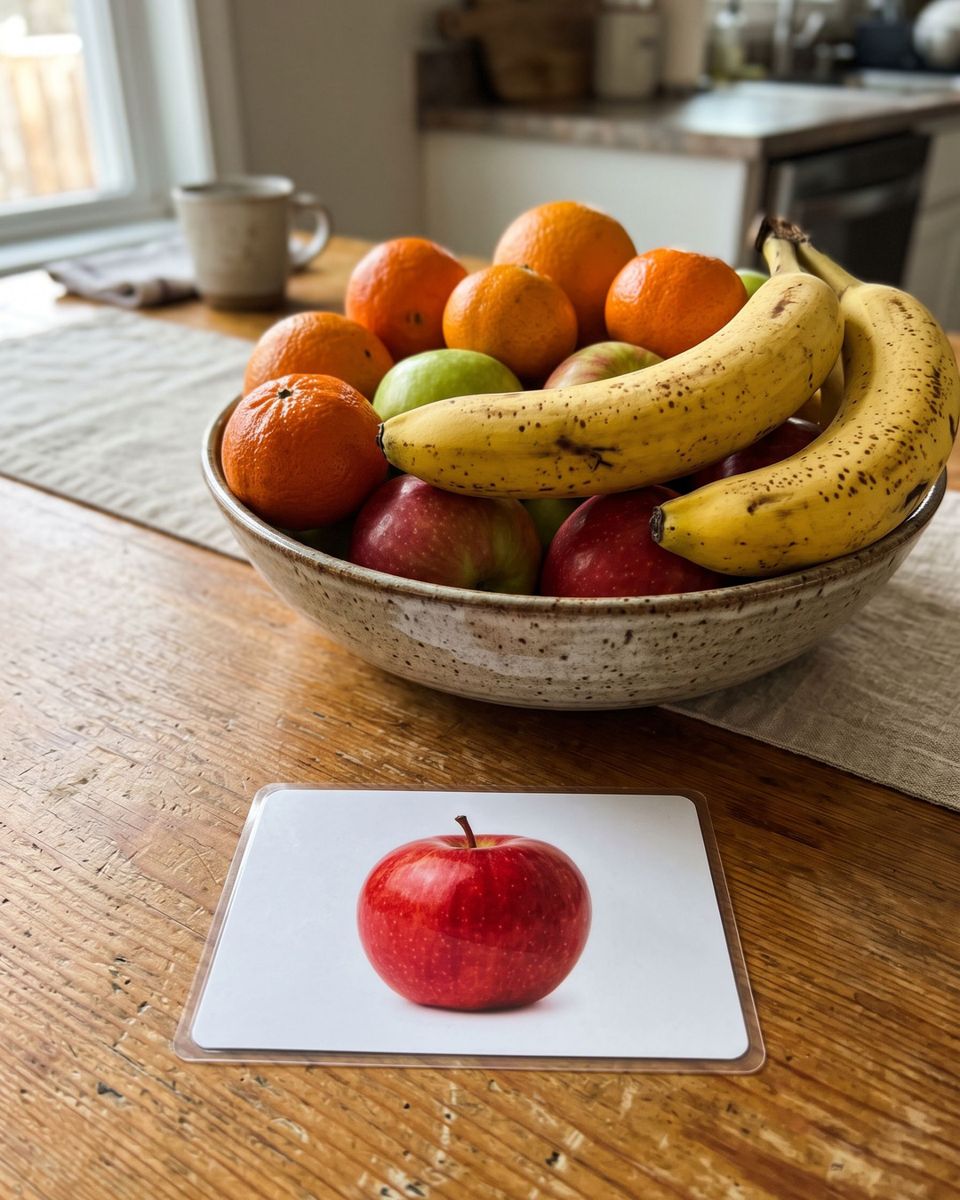
Each pack has a "Make it useful" step that takes the skill off the page. In Choose What We Eat, you say "You eat an apple" at snack time, without pressuring your child to taste anything. In Touch Each Item Once, you count snacks or toys by moving each one once, then ask how many. In Make a Requested Quantity, your child drops large blocks into a bowl one at a time, and you always put out more blocks than you ask for.
That last part matters. A child who knows "apple" on one card at one table may not know it yet. Try the skill with a real object, with another adult, in another room, and again a few days later.