What is a mand in the VB-MAPP?
A mand is a request that is controlled by what the child wants at that moment and is reinforced by getting the specific thing asked for. “Juice” said because the child is thirsty, and followed by juice, is a mand.
Skinner coined the word from “command” and “demand.” What makes a response a mand is its cause, so the form does not matter. A spoken word, a sign, a picture handed over with PECS, or a button on a speech device can all be mands. The test is simple: did motivation set the response off, and did the child receive the item or action they named? A word said because an adult held up a picture and asked “What is it?” is a tact, even when the word is the same.
Behavior analysts put manding first for a practical reason. A child who can request has a reliable way to get needs met without crying, grabbing or dropping to the floor, and many teams see problem behavior fall as requesting rises. That link is the basis of functional communication training. Manding also puts the child in charge of the interaction, which makes the adult a source of good things and makes later teaching easier.
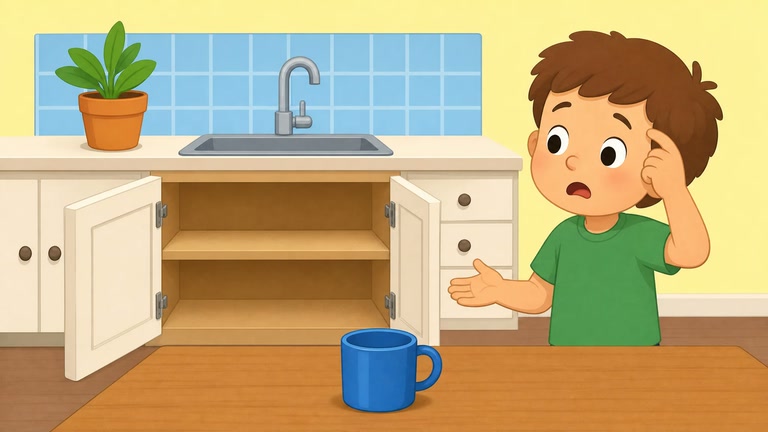
In the VB-MAPP the mand domain grows from asking for a handful of favorites with help, to asking for missing items and actions, to questions that request information (“Where is my cup?”) and requests that direct other people. The goal map below breaks each level into milestone areas with practice goals. This page covers the procedure behind them.
- Counts as mand
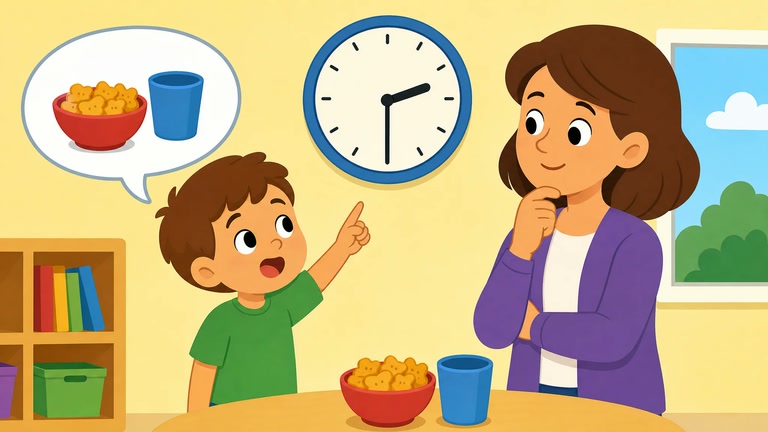
Snack time; the child has finished one cracker and reaches toward the box
Says or signs “cracker” and is handed another cracker
Wanting more set the response off, and the reinforcer was the cracker itself. That is a mand.
- Not mand
An adult holds up a picture of juice and asks “What is this?”
Says “juice” and gets praise
The picture and the question controlled the word, and the payoff was praise. This is a tact. It becomes a mand only when thirst drives it and juice follows.
- Not mand
The adult says “Say ball” while the child plays with a ball
Repeats “ball” and gets nothing else
Copying a spoken model is an echoic. It is a useful prompt during mand training, but the mand is the unprompted “ball” when the ball is out of reach.
- Counts as mand
The child is stuck on a jar lid and looks at Mom
Hands her the jar and says “open”
The child asked for an action instead of an object. Action mands like open, push and help are part of the same domain.
- Not mand
Bubbles stop and the child cries until the adult blows more
Crying, then bubbles
Crying is working as a request here, which is exactly what mand training replaces. Teach a sign or word for “bubbles” and stop reinforcing the crying.
- Counts as mand
Brother takes the toy car; the child says “my car” and holds out a hand
Brother gives the car back
A two-word mand delivered to a peer. Requests to other children appear in the social domain as well.
Mand milestones, goals and activities by level
Each milestone area below is our own summary of a group of VB-MAPP milestones, with measurable practice goals, everyday activities and the sign that a learner is ready for the next step. Score the official protocol first; then use the area that matches.
Level 1 · 0–18 months
At Level 1 the child asks for a few strong favorites, first with an echoic or physical prompt, then on their own as the item comes into view. The target is the form (word, sign or picture), not the length.
Milestones 1–2
Asking for favorite things, with help at first
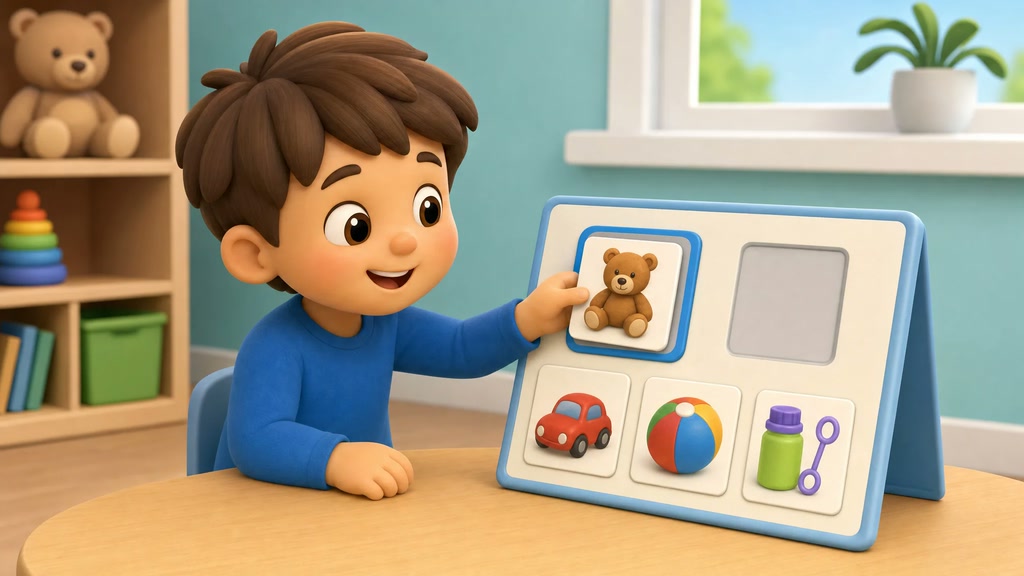
The child learns that a word, sign or picture gets them the thing they want right now, starting with a few strong favorites and fading adult help.
Practice goals
- Requests 3 different highly preferred items with a word, sign or picture exchange when the item is in view, with no more than a model prompt, on 4 of 5 opportunities.
- Requests 3 different preferred items without any prompt on 80% of opportunities across 2 consecutive sessions.
- Uses the same request form for a favorite item with 2 different adults in 2 different rooms.
Everyday activities
- Blow bubbles once, then hold the wand and wait for the child to sign, say or hand you a picture for “bubbles” before blowing again.
- At snack time, give crackers in tiny pieces so the child gets many chances to ask for “more” or “cracker.”
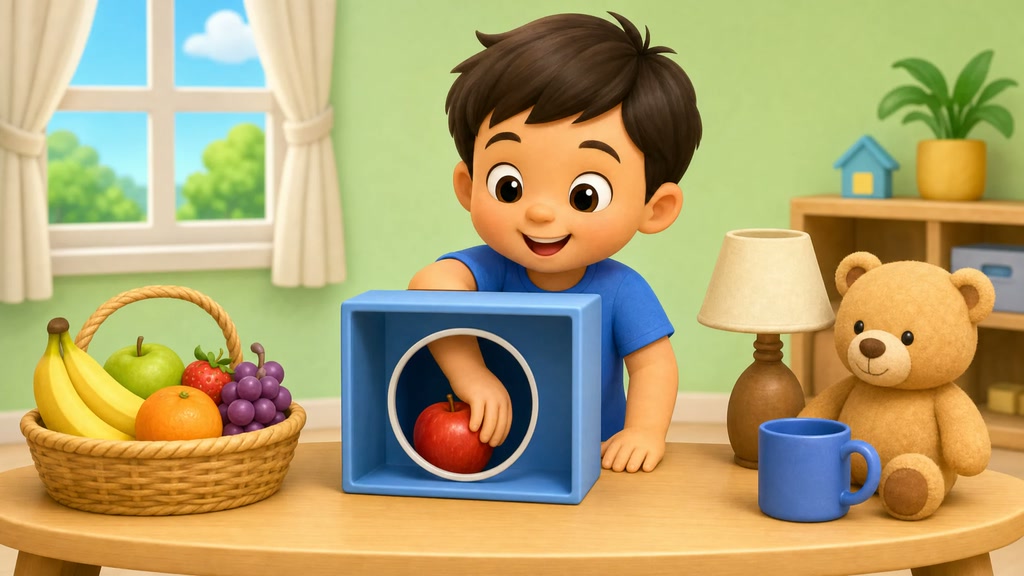
- Keep a favorite wind-up toy in a clear container the child can see but not open, and reward any request form with a turn.
Ready to move on: Move on when the child asks for favorites without help from different adults and does not need the item held up as a cue.
SuperChild trainings: Requesting: Preferred Items · Requesting: Fruit and Vegetables
Open in the goal mapperMilestones 3–5
Asking spontaneously and for missing pieces
Requests start to happen without anyone setting them up, and the child asks for the part that is missing from something they are already doing.
Practice goals
- Makes at least 8 requests without a prompt or a question from an adult during a 30-minute play or snack routine, on 3 consecutive days.
- Requests the missing item in 4 different routines (for example a puzzle piece, a spoon, a shoe) on 4 of 5 opportunities.
- Uses at least 10 different request words, signs or pictures across a week of home and session data.
Everyday activities
- Serve yogurt without a spoon and wait for the child to ask for it before handing one over.
- Hand over a shape puzzle with one piece held back, then pause so the child asks for the last piece.
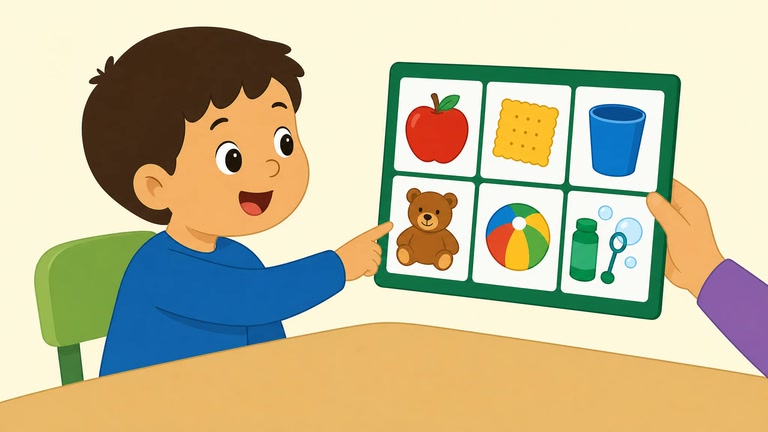
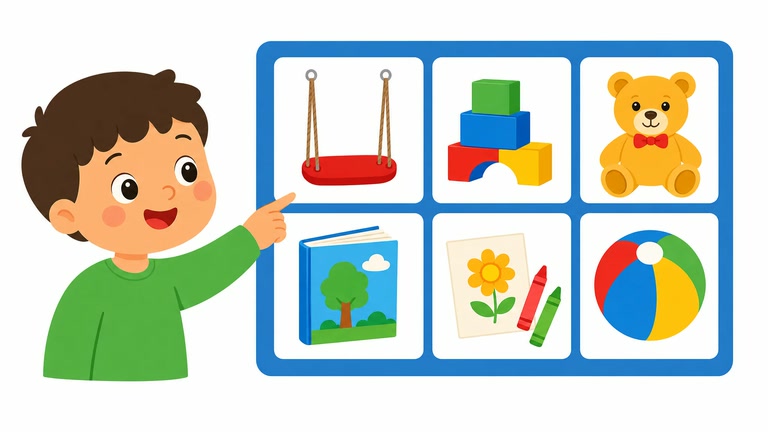
- Use a tablet requesting training where the child picks the item they want, then practice the same items at the table with real objects.
Ready to move on: Look for requests that show up across the day without set-ups, with new items added without direct teaching.
SuperChild trainings: Requesting Hidden Items: Fruit and Home Items · Request Board: Ten Everyday Items
Open in the goal mapper
Level 2 · 18–30 months
At Level 2 requests cover items that are out of sight and actions people can do, get longer than one word, and start to appear for new things nobody taught. Most of the day’s requests should now happen without a set-up.
Milestones 6–7
Asking for missing items and for actions
The child asks for a wider range of things that are out of sight and starts asking people to do something, like push, open or tickle.
Practice goals
- Requests 15 different items that are out of sight during real routines, without prompts, over 2 weeks of data.
- Asks an adult to do 5 different actions (for example open, push, spin, tickle, help) without prompts on 80% of opportunities.
- Asks for help when a container or toy is too hard to open on 4 of 5 opportunities across 2 adults.
Everyday activities
- Put favorite snacks in a jar with a tight lid and wait for the child to ask you to open it.
- On a swing or a rolling chair, stop after each push and wait for the child to ask for “push” or “go.”
- Use a tablet training for requesting actions, then match the same actions in a tickle or chase game with the team.
Ready to move on: Ready when the child asks for actions and missing items with new people and in new places, not only with the therapist who taught them.
SuperChild trainings: Requesting Actions: Action and Object · Requesting Help and Attention
Open in the goal mapperMilestones 8–10
Longer requests and new requests on their own
Requests get longer (two words or more) and more frequent, and new request words start to appear without being taught one by one.
Practice goals
- Uses 2-word requests (for example “more juice” or “open door”) on 70% of requesting opportunities across 3 sessions.
- Makes at least 20 spontaneous requests in a 1-hour session or home routine on 3 days.
- Uses at least 5 new request words that were only taught as labels or heard in play, logged over a month.
Everyday activities
- Offer two cups of juice in different colors and wait for “red cup” or “blue juice” before handing one over.
- During block play, keep the block bin and wait for “more blocks” or “big block” before giving pieces.
- Rotate a box of new toys weekly and note any new request words the child uses without teaching.
Ready to move on: Check that longer requests hold up with peers and family, and that the child keeps adding new requests on their own.
SuperChild trainings: Request Board: Ten Everyday Items · Polite Requests with Please
Open in the goal mapper
Level 3 · 30–48 months
At Level 3 the child uses requests to get information with wh-questions, refuses politely, describes what they want with adjectives and prepositions, and gives directions to peers in play. See wh-questions practice for the question forms.
Milestones 11
Asking questions to get information
The child starts to ask what, where, who and similar questions because they want to know something, not just to get an item.
Practice goals
- Asks a “where” question when a favorite item is hidden on 4 of 5 opportunities across 2 adults.
- Asks “what’s that?” or “who is that?” about something new at least 5 times in a session without prompts.
- Uses at least 4 different question words in real requests for information over 2 weeks of data.
Everyday activities
- Hide a favorite toy in one of 3 boxes and wait for the child to ask “where is it?” before giving clues.
- Bring a mystery bag with a new object inside and wait for “what’s in there?” before opening it.
- Use the tablet’s question trainings, then set up the same questions at home with family photos and household items.
Ready to move on: Look for questions asked during everyday life, about real gaps in what the child knows, with different people.
SuperChild trainings: Asking Where Questions: Household Items · Asking Who Questions: People and Helpers · Asking When Questions: Daily Routines
Open in the goal mapperMilestones 12–13
Refusing and describing what they want
The child refuses or asks to stop in their own way, and the refusal is always respected. They also use describing words (big, red, under, fast) to make requests more exact.
Practice goals
- Refuses an item or activity in their own way (word, sign, gesture, AAC or pushing it away), and the refusal is honored, on 80% of opportunities.
- Requests with describing words (color, size, position or speed) for 8 different targets across 3 sessions.
- Asks for a specific item from a set by a feature (for example “the big one”) on 4 of 5 opportunities with 2 adults.
Everyday activities
- Offer a non-preferred snack alongside a favorite and take it away as soon as the child refuses it in any way. As a later, optional step, model “no thank you”.
- Set out the same toy car in 2 colors and 2 sizes and wait for “big red car” before handing it over.
- During a marble run (large marbles, adult nearby), ask the child to choose “fast” or “slow” and “up” or “down” before each turn.
Ready to move on: Ready when the child refuses reliably in their own way, with any adult, and describing requests show up in play with peers.
SuperChild trainings: Rejecting Offers and Actions · Visual Feature-Item Request Icon Selection · Asking Whose Questions: Household Items
Open in the goal mapperMilestones 14–15
Directing others and joining talk with requests
The child gives other people instructions in play and uses requests as part of back-and-forth conversation, not only to get things.
Practice goals
- Gives a peer or adult at least 5 different play directions (for example “you build the tower”) in a 15-minute play session.
- Asks for information to keep a conversation going at least 3 times in a 5-minute chat, across 3 sessions.
- Requests attention to something they made or noticed (“look at my drawing”) at least 3 times per day at home or school.
Everyday activities
- Play “be the teacher”: the child tells you which shape to put where while building a block design.
- During a picture-book chat, pause and coach the child to ask you a question about your favorite page.
- Set up a cooking task where the child tells the adult each step (pour, stir, add) from a picture recipe.
Ready to move on: Look for the child directing peers in free play and asking questions in natural conversation without adult set-ups.
SuperChild trainings: Giving Play Directions: Shapes
Open in the goal mapper
Mand training procedure, step by step
The procedure below follows the order most behavior analysts use. Each step depends on the one before it, so do not move to fading until the child reliably requests with a prompt.
- 1Find out what the child wants right nowRun a short preference check before every session: offer three or four items and note what the child reaches for first. Motivation changes by the hour, and a mand session with an item the child does not want teaches nothing. Keep the favorites in sight but out of reach, in a clear box or on a high shelf.
- 2Pick one response form and stick to itChoose a word, an approximation, a sign or a picture exchange based on what the child can do today. A child with an echoic repertoire can start with spoken words; a child with few sounds often starts with signs or PECS while speech develops. Accept the same approximation from every adult.
- 3Prompt the request at the moment of motivationWhen the child reaches for the item, give the prompt right away: say the word for them to echo, model the sign, or guide their hand to the picture. Deliver the item within a second or two of the response. Early on, every request gets the item.
- 4Transfer control to the motivationUse a time delay to move control from your prompt to the child’s wanting. Hold the item, wait 2 to 5 seconds, and give the prompt only if the child does not request. When the child starts filling the delay on their own, the request belongs to them.
- 5Fade the item as a cueOnce requests come freely with the item in view, put it out of sight. The child now has to ask for something they cannot see, which is the step most programs skip. Set up missing items on purpose: a bowl of cereal without the spoon, a puzzle with one piece held back.
- 6Spread requests across people, places and itemsAdd new items in small batches and have every adult in the child’s day honor the same forms. Aim for many requests per hour across the day. Thirty requests in a ten-minute table session matter less than thirty spread through snack, bath, play and car rides.
Common mistakes, and what to do instead
- Teaching “please” or “more” as the first mand
- Generic words work for everything, so the child never learns specific names. Teach “juice,” “swing” and “bubbles” first and add manners later, once the child has a good set of specific requests.
- Asking “What do you want?” before every request
- The question becomes part of the cue and the child waits for it. Set up the situation and wait silently, then prompt with the word itself if needed.
- Running mand trials when the child is full or bored
- Without motivation the response is a tact or an echoic dressed as a request. End the session when interest drops and come back to it later, or switch to an item the child wants more.
- Holding out for a perfect word
- Demanding clear speech too early can stall the child and raise frustration. Reinforce the best approximation the child can make today and shape it up gradually.
How to measure mand progress
Count unprompted requests per session or per hour and tally them by item, with a separate column for prompted ones; a weekly count of different mands shows vocabulary growth. Our ABA data sheets include a frequency sheet for this.
How it connects to the other domains
- Echoic
Echoics give you the prompt for vocal mands: the child repeats your model of the word, and you fade it until the request stands alone.
- Tact
The same word taught as a mand does not automatically appear as a label, so most teams teach both functions for core words.
- Intraverbal
At Level 3, asking questions to get information is both a mand and the start of real conversation.
- Social behavior & social play
Asking a peer for a turn or a toy is a mand aimed at another child, and it is one of the first bridges into social play.
Printables and tools to practise with
- Free printablePECS book printablePicture cards and a communication book for children who start manding with picture exchange.
- GuideAAC for autism guideHow to pick a sign, picture or speech-device system when spoken requests are not yet possible.
- Free toolABA data sheetsFree frequency and trial-by-trial sheets for counting requests by session.
- GuideABA therapy guideWhere manding sits among the verbal operants and the other ABA teaching methods.
Independent guide by SuperChild, not affiliated with the publisher or authors. Use the official protocol to administer and score.
Written from the publishers’ own materials and published research. Spotted an error? Email contact@superchild.ai and we’ll fix it.