What is a tact in the VB-MAPP?
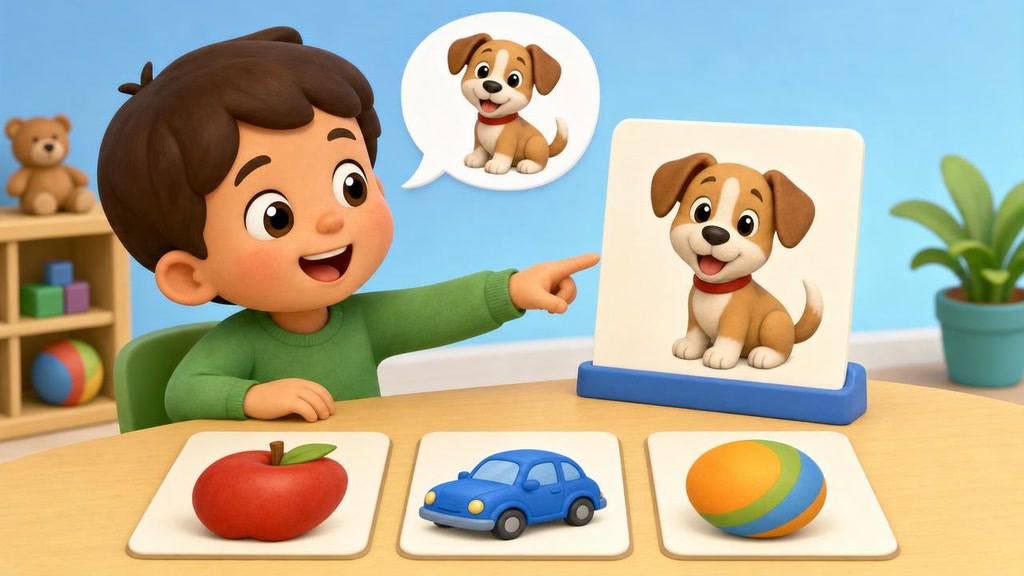
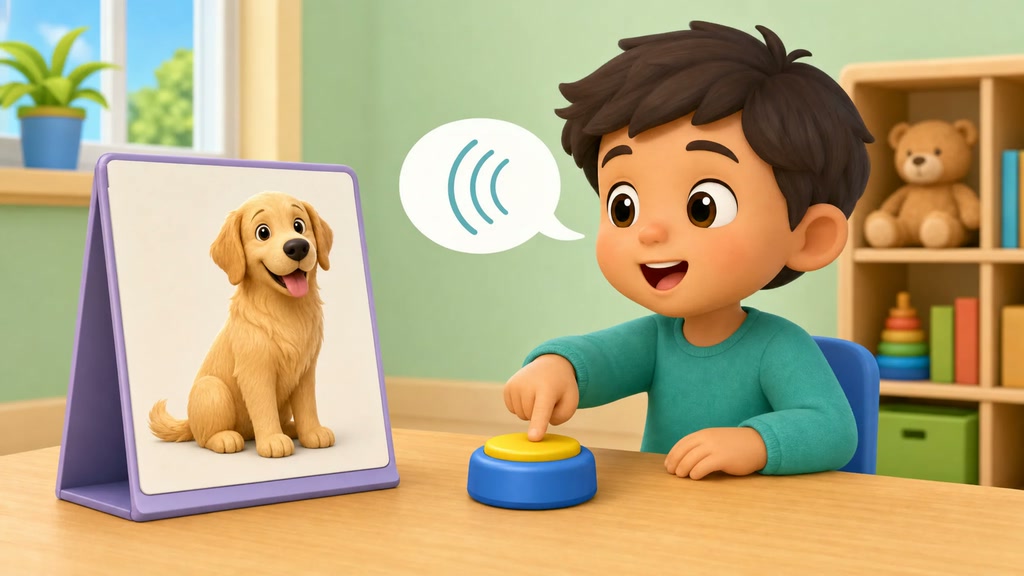
A tact is a label set off by something the child is in contact with right now (an object, a picture, a sound, a smell, an action) and reinforced by social attention, not by getting the thing. Saying “airplane” while pointing at one in the sky is a tact.
The tact is how a child tells other people about the world. It covers nouns first, then verbs, adjectives, prepositions and eventually whole descriptions such as “the big dog is running.” Because the payoff is attention and shared interest, a child who tacts a lot is usually a child who enjoys sharing things with people, which makes tacting a good window on social motivation too.
Mand vs tact is the distinction most students get wrong on exams, and the answer is in the cause and the payoff. A mand is driven by wanting something and ends with getting it. A tact is driven by noticing something and ends with praise or a shared look. The word can be identical. “Cookie” said while staring at an empty plate after snack and followed by a cookie is a mand; “cookie” said while pointing at a cookie in a picture book and followed by “Yes, a cookie!” is a tact.
A child who can mand “ball” will not necessarily tact “ball,” and the reverse holds too. Research on the independence of verbal operants is the reason most programs teach each core word in both functions instead of assuming one will carry over.
- Counts as tact
A truck rumbles past the window; the child points and looks at Dad
Says “truck!” and Dad answers “A big truck!”
The truck set the word off and the payoff was Dad’s shared attention. A textbook tact example.
- Not tact
The child is hungry and sees the banana on the counter
Says “banana” and is handed the banana
Hunger drove the word and the banana was the reinforcer. That is a mand, even though a banana was in view.
- Counts as tact
The adult holds up a picture of a cat and asks “What is it?”
Says “cat” and gets a high five
A tact with an added verbal cue. Fine for teaching, but plan to fade the question so the child names things without being asked.
- Not tact
The adult says “Say cat” while showing the cat picture
Repeats “cat”
The spoken model controls the word, so this is an echoic. It turns into a tact only when the child says “cat” to the picture alone.
- Counts as tact
The child hears a siren from another room
Says “fire truck” and looks at Mom
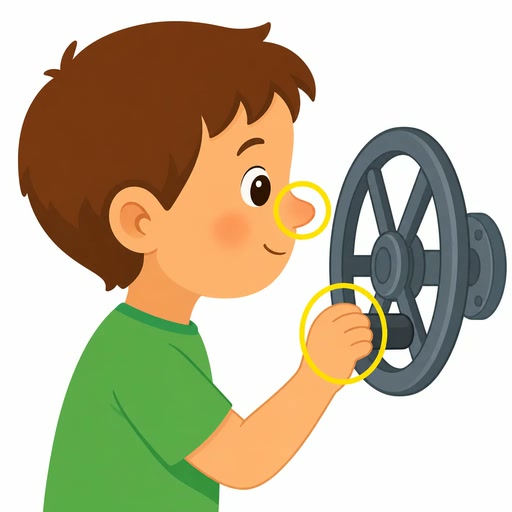
Tacts are not limited to things the child can see. Sounds, smells, tastes and textures count as well.
- Not tact
Grandma asks “What did you have for lunch?” after lunch is cleared away
Says “pasta”
Nothing in front of the child set off the word; Grandma’s question did. Answering from memory is intraverbal behavior.
Tact milestones, goals and activities by level
Each milestone area below is our own summary of a group of VB-MAPP milestones, with measurable practice goals, everyday activities and the sign that a learner is ready for the next step. Score the official protocol first; then use the area that matches.
Level 1 · 0–18 months
At Level 1 the child names a few familiar people, pets and favorite items, then builds a first vocabulary of common objects and pictures. Any clear approximation or sign counts.
Milestones 1–2
Naming familiar people and favorite things
The child starts to name a few well-known people and favorite objects with a word, sign or picture, first with an echo model and then without it.
Practice goals
- Labels 3 familiar people or favorite items when shown and asked “what’s that?”, with no more than an echo prompt, on 4 of 5 trials.
- Labels 3 items without any prompt on 80% of trials across 2 sessions.
- Labels the same 3 items with 2 different adults and in 2 settings.
Everyday activities
- Look at a family photo album and pause on each familiar face for the child to name.
- Pull favorite toys one at a time out of a “surprise bag” and wait for the child to name each one before playing.
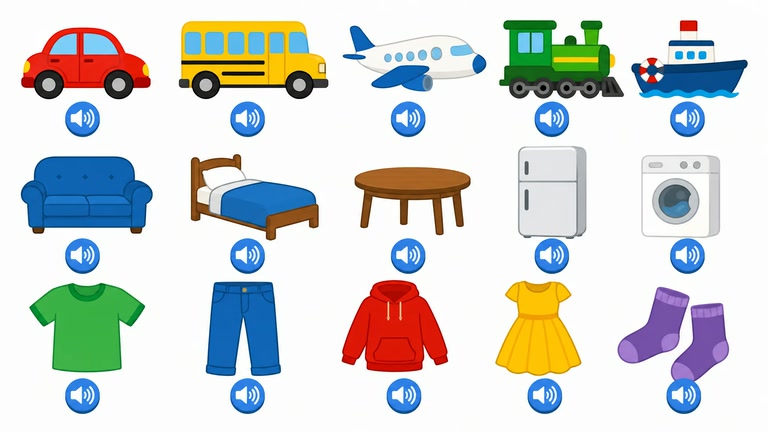
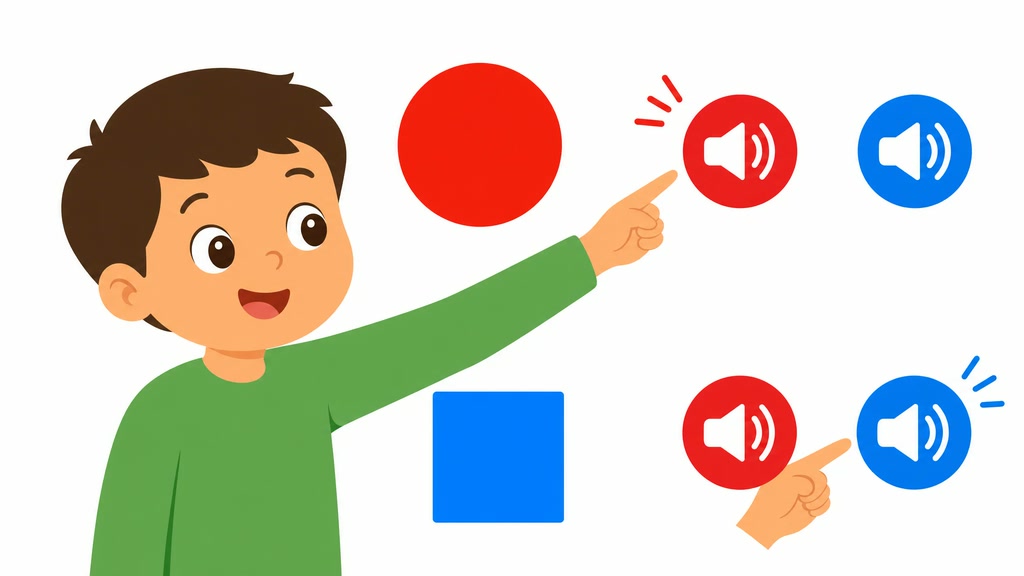
- Practice spoken labels with the team; the tablet trainings that pair pictures with spoken words can support listening for the names first.
Ready to move on: Ready when the child names these items without being asked “what’s that?” and with new adults.
SuperChild trainings: Naming Prerequisite: Picture-to-Spoken Words · Naming Prerequisite: Mixed Everyday Items
Open in the goal mapperMilestones 3–5
Growing a first naming vocabulary
The child’s set of names for objects, animals and pictures grows steadily, and new names start to stick faster.
Practice goals
- Labels 15 common objects and pictures (animals, foods, toys) without prompts on 80% of trials across 2 sessions.
- Labels 5 new objects or pictures within 3 teaching sessions each.
- Labels at least 5 items spontaneously during play or book reading without being asked, over a week.
Everyday activities
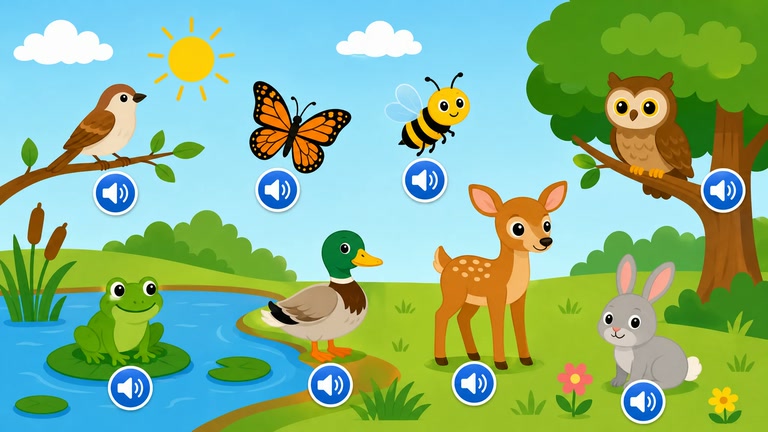
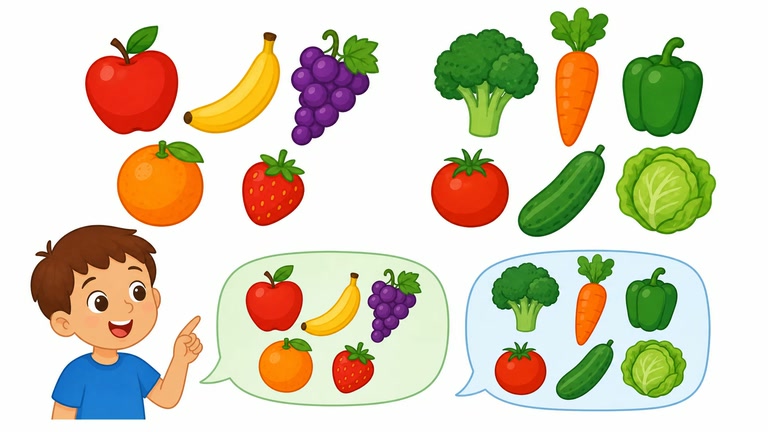
- Read a picture book about farm animals and pause on each page so the child names the animal before you turn the page.
- Play “feed the puppet”: the child names each food picture before the puppet eats it.
- Use a tablet naming-prerequisite training on animals, then hold up matching toy animals for the child to name out loud with the team.
Ready to move on: Look for names used for new examples of the same thing (a different dog, a cartoon dog) and in everyday comments.
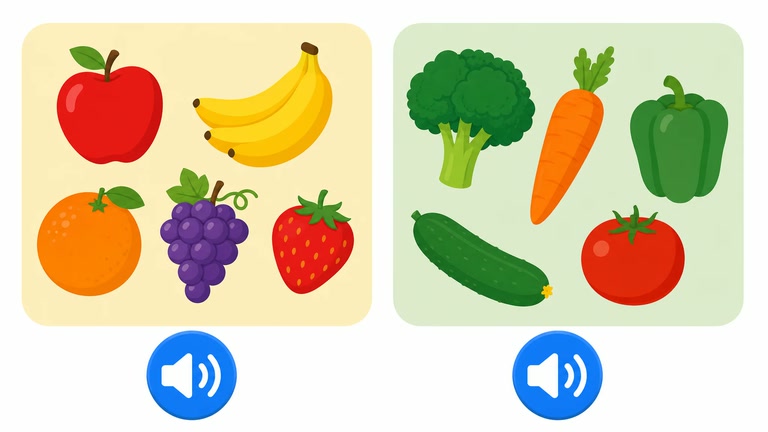
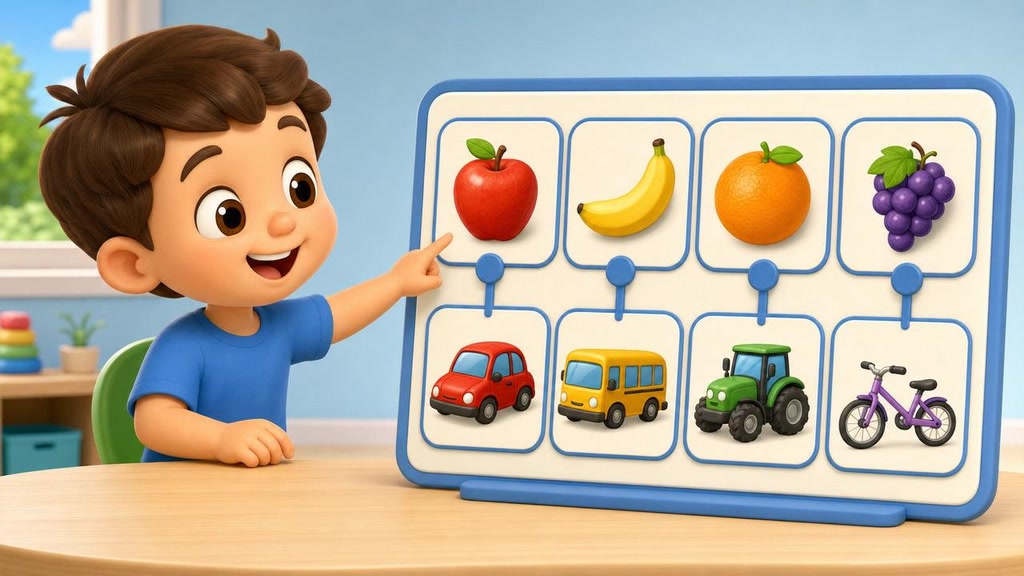
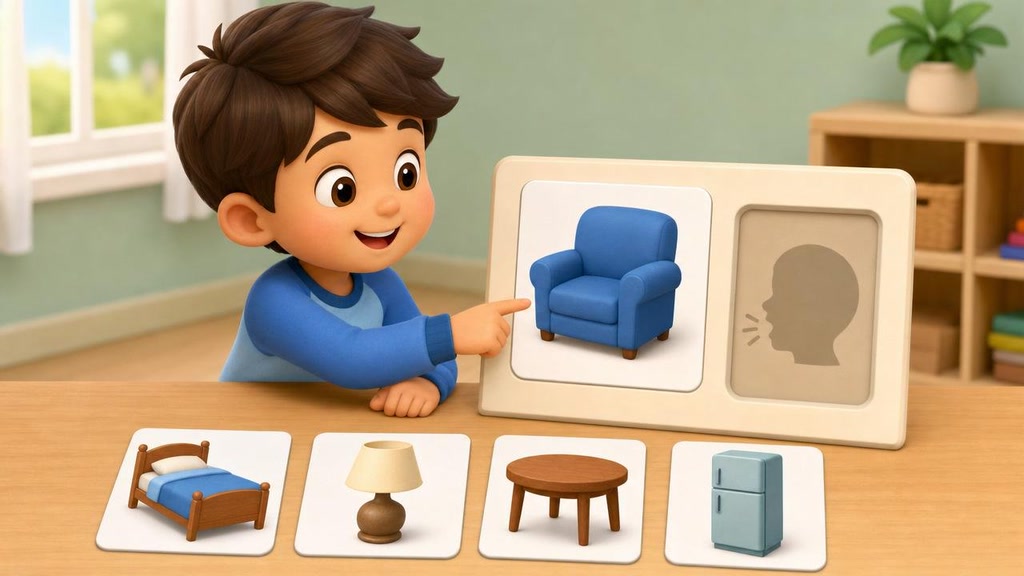
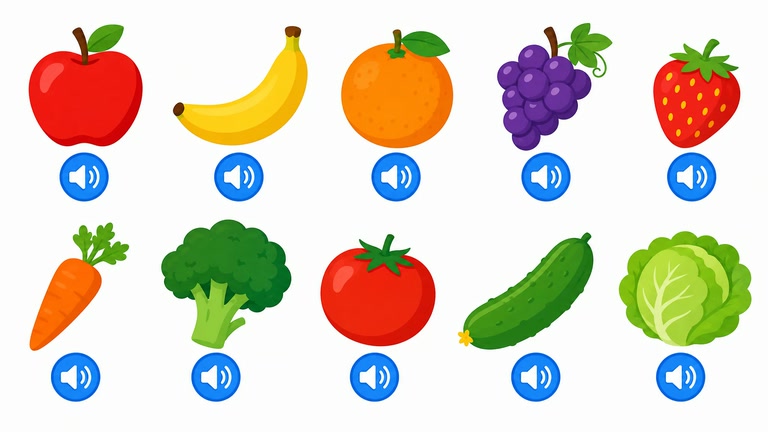
SuperChild trainings: Naming Prerequisite: Animal Picture-to-Spoken Labels · Naming Prerequisite: Household Picture-to-Spoken Labels · Naming Prerequisite: Fruit and Vehicle Picture-to-Spoken Labels
Open in the goal mapper
Level 2 · 18–30 months
At Level 2 tacts expand to actions (“jump,” “eat”), parts of objects and two-word labels such as “blue car,” and the vocabulary grows into the hundreds across categories.
Milestones 6–7
Naming actions and parts of things
The child names what people are doing and the parts of objects or bodies, not just whole objects.
Practice goals
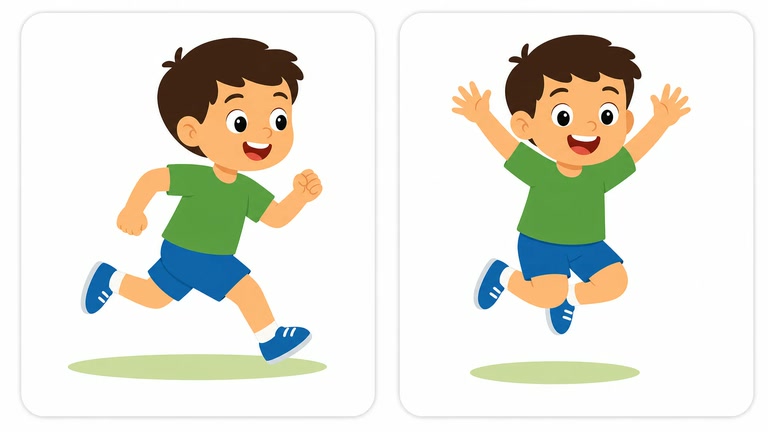
- Labels 10 actions (jumping, eating, sleeping) in pictures or live demonstrations on 80% of trials across 2 sessions.
- Labels 8 parts or features of objects (wheel, door, tail, nose) on 80% of trials.
- Labels actions during real play at least 5 times in a session without being asked.
Everyday activities
- Act out actions with a doll (sleep, eat, wash) and ask “what is she doing?” after each one.
- Explore a toy car together and name its parts: wheels, door, window, lights.
- Use the tablet’s action and part trainings, then label the same actions during a walk outside with the team.
Ready to move on: Ready when the child labels actions and parts on new pictures and real objects, not only the ones taught.
SuperChild trainings: Naming Prerequisite: Action-to-Spoken Verbs · Part-to-Spoken-Label Matching: Vehicles and Body Parts
Open in the goal mapperMilestones 8–10
Two-word labels and a much larger vocabulary
The child combines words in labels (“red car”, “boy running”) and their naming vocabulary grows into the hundreds.
Practice goals
- Uses 2-word labels combining an object with an action or a color for 20 different pictures across 3 sessions.
- Keeps adding new labels for objects, pictures and actions each week, tracked on a cumulative target list.
- Labels new items in a picture book without teaching on 7 of 10 pages.
Everyday activities
- Play “I see” with a busy picture scene and take turns naming “blue car” or “dog running.”
- Sort a bag of mixed household items and name each one as it goes in its basket.
- Pair a tablet phrase-matching training with live narration during play, such as “baby sleeping” and “big truck.”
Ready to move on: Look for 2-word comments during free play and new labels picked up from everyday life.
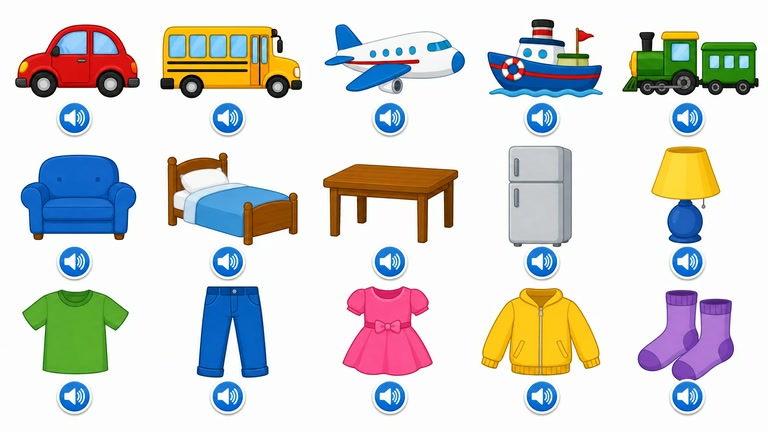
SuperChild trainings: Picture-to-Spoken-Phrase Matching: Color and Action Phrases · Naming Prerequisite: Vehicles, Household, and Clothing
Open in the goal mapper
Level 3 · 30–48 months
At Level 3 the child describes colors, shapes, positions, feelings, people and places, and starts to tact with full sentences. Practice for position words is on our prepositions page.
Milestones 11–12
Describing with colors, shapes and positions
The child describes what they see with colors, shapes, sizes and position words, and names things by category or use.
Practice goals
- Labels 6 colors and 5 shapes on new objects on 80% of trials across 2 sessions.
- Describes where an item is using 4 position words (in, on, under, next to) on 4 of 5 trials.
- Names the category of 10 items (food, animal, clothing) when asked “what kind of thing is it?”
Everyday activities
- Hide a toy bear around the room and ask the child to tell you where it is: under the table, in the box.
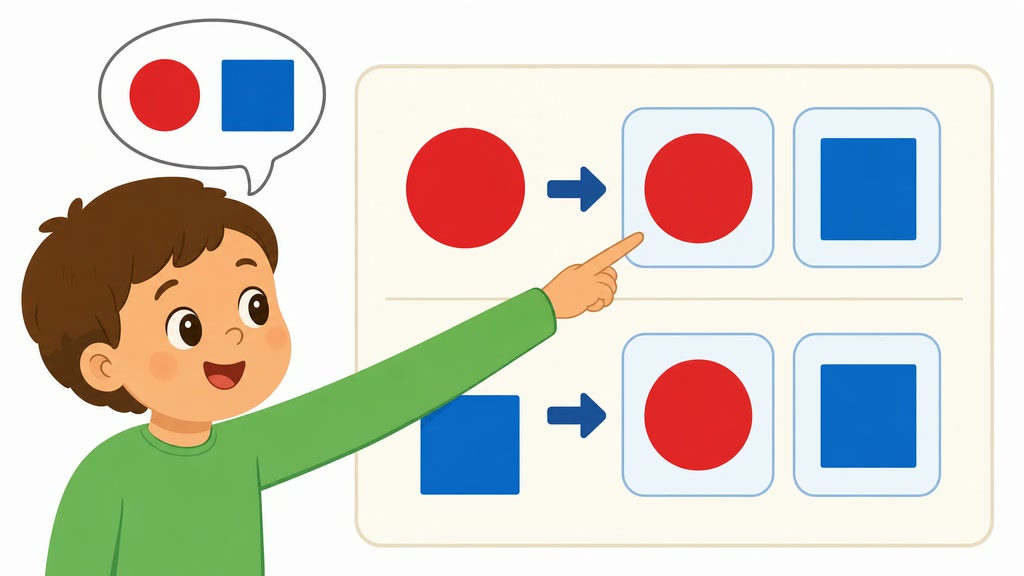
- Sort colored shapes into bowls and describe each piece out loud, “a red circle.”
- Use the tablet’s color, shape and class trainings, then practice describing real snacks and toys with the team.
Ready to move on: Ready when the child uses describing words on their own in play and conversation, not only when asked.
SuperChild trainings: Picture-to-Spoken-Adjective Matching: Colors · Picture-to-Spoken-Adjective Matching: Shapes · Naming Prerequisite: Mixed Labels and Position Phrases
Open in the goal mapperMilestones 13–14
Naming feelings, people, places and features
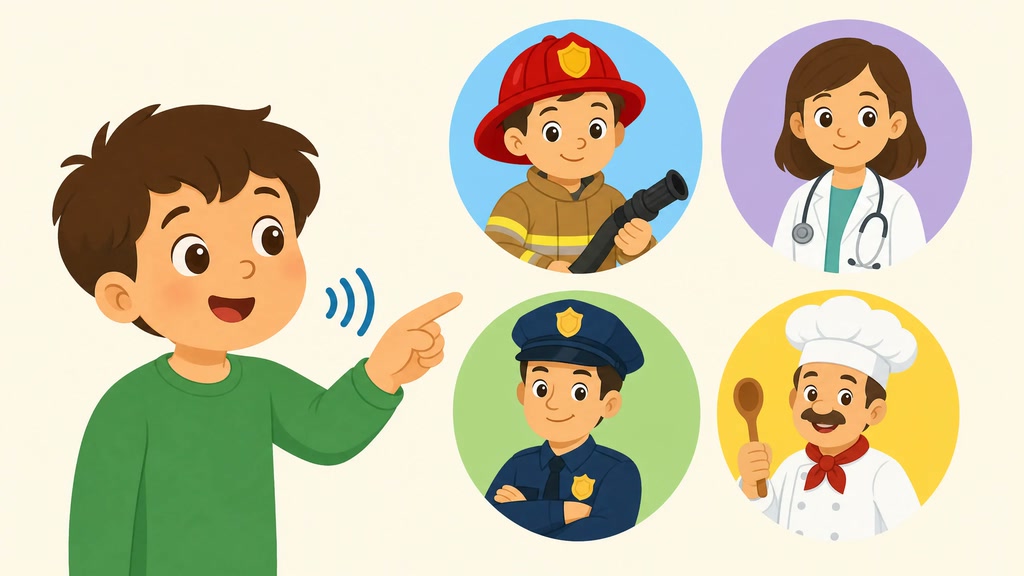
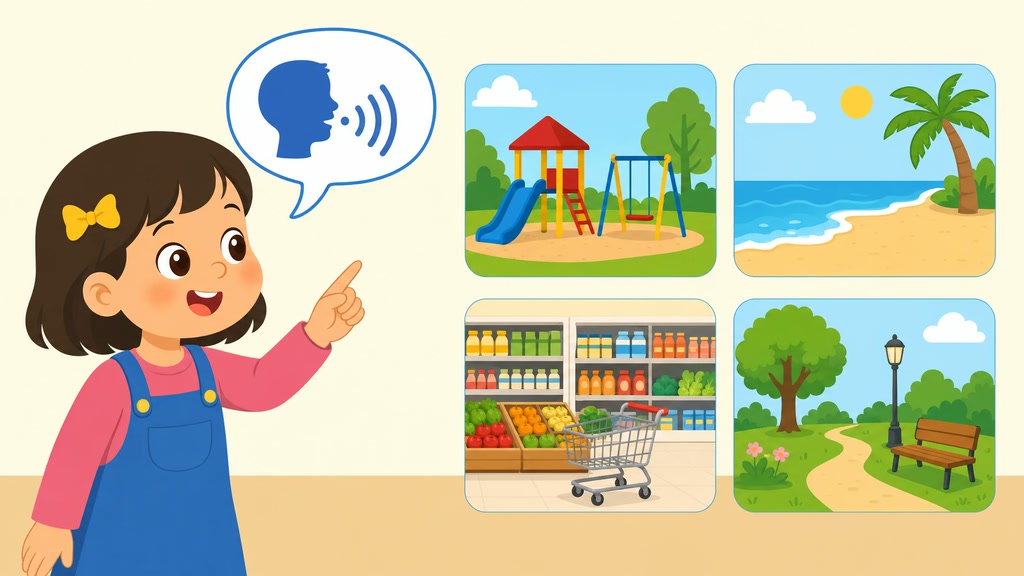
Labels extend to emotions, community helpers, places, and the features and uses of things.
Practice goals
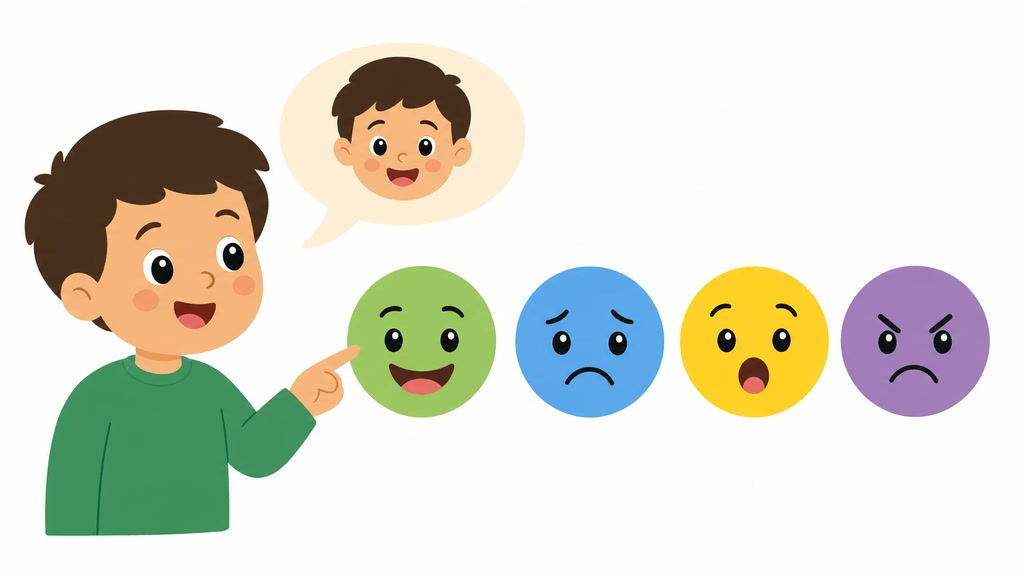
- Labels 5 feelings in pictures or video clips on 80% of trials.
- Labels 8 community helpers and 8 places on 80% of trials across 2 sessions.
- Describes a feature or use of 10 items (“it has wheels”, “you eat with it”) on 4 of 5 trials.
Everyday activities
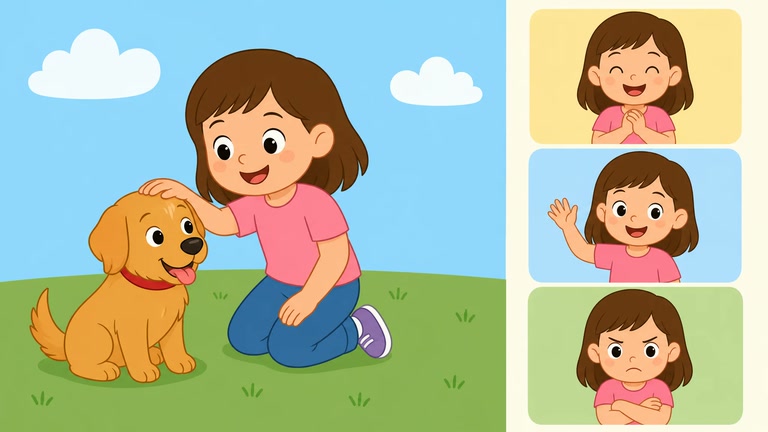
- Look at a feelings book and talk about each face: “he’s sad, his toy broke.”
- On a walk or car ride, name the places you pass (park, shop, school) and the people working there.
- Use the tablet’s feelings, people and places trainings, then name feelings that come up during real play.
Ready to move on: Look for the child naming their own feelings and describing new objects by feature or use.
SuperChild trainings: Naming Prerequisite: Feelings Picture-to-Spoken Labels · Naming Prerequisite: People and Professions Picture-to-Spoken Labels · Naming Prerequisite: Places Picture-to-Spoken Labels
Open in the goal mapperMilestones 15
Full-sentence descriptions
The child describes pictures, events and experiences in sentences with several parts, the way a preschooler comments on the world.
Practice goals
- Describes a picture scene with sentences of 4 or more words on 4 of 5 trials.
- Tells an adult about something that just happened (“the ball went under the couch”) at least 3 times per session.
- Uses at least 5 different describing words in a 5-minute picture-book conversation.
Everyday activities
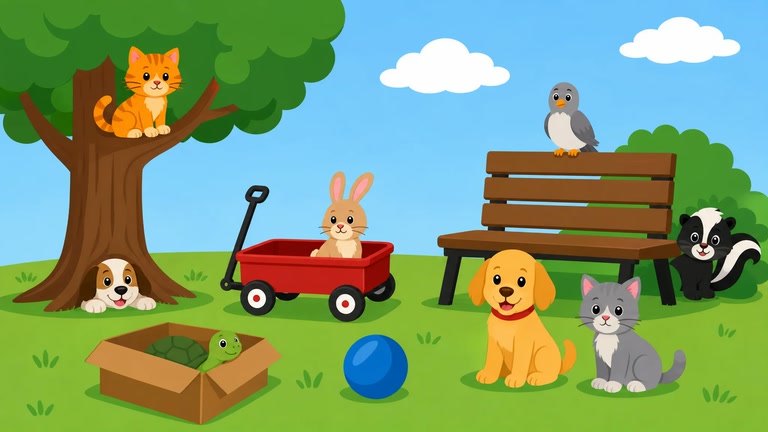
- Look at a busy picture book together and take turns telling “what is happening on this page.”
- After a short cooking activity, look at photos of each step and ask the child to describe them.
- Use the tablet’s feature and function phrase trainings, then ask for full-sentence descriptions with the real items.
Ready to move on: Ready when longer descriptions appear in everyday comments and with peers, not only in teaching.
SuperChild trainings: Picture-to-Spoken Feature Phrases: Body Parts · Picture-to-Spoken Function Phrases: Household Items · Picture-to-Spoken Class Phrases: Fruit and Vegetables
Open in the goal mapper
A tact program, step by step
Most tact programs combine short structured trials with naming during play, walks and book reading. The steps below assume the child can already echo single words or approximations.
- 1Pick targets the child already cares aboutStart with five to ten items from the child’s own world: family members, a pet, favorite toys, foods they like. Use real objects first, then photos, then drawings. A child names what they notice, so start with things they look at without being prompted.
- 2Present the item and prompt with an echoicShow the item and immediately say its name for the child to repeat. Reinforce the echoed word with enthusiastic attention and, early on, a small extra reinforcer. Keep the item clearly visible so it is part of what controls the response.
- 3Transfer to the item alone with a time delayOn the next presentation, wait 2 to 3 seconds before saying the word. If the child names it first, reinforce more strongly than for a prompted answer. This transfer of stimulus control is the core of tact training.
- 4Fade the “What is it?” questionA question is a useful starting cue, but children who only tact when asked are not using the skill. Pause near interesting things, point, or act surprised, and wait for the child to comment. Count unasked tacts separately.
- 5Use many examples of each wordTeach “dog” with ten different dogs: photos, toy dogs, the neighbor’s dog, a cartoon dog. Mix new and mastered targets in each set so the child has to discriminate. A tact is mastered when it generalizes to examples the child has never seen.
- 6Grow the response from words to descriptionsOnce single nouns are solid, add actions, then two-word combinations, then colors, shapes and positions. Each new layer builds on stable nouns, so do not rush adjectives onto a shaky vocabulary.
Common mistakes, and what to do instead
- Reinforcing tacts with the item itself
- Handing over the cookie after the child names it trains a mand. Keep tact reinforcement social, or use an unrelated small reinforcer while the skill is new.
- Teaching only with one picture per word
- The child learns that card and nothing else. Use several exemplars per target from the first session.
- Never leaving the table
- Tacts taught only with flashcards often fail to show up on a walk or at the zoo. Plan daily naming moments in the natural environment, and count them.
- Assuming a mand will become a tact
- Verbal operants are often learned separately. If the child requests “swing” but never comments on one, teach the tact directly.
How to measure tact progress
Probe each target once at the start of a session, before any prompting, and score it as correct only if the child names it without help; three correct cold probes across two people is a common mastery rule. Track unasked tacts during play as a separate count. Our ABA data sheets have a cold-probe sheet.
How it connects to the other domains
- Mand
Core words are usually taught as both mands and tacts, since learning one function often does not produce the other.
- Echoic
The echoic is the prompt that gets a new tact started, and is faded as the item takes over control.
- Listener responding
Finding the named item and naming it are two halves of the same word, and many programs teach them side by side.
- LRFFC (listener by function, feature & class)
Once the child can name items, they can learn to pick them by function, feature and class, which feeds into describing at Level 3.
Printables and tools to practise with
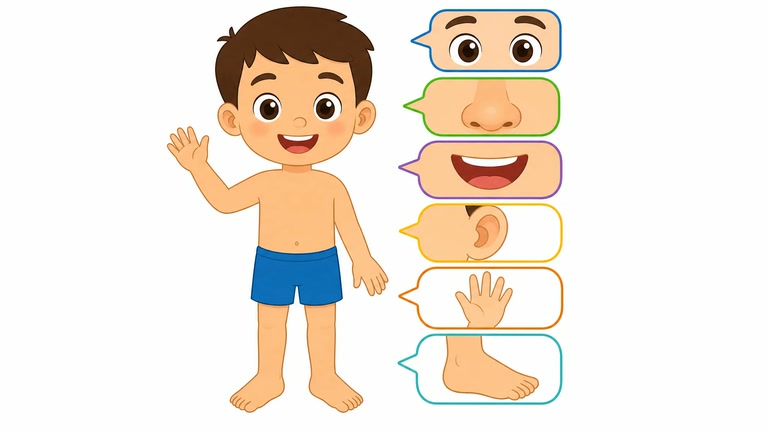
- Free printableBody parts printablesPicture cards for naming body parts, one of the first tact sets in many programs.
- Free printablePrepositions activitiesScenes for tacting in, on and under once nouns are stable.
- Free printableReceptive language activitiesThe listener side of the same vocabulary, for teaching both halves of each word.
- GuideABA therapy guideHow tacting fits with manding, echoics and intraverbals in a verbal behavior program.
Independent guide by SuperChild, not affiliated with the publisher or authors. Use the official protocol to administer and score.
Written from the publishers’ own materials and published research. Spotted an error? Email contact@superchild.ai and we’ll fix it.