
What kind of questions are on the RBT exam?
The RBT exam has 85 multiple-choice questions and a 90-minute time limit. Most RBT exam questions are short scenarios about a learner, a session or a supervisor, each with four choices and one correct answer. Only 75 questions are scored. The other 10 are unscored pilot questions that look exactly like the rest.
Since 2026 the exam follows the RBT Test Content Outline (3rd ed.), which replaced the old RBT Task List. It has 43 tasks in six domains. This is how the 75 scored questions are split:
| Domain | Scored questions | Share |
|---|---|---|
| A. Data Collection and GraphingContinuous and discontinuous measurement, permanent products, writing observable definitions, calculating rate and percentage, reading trends, and why sloppy data is a risk.13 scored questions17% | 13 | 17% |
| B. Behavior AssessmentPreference assessments, your part in skill assessments such as the VB-MAPP or ABLLS-R, and functional assessment: ABC data, descriptive assessment and functional analysis.8 scored questions11% | 8 | 11% |
| C. Behavior AcquisitionReinforcement and schedules, conditioned reinforcers, discrete-trial and naturalistic teaching, chaining, discrimination training, prompting and fading, generalization, maintenance, shaping and token economies.19 scored questions25% | 19 | 25% |
| D. Behavior ReductionThe functions of behavior, antecedent interventions, differential reinforcement, extinction and its side effects, punishment, and crisis procedures.14 scored questions19% | 14 | 19% |
| E. Documentation and ReportingPassing concerns to your supervisor in time, asking for clinical direction, reporting things that affect progress (illness, medication, schedule changes) and writing objective session notes.10 scored questions13% | 10 | 13% |
| F. EthicsThe RBT Ethics Code (2.0): competence, supervision, confidentiality, social media and public statements, multiple relationships, gifts, professional skills and cultural humility.11 scored questions15% | 11 | 15% |
| Total75 scored questions · 100% | 75 | 100% |
Behavior Acquisition is the biggest block, a quarter of the exam. Data Collection and Graphing and Behavior Reduction come next. Behavior Assessment is the smallest, but it’s still eight questions you can’t afford to guess on.
How is the RBT exam scored, and is it hard to pass?
The RBT exam is scored pass/fail, and you see your result at the testing center when you finish. Every question carries the same weight, and the result depends on your overall performance, not on each domain. A weak domain won’t fail you on its own, but it costs points you’ll need to find somewhere else.
The BACB sets the passing score with the modified Angoff method: a panel of certified behavior analysts decides how a just-qualified behavior technician would do on the questions. The BACB doesn’t publish the cut score as a percentage, so be careful with any site that tells you the exact number you need.
Is the RBT test hard? It isn’t a vocabulary quiz. Most questions put a term inside a short scenario and ask what you would do, so knowing the definition isn’t enough. People who struggle usually mix up close pairs, such as DRA and DRO or negative reinforcement and punishment, or forget that some decisions belong to the supervisor.
On this practice test we use 80% as our study target. It isn’t the BACB’s number, and a score here can’t predict your exam result: the questions are our own, and a repeat mock can feel easier simply because you’ve seen some questions before. Use it to decide what to study next, not as proof you’re ready.
- A blank answer is a wrong answer. If time is running out, pick something for every question.
- If you don’t pass, you can retake the exam. You get up to 8 attempts within 12 months of your application being approved, with at least 7 days between attempts.
- You take the exam at a Pearson VUE testing center, in English. In 2026 the BACB application fee is $65 and the Pearson VUE exam appointment is $45.
Checked against the BACB RBT Handbook and the RBT Test Content Outline on . Fees and rules change, so check the handbook before you apply.
How to use this free RBT practice test
This free RBT practice test has two modes. The full mock exam copies the real format: 85 questions in the same domain mix, a 90-minute clock and your answers at the end. Practice by domain is for learning: you pick one domain and read the explanation right after every answer.
On the mock, you can skip questions, flag them and come back, just like on test day. The score report then shows how you did in each domain. Take those weak domains into practice mode, where the explanation after each answer shows why the right choice is right.
Your progress is saved in this browser, so if you close the tab you can pick up where you left off. On the mock the clock keeps running, just as it would at the testing center.
How to study for the RBT exam: a three-week plan
The most efficient way to study for the RBT exam is to let a full mock show you your weak domains and study those first. This three-week RBT study plan assumes you’ve finished your 40-hour training and have 30 to 45 minutes a day. Stretch it if you have less time; don’t squeeze it.
- Day 1: take the full mock cold, without notes. The score doesn’t matter yet. The domain report does: it tells you where to spend your time.
- Days 2 to 7: work through your two weakest domains in practice mode. Read every explanation, including on the questions you got right. Write down each term you couldn’t define without looking.
- Days 8 to 14: cover Behavior Acquisition and Behavior Reduction properly, since together they’re 44% of the exam. Say the differences out loud: shaping vs chaining, DRA vs DRO, negative reinforcement vs punishment, extinction burst vs spontaneous recovery.
- Day 15: take the full mock again. Compare the domain report with day 1.
- Days 16 to 20: read the RBT Ethics Code (2.0) end to end, practice Documentation and Reporting, and redo every question you missed on either mock.
- Day 21: one last mock. If you’re consistently at 80% or above and your supervisor agrees you’re ready, book the exam. If not, give your weakest domain one more week.
Your supervisor is part of your study plan too. Ask them to watch you run a preference assessment, a prompting procedure and a data sheet before the exam. Doing it in front of someone who gives you feedback sticks better than reading about it. For the data side, print a real ABC or frequency sheet from the free ABA data sheet generator and fill it in on a short video.
RBT exam tips for test day
On RBT exam day, pacing and careful reading matter most. The 90 minutes include the tutorial, so you have a little under a minute per question. Flag hard questions and come back, watch for words like BEST and FIRST, and when a question goes beyond an RBT’s role, the answer usually involves the supervisor.
- The 90 minutes include the terms and conditions and the tutorial, so you have a little under a minute per question. Don’t spend three minutes on one.
- Flag the hard ones and move on. Coming back with a fresh head often makes the answer obvious.
- Watch for words like BEST, FIRST and MOST LIKELY. More than one choice may be true. Only one answers the question asked.
- When a question is about something outside your role, the answer usually involves your supervisor. RBTs implement the plan; they don’t design or change it.
- Arrive about 30 minutes early. If you’re more than 30 minutes late, you won’t be allowed to test and you lose the appointment fee.
RBT outside the US: the UK, Australia and other behavior technician credentials
The RBT is a US credential issued by the Behavior Analyst Certification Board (BACB). Some behavior technicians in the UK, Ireland and Australia hold the RBT, but the BACB has narrowed who it certifies outside the US and Canada, so check the current RBT Handbook for your country before you pay for training or book the exam.
- United Kingdom: the UK Society for Behaviour Analysis (UK-SBA) runs the UK register of behaviour analysts, with the UKBA(cert) credential. It registers analysts, not technicians, and there is no UK-specific technician exam that mirrors the RBT. ABA tutors and behaviour technicians in the UK are usually trained by their employer and supervised by a behaviour analyst.
- QABA: the Qualified Applied Behavior Analysis Credentialing Board offers the Applied Behavior Analysis Technician (ABAT) credential, alongside QASP-S and QBA for supervisors and analysts. QABA credentials are also available outside the US, so the ABAT is a common alternative for technicians who can’t get the RBT.
- IBAO: the International Behavior Analysis Organization offers the International Behavior Analyst (IBA) credential, an analyst-level option designed for practice outside the US.
- Australia: some technicians hold the RBT, and ABA programs are usually supervised by a BCBA or a QBA. Many families fund early intervention through the NDIS, which doesn’t require the RBT; providers set their own training and supervision standards for therapy assistants.
The behavior science is the same everywhere, so these practice questions are useful revision for the ABAT or an ABA tutor role too. The exam facts on this page, such as the fee, the attempts and Pearson VUE, apply only to the BACB’s RBT.
What does an RBT do after the exam?
A Registered Behavior Technician (RBT) delivers ABA services under the close supervision of a BCBA or BCaBA. An RBT runs the teaching and behavior-reduction procedures in the plan, collects and graphs data and reports to the supervisor, but doesn’t design or change the plan. Many RBTs work one to one with young autistic children.
Much of the exam maps straight onto that work. Data Collection and Graphing is the sheets you fill in every session, like the free ABA data sheets, and the graphs your supervisor reads, like the ones the ABA graph maker draws. You may also be the second observer in an IOA check, which the IOA calculator works out. Behavior Assessment includes your part in skill assessments such as the VB-MAPP; see how the VB-MAPP compares with the ABLLS-R, PEAK and AFLS.
Most of what this exam tests, you’ll do every day: running teaching trials, prompting and fading, delivering reinforcement at the right moment, and writing down what happened. The exam checks that you know the rules. The job is doing them consistently, with a child who may be tired, distracted or having a hard day.
That’s where SuperChild comes in. It’s practice software used by BCBAs and their teams. The behavior analyst picks the targets, for example from the VB-MAPP. The child then practices them in small, clear steps on a tablet, guided by an AI coach that prompts, fades and reinforces the same way every time, and every trial is recorded. The RBT stays with the child, and the BCBA keeps oversight of the program and every decision in it. See how SuperChild works for BCBAs and ABA teams.
SuperChild for professionalsThe VB-MAPP practice libraryHow it works
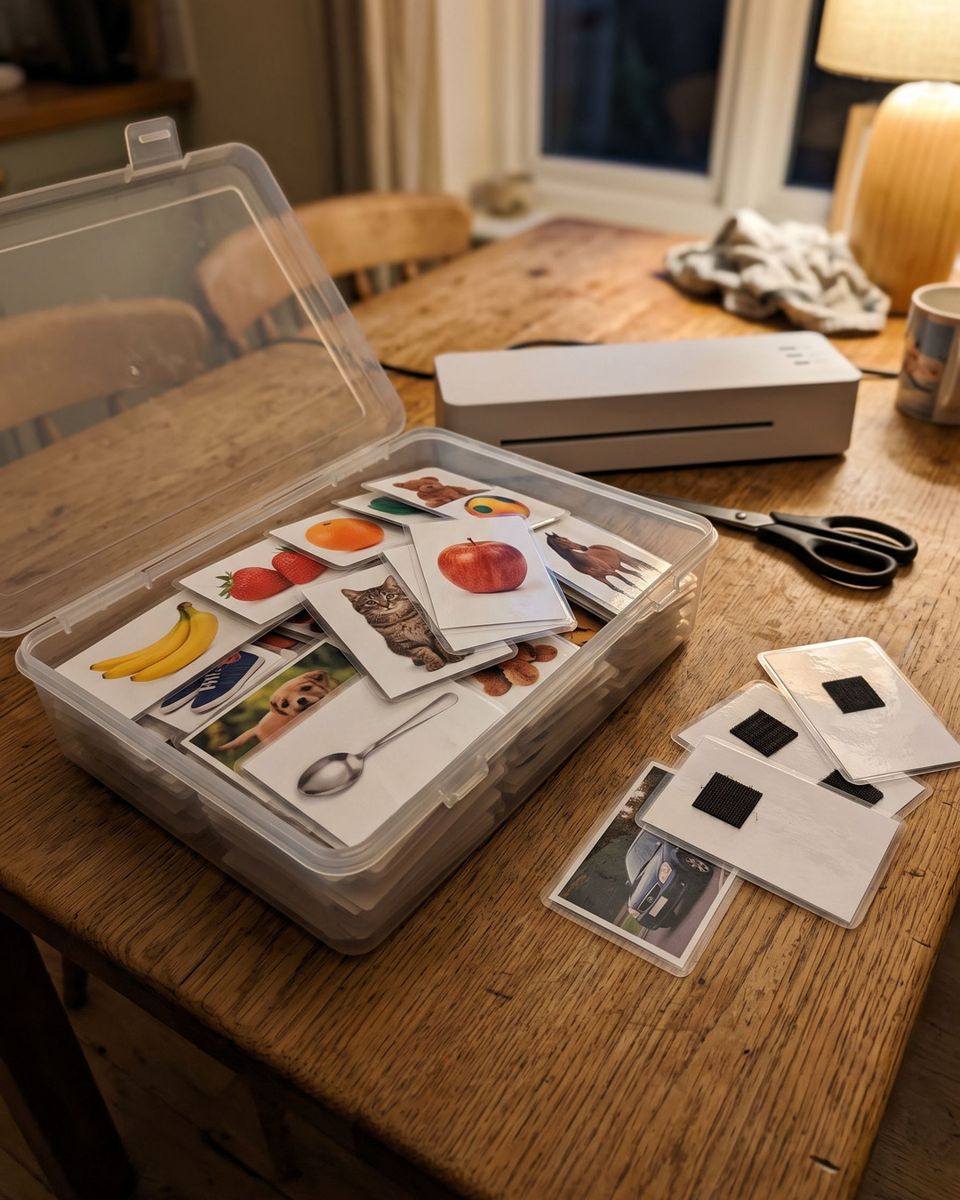
Free download1 ZIP · 94 packs
All 94 printable skill packs, free
Listening, matching, math, reading and more, one skill per pack, each with an adult guide, practice rounds and a log.