
Which ABA assessment should you use? Pick by learner profile
The right ABA assessment depends on the learner: the VB-MAPP for early learners with little language, the ABLLS-R for broad tracking that includes academics and self-help, PEAK for learners who need generalization, the AFLS for functional life skills, and Essential for Living for learners with limited speech and higher support needs.
- Early learner with little language → VB-MAPP
- A young child (or older learner) who is just starting to request, imitate and follow simple directions. The VB-MAPP’s developmental milestones and barriers assessment show where to start and what is in the way.
- Broad curriculum tracking incl. academics and self-help → ABLLS-R
- A learner who needs a wide map across language, play, group skills, reading, math, dressing and eating, tracked on one grid for years. See the ABLLS-R guide.
- Has the basics, needs generalization and derived responding → PEAK
- A learner who labels and follows directions but learns everything one item at a time and doesn’t combine or transfer skills. PEAK’s equivalence and transformation modules target that.
- Older learner, teen or adult, or functional life skills → AFLS
- Someone preparing for more independence at home, at school, in the community or at work. See the AFLS assessment guide.
- Limited vocal language and moderate-to-severe disabilities → Essential for Living
- A child or adult who needs a reliable way to communicate, tolerate everyday situations and complete essential daily routines, often alongside problem behavior. See the Essential for Living guide.
VB-MAPP vs ABLLS-R vs PEAK vs AFLS vs Essential for Living at a glance
The VB-MAPP, ABLLS-R, PEAK, AFLS and Essential for Living differ in theory, size and scoring. The VB-MAPP has 170 milestones, the ABLLS-R 544 skills in 25 areas, PEAK four modules of 184 programs, the AFLS six protocols, and Essential for Living a functional curriculum built around the Essential Eight.
Five ABA assessments compared
VB-MAPP
- Built on
- Skinner’s verbal behavior, typical development
- Best fit
- Early learners, little language
- Ages/levels
- Skills of 0–48 months, 3 levels
- Structure
- 170 milestones, 16 domains; 24 barriers; 18 transition areas
- Scoring
- Milestones 0, ½ or 1; color grid per round
ABLLS-R
- Built on
- Skinner’s verbal behavior, skills curriculum
- Best fit
- Broad tracking incl. academics, self-help
- Ages/levels
- Skills up to kindergarten entry
- Structure
- 544 skills, 25 areas (A–Z)
- Scoring
- Per-item criteria; shaded tracking grid
PEAK
- Built on
- Verbal behavior plus relational frame theory
- Best fit
- Has basics, needs generalization and derived responding
- Ages/levels
- Early learners to older learners
- Structure
- 4 modules, 184 items each
- Scoring
- Direct testing of items; pre-assessment per module
AFLS
- Built on
- Functional skills, task analysis
- Best fit
- Teens, adults, functional life skills
- Ages/levels
- Childhood through adulthood
- Structure
- 6 protocols (basic living, home, community, school, independent living, vocational)
- Scoring
- Per-item criteria; shaded tracking grid
Essential for Living
- Built on
- Skinner’s verbal behavior, functional skills
- Best fit
- Limited speakers, moderate-to-severe disabilities
- Ages/levels
- Children through adults
- Structure
- Communication, daily living, tolerating and problem behavior focus; “Essential Eight” skills
- Scoring
- Skill-based ratings in its own system
Worked examples: which assessment for which learner
Three typical learners show how the choice of ABA assessment works in practice: a 3-year-old with a few words starts with the VB-MAPP, a 6-year-old who labels well but cannot answer questions needs VB-MAPP intraverbal data and possibly PEAK, and a 14-year-old preparing for community life fits the AFLS or Essential for Living.
- A 3-year-old with a few words
- Maya says “up” and “juice”, uses two signs to request and leads adults by the hand. Start with the VB-MAPP. Its Level 1 milestones cover exactly her skills (requesting, imitating, matching, early listening), the EESA checks her echoic skills, and the Barriers Assessment flags things like prompt dependency early. Add parts of the ABLLS-R later if the team wants finer tracking of self-help or play. A PECS book printable can support her picture requests in the meantime.
- A 6-year-old who labels 200 items but can’t answer questions
- Leo names almost everything in a picture book but stares blankly at “What do you eat with?” He has strong tacts and weak intraverbals and LRFFC skills. A VB-MAPP will show the gap clearly in Levels 2 and 3. If the team suspects he memorizes item by item and doesn’t generalize, PEAK’s generalization and equivalence modules are a strong next step. The ABLLS-R intraverbal area also gives a detailed sequence to teach from, and feature, function and class activities or WH questions printables give his team ready practice materials.
- A 14-year-old preparing for community life
- Sam reads simple words, but needs help shopping, using money and making a snack. The AFLS fits best: the Community Participation, Home Skills and Independent Living protocols map onto his real week. If his communication is very limited and he has frequent problem behavior around transitions, Essential for Living may be the better first tool, because it starts with communication and tolerating everyday situations.
Can you use the VB-MAPP and ABLLS-R together?
Yes: many teams combine ABA assessments, using one main tool for planning and progress reports and pulling areas from a second only where it fills a gap. The most common pairs are VB-MAPP with ABLLS-R, VB-MAPP with PEAK, ABLLS-R with AFLS, and AFLS with Essential for Living.
The tools overlap in places but answer different questions. Keep one main tool for progress reports so the numbers stay comparable over time.
Common combinations:
- VB-MAPP plus ABLLS-R: VB-MAPP milestones and barriers for planning, ABLLS-R areas for academics, self-help and long-term tracking.
- VB-MAPP plus PEAK: VB-MAPP for early verbal skills, PEAK once the learner needs generalization and derived relational responding.
- ABLLS-R plus AFLS: same author and similar grids, so teams move from one to the other as a learner grows, or use the AFLS Basic Living Skills protocol alongside the ABLLS-R.
- AFLS plus Essential for Living: functional skills from the AFLS, with Essential for Living’s focus on communication and tolerating situations for learners with limited speech.
What do insurers and funders expect?
US insurers usually expect a recognized curriculum-based or standardized assessment in every ABA treatment plan, repeated at each reauthorization. The VB-MAPP, ABLLS-R, AFLS and PEAK are all commonly used in treatment plans, often next to an adaptive measure such as the Vineland, and requirements differ by payer, state and plan.
Requirements change, so check each payer’s current medical policy or provider manual before choosing, and ask the case manager if a specific tool is expected.
Outside the US, funders rarely name a tool. In England, VB-MAPP or ABLLS-R results are often used as evidence of special educational needs (SEN) and to write outcomes in a child’s Education, Health and Care Plan (EHCP). In Australia, NDIS-funded early intervention providers use them to set plan goals and report progress at plan reviews. Schools and EU funders set their own rules.
Who administers these assessments outside the US?
Outside the US, the VB-MAPP, ABLLS-R, PEAK, AFLS and Essential for Living are administered by behaviour analysts and allied professionals trained in ABA: BCBAs and BCaBAs, behaviour analysts on the UK-SBA register, QABA and IBAO credential holders, and speech and language therapists in the UK and Ireland or speech pathologists in Australia.
None of the five is a restricted test, but each assumes training in applied behavior analysis, and scoring is only as good as the assessor’s practice. The credentials you will see most often:
- BCBA and BCaBA: Behavior Analyst Certification Board (BACB) credentials, held by many behaviour analysts in the UK, Ireland and Australia.
- UKBA(cert): the UK Society for Behaviour Analysis (UK-SBA) runs the UK register of behaviour analysts.
- QABA: the Qualified Applied Behavior Analysis Credentialing Board certifies QBA (analysts), QASP-S (supervisors) and ABAT (technicians).
- IBA: the International Behavior Analyst credential from the International Behavior Analysis Organization (IBAO).
- Speech and language therapists (SLTs) in the UK and Ireland and speech pathologists in Australia often run the VB-MAPP language domains or co-assess with the behaviour analyst.
- RBTs and ABA technicians usually run the daily programs that come out of these assessments. Preparing for the RBT exam? Take our free RBT practice test.
What none of these assessments do
None of the VB-MAPP, ABLLS-R, PEAK, AFLS or Essential for Living is a diagnostic test for autism or an IQ test. All five are mainly criterion-referenced: they show which skills a learner has and which to teach next. For a standardized developmental profile of a young autistic child, some teams add the PEP-3.
They also don’t teach anything by themselves. The result is only as useful as the practice that follows, which is where most programs struggle for time.
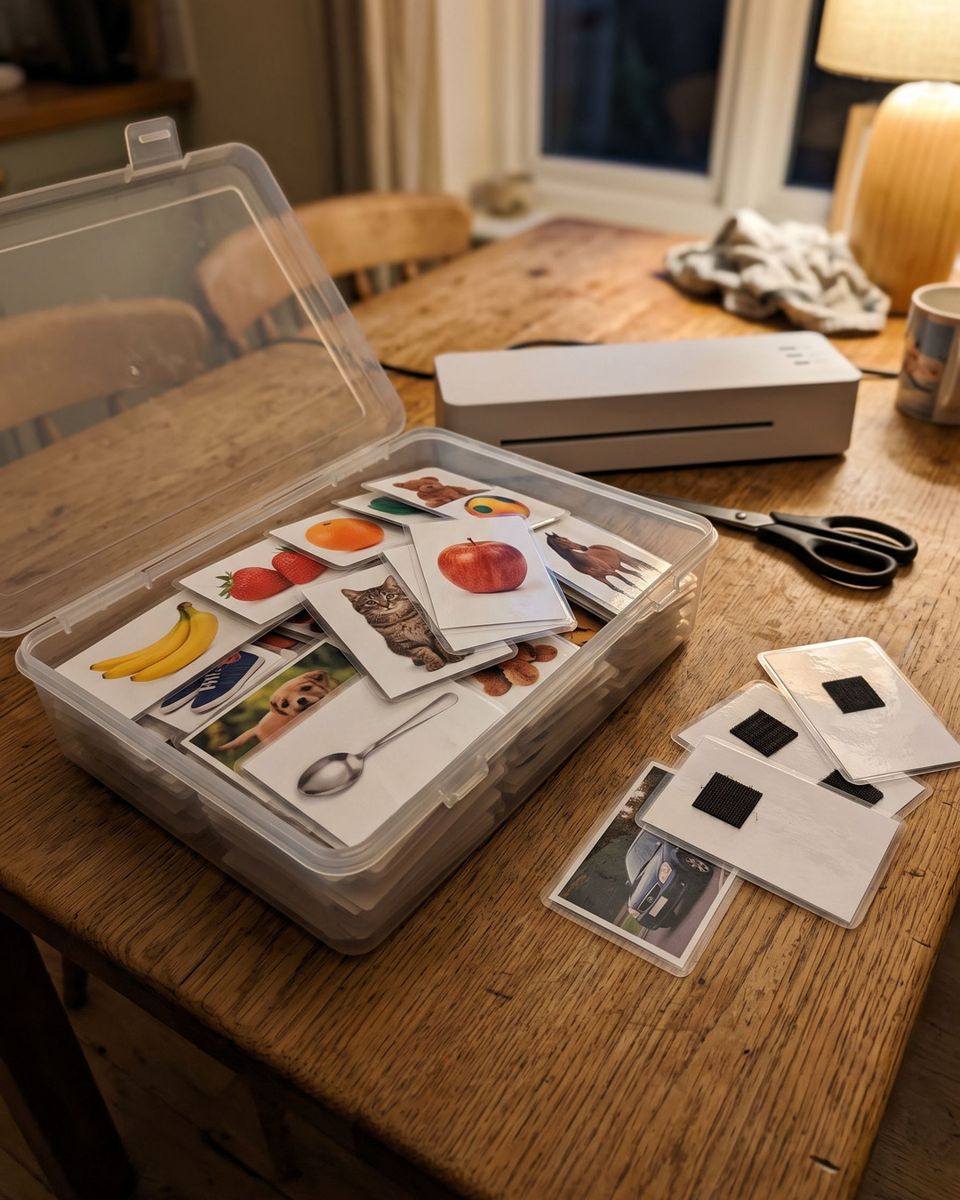
Free download1 ZIP · 94 packs
All 94 printable skill packs, free
Listening, matching, math, reading and more, one skill per pack, each with an adult guide, practice rounds and a log.
Sources
Cite this page
Citation (APA style)
SuperChild. (2026). VB-MAPP vs ABLLS-R vs PEAK vs AFLS: which assessment to use. Retrieved from https://superchild.ai/assessments/vb-mapp-vs-ablls-r-vs-peak-vs-afls
Link for your website
<a href="https://superchild.ai/assessments/vb-mapp-vs-ablls-r-vs-peak-vs-afls">VB-MAPP vs ABLLS-R vs PEAK vs AFLS: which assessment to use</a> (SuperChild)