On this page
- What is early intervention for autism spectrum disorder?
- Why is early intervention important for autism?
- How to get early intervention services for autism
- Early intervention therapy for autism: the main approaches
- How many hours of early intervention does an autistic toddler need?
- What does early intervention for autism look like in a typical week?
- Early intervention autism strategies for home: practice between sessions
- Which assessments are used to set early intervention goals?
- Choosing autism early intervention programs
What is early intervention for autism spectrum disorder?
Early intervention for autism spectrum disorder is individualized therapy and family support for autistic children, typically from birth to age 5, that targets communication, social interaction, play, daily living and learning skills during the years when development moves fastest.
Early intervention is not one therapy. It is a team and a plan: a speech-language pathologist, an occupational therapist, a developmental educator, sometimes a BCBA, and you. The plan names a few goals your child is ready for next, such as looking where you point, asking for juice with a word, sign or picture, or putting on socks.
In the US, the federal Individuals with Disabilities Education Act (IDEA) sets up two stages. Part C Early Intervention serves infants and toddlers from birth to their third birthday, and the plan is called an Individualized Family Service Plan (IFSP). Part B serves children from 3 through school age through the local school district, and the plan becomes an Individualized Education Program (IEP). Private therapy paid by insurance, such as ABA therapy, often runs alongside.
Good early intervention is delivered with families, not just to children. Part C services are meant to happen in natural environments, which usually means your home or your child’s daycare, so the strategies fit the routines you already have.
Why is early intervention important for autism?
Early intervention is important for autism because the brain is most adaptable in the first years of life, and children who start support earlier tend to make more progress in communication, social and daily-living skills than those who start later.
Between birth and 3, a child’s brain forms connections faster than at any other time. Joint attention (sharing focus with another person), imitation and early requests are building blocks for language and learning, and each new skill opens doors to the next.
Research supports starting early, with honest limits. A randomized trial of the Early Start Denver Model with toddlers aged 18 to 30 months found gains in IQ, language and adaptive behavior compared with community care. Reviews of the wider field find benefits for many children, but results vary widely and study quality is mixed. No program cures or reverses autism. The realistic goal is a child who communicates more, joins in more and copes better with daily life, and a family that feels equipped.
There is also a practical reason. Diagnosis waiting lists can run many months, and Part C does not require a diagnosis in most states, so your child can keep learning while you wait.
How to get early intervention services for autism
To get early intervention services for autism in the US, contact your state’s Part C Early Intervention program directly or ask your pediatrician to refer you; the program will evaluate your child for free and, if they qualify, write an IFSP with you within 45 days of referral.
The pathway looks the same in most states, even though program names differ. Here is each step, from first worry to first session and beyond.
- 1Notice and write down your concernJot down specific examples: “doesn’t point,” “lines up cars for an hour,” “stopped saying mama.” Short phone videos help professionals see what you see.
- 2Screening at the pediatricianThe American Academy of Pediatrics recommends autism-specific screening with the M-CHAT-R/F at the 18- and 24-month well visits, plus general developmental screening at 9, 18 and 30 months. Ask for it any time you are worried.
- 3Referral to Part C (you can self-refer)You don’t need a doctor’s note to call your state Early Intervention program. A positive screen or your concern is enough to request an evaluation.
- 4Evaluation and eligibilityA team assesses communication, motor, cognitive, social-emotional and adaptive skills. Eligibility is based on developmental delay or a diagnosed condition, as defined by each state, so many toddlers qualify before any autism diagnosis.
- 5Write the plan: IFSP before 3, IEP from 3You sit with the team to agree on outcomes, services, hours and where they happen. From age 3, the school district writes an IEP instead. See IEP goals for autism for what strong goals look like.
- 6Services start, then reviewThe IFSP is reviewed at least every six months and fully re-evaluated each year. If a goal is met or isn’t moving, ask to change it rather than waiting for the next review.
What happens at age 3: the move from Part C to Part B
Part C ends at your child’s third birthday. Your service coordinator must hold a transition conference with you and the school district at least 90 days before then. The district evaluates your child and, if they are eligible for special education, writes an IEP that starts by their birthday.
The style often changes. Part C is family-centered and usually home-based; Part B preschool is usually classroom-based, with goals tied to school readiness. Bring your IFSP progress notes and any private assessments to the IEP meeting.
Early intervention programmes for autism in the UK and Australia
UK: Concerns usually go to your health visitor or GP, who can refer your child to the local NHS child development or autism assessment team. NICE guidance recommends play-based social communication support delivered with parents. Your local authority handles early years special educational needs support and, if needed, an Education, Health and Care (EHC) needs assessment.
Australia: The NDIS early childhood approach supports children younger than 6 with developmental delay, and children younger than 9 with disability, through local early childhood partners. A diagnosis is not needed to get early supports for a young child with delays.
Early intervention therapy for autism: the main approaches
The main early intervention therapies for autism are ABA-based programs (EIBI, DTT and NET), naturalistic developmental behavioral interventions (ESDM, JASPER, PRT), speech-language and occupational therapy, parent-mediated programs, developmental approaches such as DIR/Floortime, and TEACCH structured teaching.
Most children get a blend rather than one brand. The approaches differ mainly in who leads the moment (adult or child), how structured the teaching is and how much parents are coached.
Early intervention approaches for autism compared
ABA-based (EIBI, DTT, NET)
- What it looks like
- Skills broken into small steps and taught with prompts and reinforcement, from table-top discrete trials to play-based natural environment teaching.
- Typical setting and dose
- Home or center, often 10–40 hrs/week, led by a BCBA with RBTs.
- Evidence, briefly
- EIBI has research support for some gains, though reviews rate study quality as low to moderate.
NDBIs (ESDM, JASPER, PRT)
- What it looks like
- Teaching inside play and routines, following the child’s interests, using behavioral teaching methods and developmental targets.
- Typical setting and dose
- Home, clinic or preschool; a few to 20+ hrs/week, with strong parent coaching.
- Evidence, briefly
- Among the more promising evidence bases in recent reviews, especially for social communication.
Speech-language therapy
- What it looks like
- Building understanding, gestures, words or AAC, and back-and-forth communication.
- Typical setting and dose
- Often 1–2 sessions a week, plus home strategies.
- Evidence, briefly
- Core part of almost every plan; methods vary.
Occupational therapy
- What it looks like
- Fine motor, self-care (feeding, dressing), play skills and sensory regulation.
- Typical setting and dose
- Often weekly sessions at home or clinic.
- Evidence, briefly
- Supports daily living; evidence for specific sensory techniques is mixed.
Parent-mediated (Hanen More Than Words, PACT)
- What it looks like
- A therapist coaches you, often with video feedback, to use strategies during your own routines.
- Typical setting and dose
- Group or individual sessions over weeks to months; practice happens daily at home.
- Evidence, briefly
- PACT showed lasting effects on parent-child interaction in follow-up; coaching is central to most models.
DIR/Floortime
- What it looks like
- Following the child’s lead in play to grow engagement and “circles of communication.”
- Typical setting and dose
- Home and clinic, often with parents leading play.
- Evidence, briefly
- Smaller and less rigorous evidence base so far.
TEACCH structured teaching
- What it looks like
- Visual schedules, organized spaces and work systems that make tasks predictable.
- Typical setting and dose
- Classrooms and homes, woven into the day.
- Evidence, briefly
- Some support, mostly for independence and classroom routines.
| Approach | What it looks like | Typical setting and dose | Evidence, briefly |
|---|---|---|---|
| ABA-based (EIBI, DTT, NET) | Skills broken into small steps and taught with prompts and reinforcement, from table-top discrete trials to play-based natural environment teaching. | Home or center, often 10–40 hrs/week, led by a BCBA with RBTs. | EIBI has research support for some gains, though reviews rate study quality as low to moderate. |
| NDBIs (ESDM, JASPER, PRT) | Teaching inside play and routines, following the child’s interests, using behavioral teaching methods and developmental targets. | Home, clinic or preschool; a few to 20+ hrs/week, with strong parent coaching. | Among the more promising evidence bases in recent reviews, especially for social communication. |
| Speech-language therapy | Building understanding, gestures, words or AAC, and back-and-forth communication. | Often 1–2 sessions a week, plus home strategies. | Core part of almost every plan; methods vary. |
| Occupational therapy | Fine motor, self-care (feeding, dressing), play skills and sensory regulation. | Often weekly sessions at home or clinic. | Supports daily living; evidence for specific sensory techniques is mixed. |
| Parent-mediated (Hanen More Than Words, PACT) | A therapist coaches you, often with video feedback, to use strategies during your own routines. | Group or individual sessions over weeks to months; practice happens daily at home. | PACT showed lasting effects on parent-child interaction in follow-up; coaching is central to most models. |
| DIR/Floortime | Following the child’s lead in play to grow engagement and “circles of communication.” | Home and clinic, often with parents leading play. | Smaller and less rigorous evidence base so far. |
| TEACCH structured teaching | Visual schedules, organized spaces and work systems that make tasks predictable. | Classrooms and homes, woven into the day. | Some support, mostly for independence and classroom routines. |
Every child is different. A good team chooses methods to fit the child’s goals, not the other way round.
ABA therapy in early intervention: EIBI, DTT and NET
Early intensive behavioral intervention (EIBI) is ABA delivered many hours a week to young children, traditionally 20 to 40 hours for one to three years. Sessions mix discrete trial training, short structured teaching turns at a table, with natural environment teaching during play. Modern ABA for toddlers leans heavily toward play-based, child-led teaching and should feel engaging, not drill-like. A BCBA writes the program and tracks data on each goal. Read the full ABA therapy guide for how sessions work.
Naturalistic developmental behavioral interventions (NDBIs)
NDBIs combine developmental science with behavioral teaching. The Early Start Denver Model (ESDM) is designed for children from about 12 to 48 months and teaches inside shared play, using its own curriculum checklist to set goals (see ESDM and PEP-3). JASPER targets joint attention, symbolic play, engagement and regulation. Pivotal Response Treatment (PRT) focuses on pivotal skills such as motivation and starting interactions, so gains spread to many other skills. All three coach parents to use the same strategies at home.
Speech, OT, parent programs, DIR/Floortime and TEACCH
Speech-language therapy is in almost every plan. Your SLP may introduce signs, pictures or a device; using AAC does not stop a child from talking. For late talkers, the speech delay guide explains what to watch. Occupational therapy works on self-care, fine motor and regulation. Hanen More Than Words is a group program for parents of autistic children 5 and under, and PACT uses video feedback to help parents tune into their child’s communication. DIR/Floortime follows the child’s lead, and TEACCH uses visual structure to make the day predictable.
How many hours of early intervention does an autistic toddler need?
There is no single right number: older intensive ABA research used 20 to 40 hours a week, the National Research Council recommended at least 25 hours a week of active engagement, and many Part C plans provide a few therapist hours a week while coaching parents to fill the rest of the day.
The numbers sound far apart because they count different things. The 2001 National Research Council report counted “active engagement” in planned learning, which can include preschool, therapy and coached family routines, not 25 hours of one-to-one therapy. Part C counts hours a professional is present; intensive ABA counts direct therapy hours.
What matters most is how many good learning opportunities your child gets across the day, and that the plan fits your child’s age, stamina and family life. Ask the team how the recommended hours will be spent and how progress will be measured.
What does early intervention for autism look like in a typical week?
A typical week of early intervention for a 2-year-old might include one home visit with an early intervention specialist, one speech session, one OT session, a few ESDM or ABA play-based blocks, a parent coaching session, and short 5 to 10 minute practice moments every day during meals, bath and play.
Here is one realistic week for Maya, age 2½, in Part C with an ESDM program funded through insurance. Your child’s week will differ, but the mix is typical: a few professional sessions, with family routines doing the heavy lifting.
- Professional sessions are usually 45 to 60 minutes; play-based ESDM or ABA blocks are often 2 to 3 hours with breaks.
- Parent coaching means the therapist watches you play, then suggests one change, such as waiting a few seconds before handing over the toy.
- Practice moments are tiny: three chances to ask for “more” during snack, or naming body parts in the bath.


Early intervention autism strategies for home: practice between sessions
The most useful early intervention strategies at home are short practice moments built into daily routines: set up a reason to communicate, wait, help just enough, celebrate right away, and use simple visual supports so your child knows what comes next.
Therapists see your child for a few hours a week. You see them for dozens. Practice between sessions turns those hours into learning without turning home into a clinic.
- 1Pick one goal and one routineAsk your therapist which goal is best for home this week, such as “asks for more” or “points to body parts.” Pair it with a routine that happens daily: snack, bath, dressing or play.
- 2Create a reason to communicatePut a favorite snack in a clear box, give one piece of puzzle at a time, or pause a song before the last word. Small sabotage invites your child to ask.
- 3Wait, then help just enoughCount silently to five. If nothing comes, model the word, sign or picture, or guide gently, then give the item straight away. Fade your help over the next few days.
- 4Make the day visibleUse a visual schedule for routines, a first-then board for tricky moments, and a token board once your child understands working toward a reward.
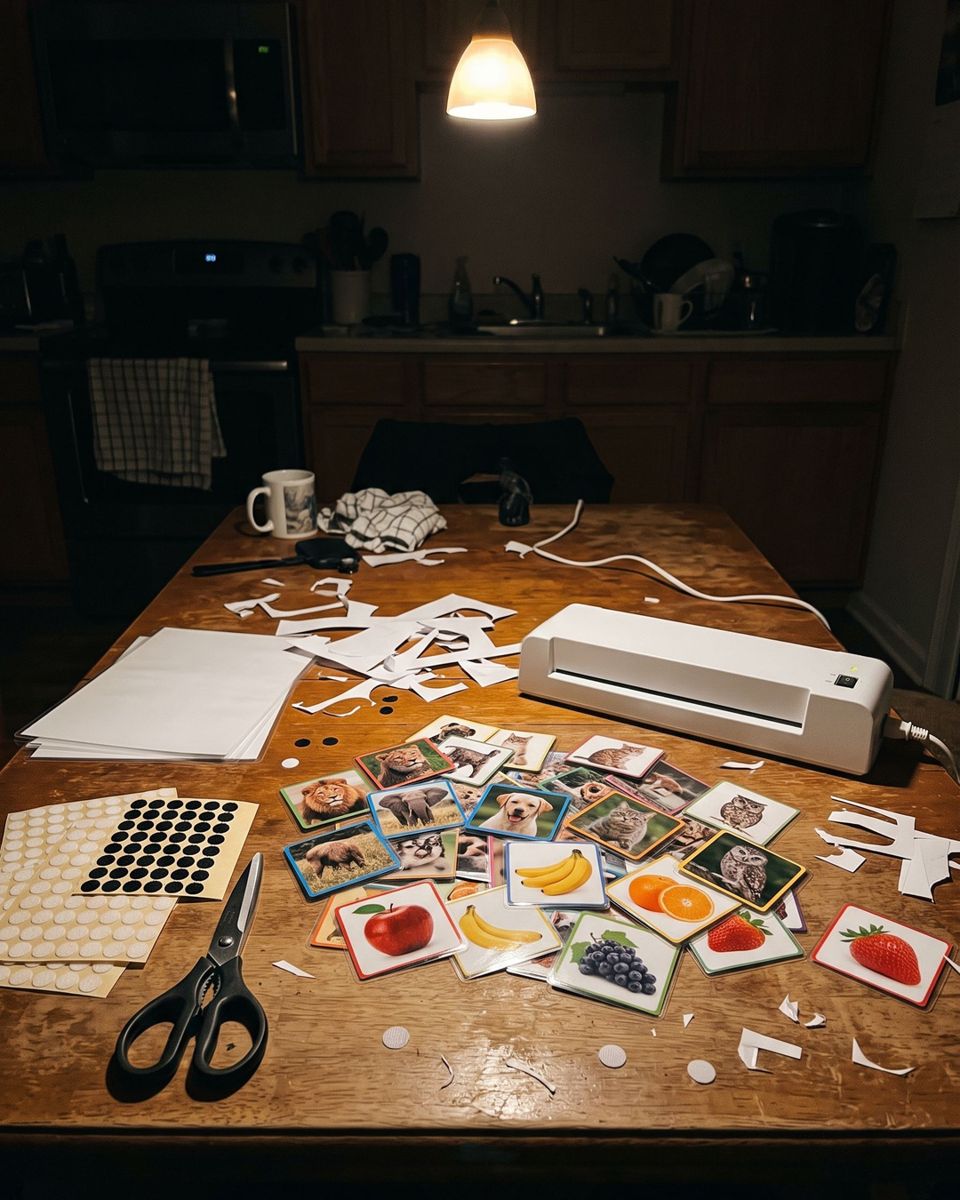
- 5Add a printable for table-timeTwo or three minutes with matching activities, receptive language cards or following directions pages gives focused practice on skills many plans target.
- 6Write down what happenedA tally on the fridge or a simple sheet from the ABA data sheet generator shows your team what your child did on their own and with help. That turns “he did great” into progress you can see.


- Free toolVisual schedule makerBuild a picture schedule for mornings, bath or bedtime and print it in minutes.
- Free toolFirst-then board makerPair a less-preferred task with something your child loves, in two clear pictures.
- Free printableMatching activitiesPicture matching from identical objects to color, shape and size, with a simple practice log.
- Free printableReceptive language activitiesPoint-to cards for everyday objects, food, clothing, animals, actions and colors.
Which assessments are used to set early intervention goals?
Early intervention teams set goals from developmental evaluations plus skill-based assessments such as the VB-MAPP, ABLLS-R or the ESDM Curriculum Checklist, which show what a child can already do and which skills come next.
Part C eligibility tools tell you whether your child qualifies. Curriculum assessments tell you what to teach. ABA providers usually use the VB-MAPP, which tracks language and learning milestones from 0 to 48 months, or the ABLLS-R, a detailed skills checklist. ESDM programs use the ESDM Curriculum Checklist, often alongside the PEP-3. Our comparison of VB-MAPP, ABLLS-R, PEAK and AFLS explains which fits which child.
Once you have results, the free VB-MAPP goal mapper turns a level and domain into plain-language goals and play ideas you can use at home. When your child moves to preschool, the IEP goals guide shows how to write measurable goals from the same data.
Choosing autism early intervention programs
A good autism early intervention program sets individual goals from a real assessment, teaches through play and routines your child enjoys, coaches you to use the strategies at home, measures progress and changes course when something isn’t working.
Whether you are comparing Part C providers, ABA centers or private therapists, ask the same questions.
- Goals: Which assessment did you use, and which three goals come first?
- Your child’s experience: Does my child seem happy and engaged in sessions? Can I watch?
- Coaching: How will you teach me to practice at home, and how often?
- Data: How do you measure progress, and when do we review it?
- Fit: How do speech, OT and behavioral goals connect, and who coordinates them?
- SuperChildSuperChild for parentsHow families use short, guided practice at home between therapy sessions.
- SuperChildSuperChild for professionalsHow BCBAs, SLPs and teachers set goals and review every recorded trial.
Red flags in autism treatment and early intervention claims
Be cautious of any autism treatment that promises recovery or a cure, demands payment up front for long packages, discourages questions, or relies on special diets, supplements or devices without good evidence. Reputable early intervention talks about goals, skills and progress, and respects your child as they are.
Free starter kit
The visual supports starter kit: 12 printables and a first-week plan
The visual supports early intervention teams usually bring into a home first, ready to print, with a day-by-day plan for adding them one at a time.
- Morning, bedtime and whole-day visual schedules, a first-then board and token boards.
- A picture exchange starter book and two social stories.
- A task box and three starter skill packs for matching, naming objects and yes/no.
Free download
Get the 12 PDFs free
Three quick answers and the PDFs open right here.
Sources
- Hyman SL, Levy SE, Myers SM, et al. Identification, Evaluation, and Management of Children With Autism Spectrum Disorder. Pediatrics, 2020 (AAP clinical report)
- IDEA Part C regulations: Early Intervention Program for Infants and Toddlers with Disabilities (US Department of Education)
- National Research Council. Educating Children with Autism. National Academies Press, 2001
- Dawson G, Rogers S, Munson J, et al. Randomized, controlled trial of an intervention for toddlers with autism: the Early Start Denver Model. Pediatrics, 2010
- Sandbank M, Bottema-Beutel K, Crowley S, et al. Project AIM: Autism intervention meta-analysis for studies of young children. Psychological Bulletin, 2020
- NICE. Autism spectrum disorder in under 19s: support and management (CG170)
Cite this page
Citation (APA style)
SuperChild. (2026). Early intervention for autism: how it works, how to get it and what a week looks like. Retrieved from https://superchild.ai/guides/early-intervention-autism
Link for your website
<a href="https://superchild.ai/guides/early-intervention-autism">Early intervention for autism: how it works, how to get it and what a week looks like</a> (SuperChild)