Free starter kit

Autism visual supports starter kit: 12 free printables and a first-week plan

One download with the visual aids most autistic children are taught with first: a visual schedule for mornings and bedtime, a first-then board, a token board, a picture exchange book, two social stories, a task box and three starter skill packs. Every PDF has a short adult guide and a log, and this page shows how to bring them in over one week, one support at a time.

By Ab Advany, founder of SuperChild · Published · Updated

Prefer your own pictures? Make your own visual schedule

Free download

Get the 12-PDF starter kit

Three quick answers and the PDFs open right here.

I am a

By getting the files you agree to our privacy policy. We’ll also send occasional practice tips; unsubscribe anytime.

Print in color on US Letter or A4. Laminate the cards you will handle every day.

What’s inside

12 printable PDFs in one download.

  • Visual schedules3 PDFs

  • First-then board1 PDF

  • Token boards1 PDF

  • Picture exchange book1 PDF

  • Social stories2 PDFs

  • Task box and skill packs4 PDFs

What are visual supports for autism?

Visual supports are pictures that show a child what is happening, what comes next and how to ask for something. Many autistic children understand a picture they can look at for as long as they need far better than spoken words that are gone in a second. That is why a visual schedule, a first-then board and picture cards are usually the first tools a speech therapist, BCBA or early intervention team brings into a home.

Each support in this kit answers one everyday problem. Start with the one that fits the hardest moment of your day, and add the next one only when the first is working.

Which visual support to use for which moment

Pick by the moment that goes wrong most often, not by the age of your child.

  • Transitions and “what happens now?”: the visual schedule. Morning and bedtime routines, plus a full-day picture board.
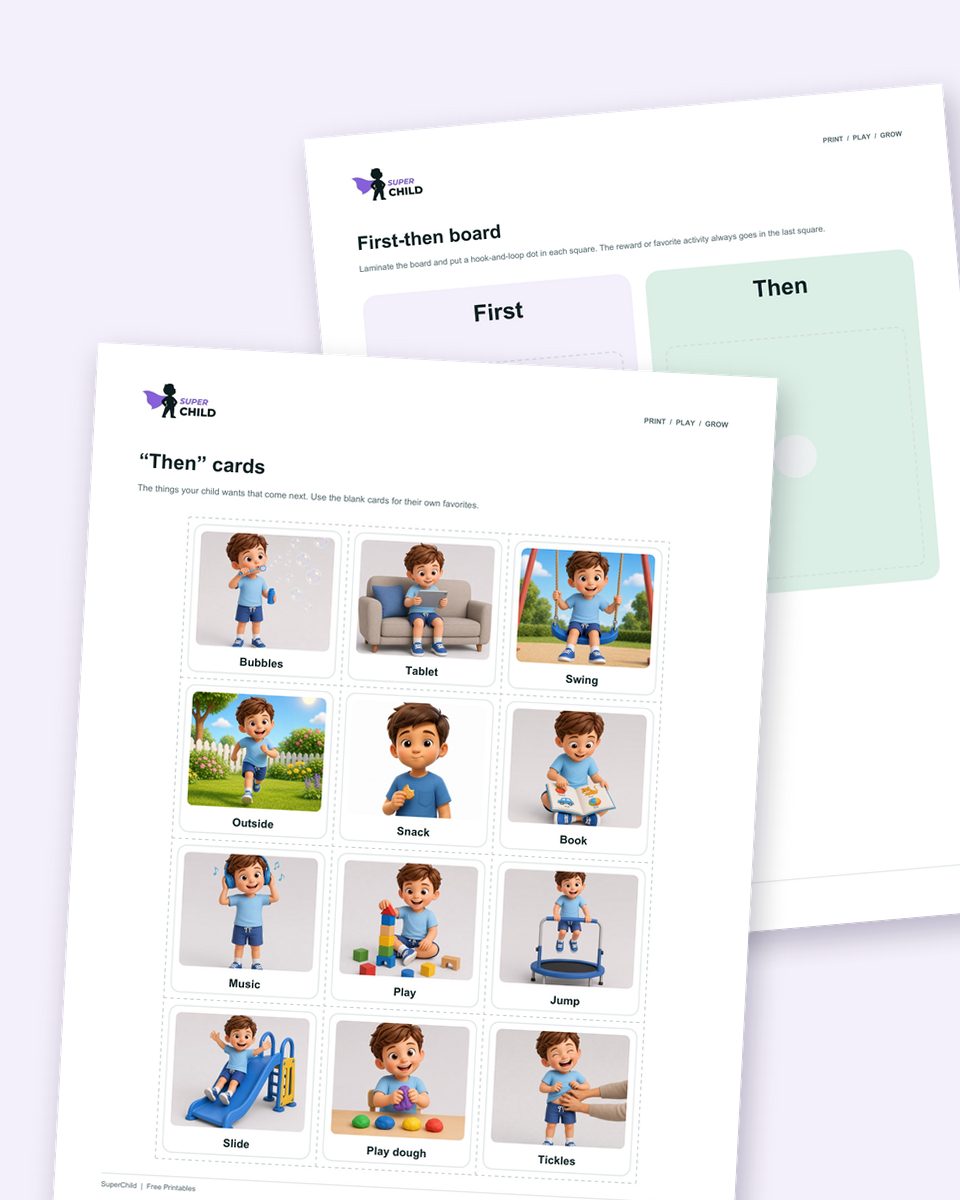
  • “I don’t want to”: the first-then board. One task, then one favorite thing, shown side by side.
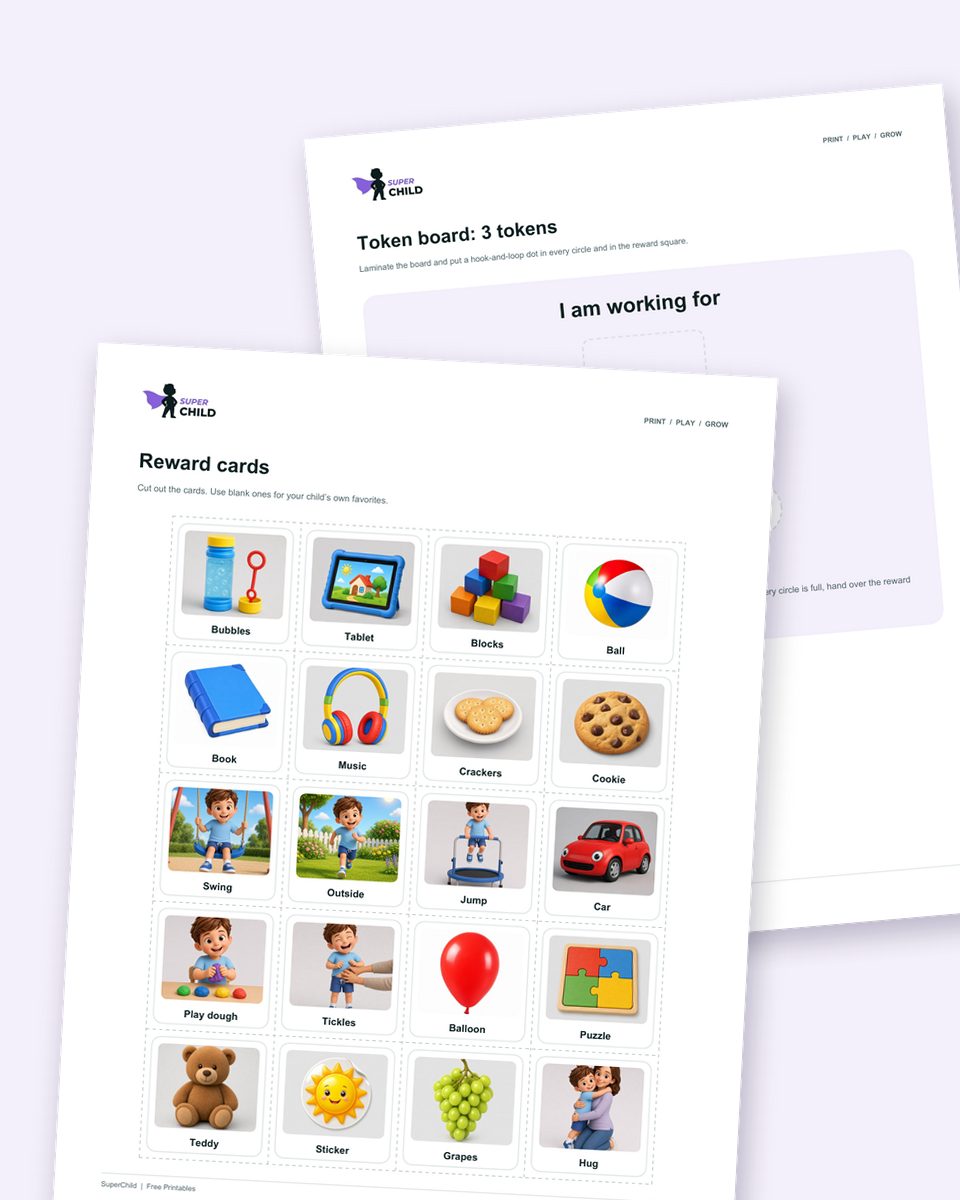
  • Waiting and staying with a task: the token board. Three stars to start, and the reward your child chose.
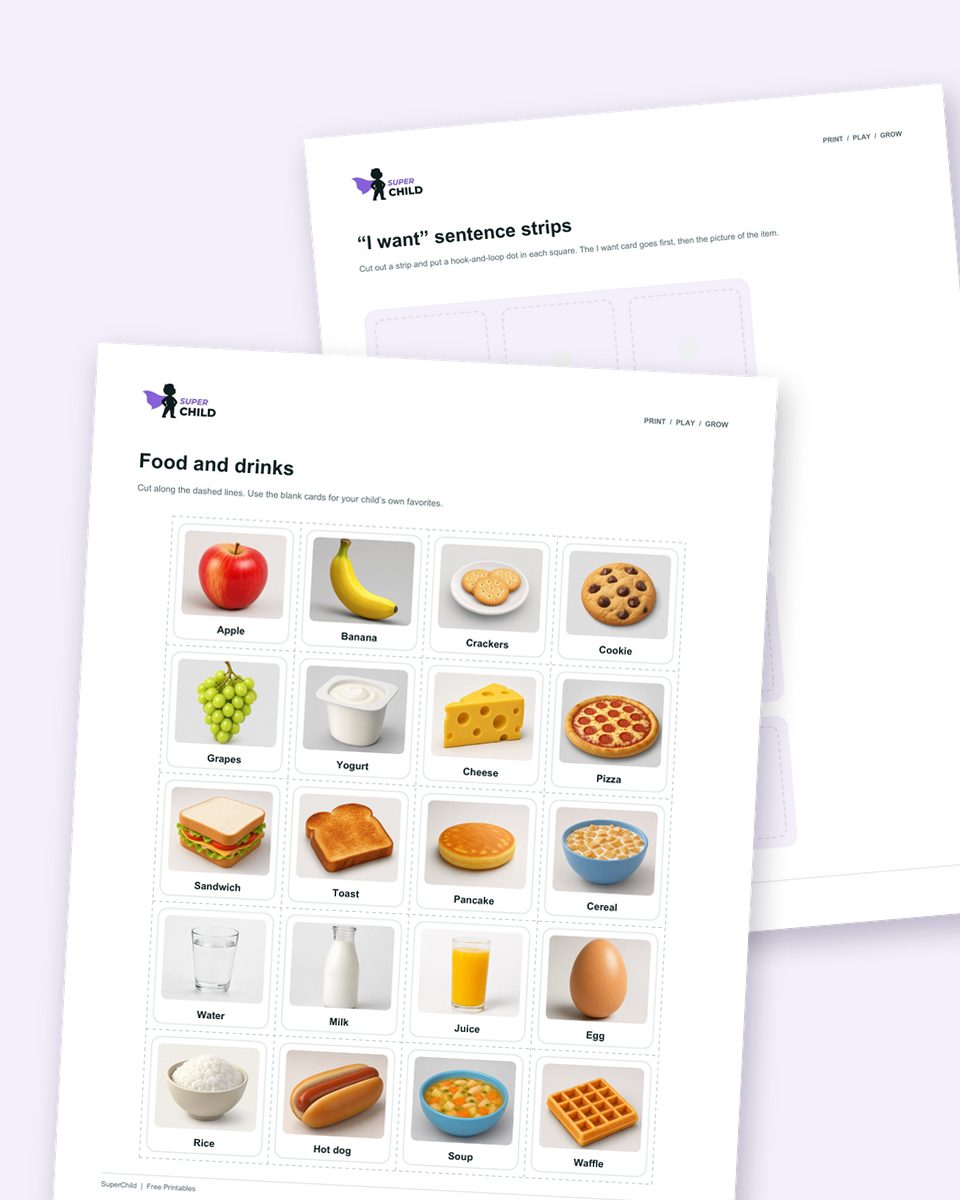
  • Asking without words: the picture exchange book. Your child hands you a picture and gets the snack or toy straight away.
  • New or hard situations: the social stories for washing hands and waiting for a turn, read before the moment, not during it.
  • Quiet work they can finish alone: the picture-matching task box, and three starter skill packs for matching, naming objects and yes/no questions.

Why bring them in one at a time

Everything in the kit works better when it is introduced slowly. A child who meets a schedule, a token board and a picture book on the same morning learns that the pictures are noise. Start with one support in one routine, use it the same way every day, and add the next when your child uses the first without help.

If your child already sees a speech therapist, BCBA or teacher, show them the kit first. They can tell you which support matches what they use in sessions, so your child sees one system at home and in therapy.

How to use the starter kit in the first week

Bring in one visual support at a time. Spend the first two days on one routine with the schedule, add the first-then board for the moment that goes wrong most, and only then add a token board, the picture book and a social story. Short and the same every day beats long and new every day.

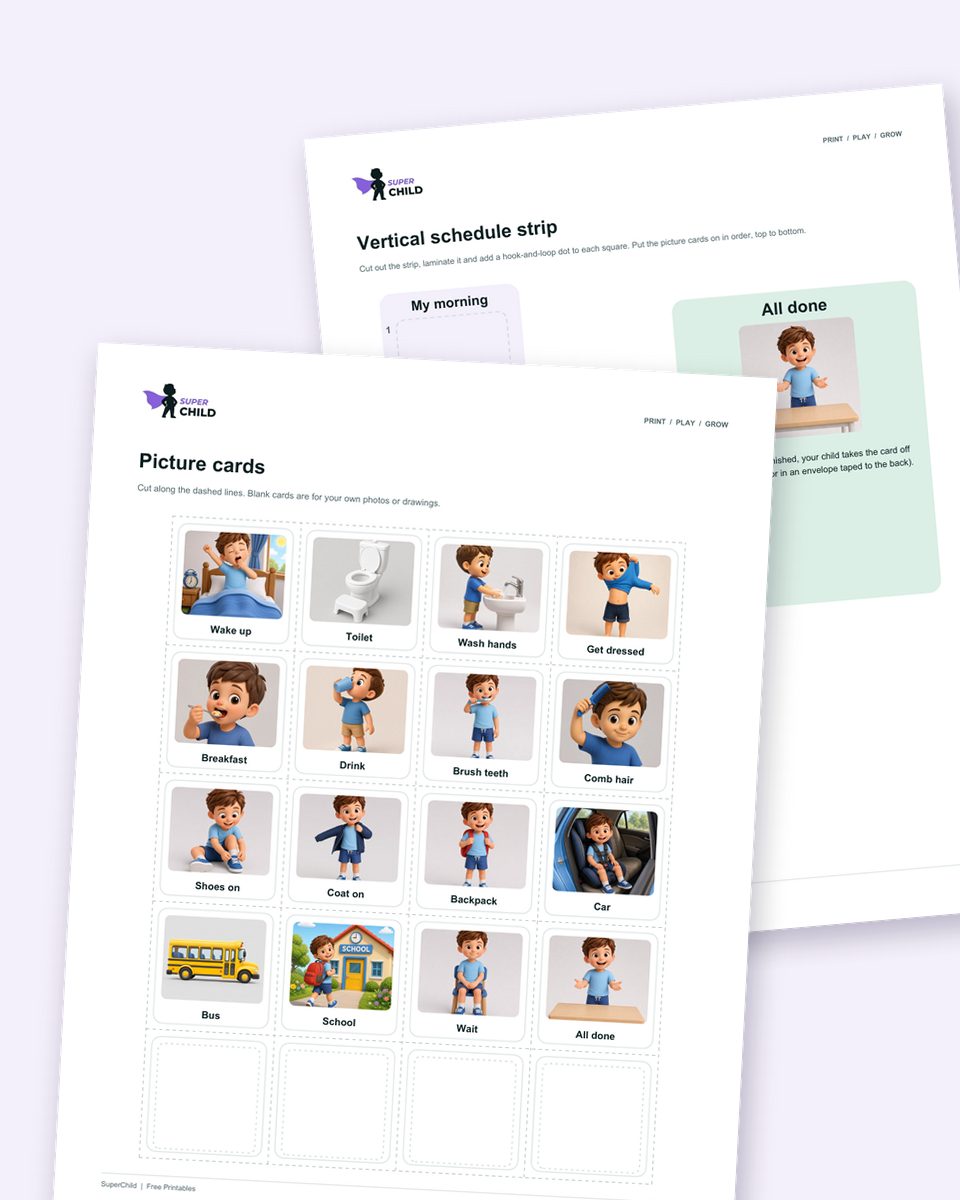
  1. Day 1: print and laminate the morning schedule and the first-then board. Pick the routine that goes wrong most often and walk through the schedule with your child, moving each card to All done.
  2. Day 2: use the same schedule at the same time. Point to the next card before each step and say one short sentence: “Now teeth.” Keep everything else the same.
  3. Day 3: add the first-then board to one hard moment: “First shoes, then outside.” Hand over the “then” straight away when the “first” is done.
  4. Day 4: start the picture exchange book with two favorite snacks or toys. Each time your child hands you a picture, give that item at once and name it.
  5. Day 5: bring in the 3-token board for a short task your child can already do, such as the picture-matching task box. Let your child choose the reward first.
  6. Day 6: read the waiting-my-turn social story at a calm moment, before a game or a trip to the playground, not in the middle of a meltdown.
  7. Day 7: look at the logs. Keep what worked, drop what did not, and only then try one of the three starter skill packs for five minutes a day.

In the download

12 printable packs, each with a short adult guide, the cards or pages to print, and a log.

  • Visual Schedule: Morning Routine

    For mornings: picture cards from waking up to shoes on, each moved to All done.

  • Visual Schedule: Bedtime Routine

    For evenings: dinner, bath, story and sleep, so lights out is never a surprise.

  • Visual Schedule Picture Cards: The Whole Day

    For the rest of the day: places, meals and play to check at each change of activity.

  • First-Then Board and Cards

    For “I don’t want to”: the task first and the favorite thing right after.

  • Token Boards: 3, 5 and 10 Tokens

    For waiting and staying with a task: stars earned toward the reward your child picked.

  • Picture Exchange Starter Book

    For asking without words: your child hands you a picture and gets it straight away.

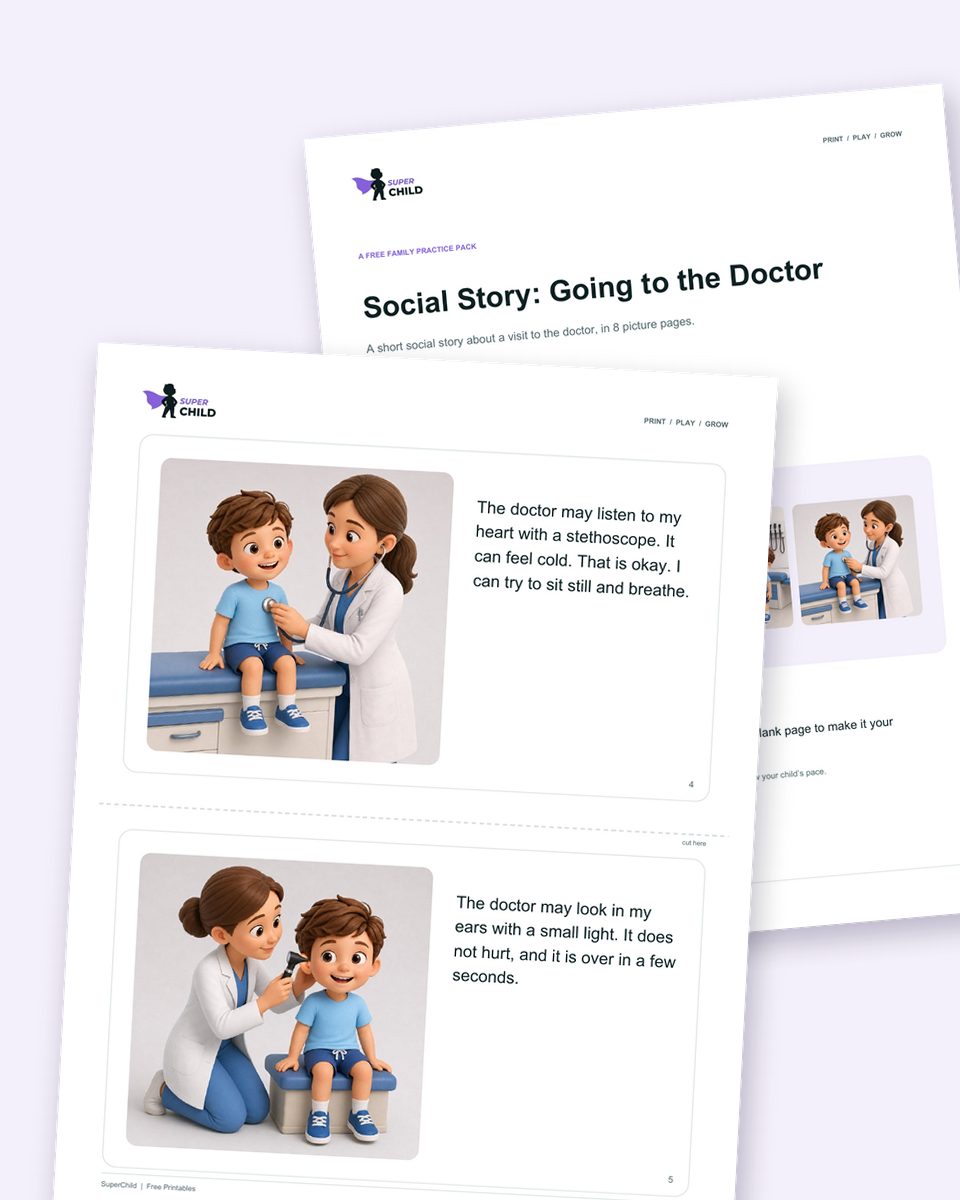
  • Social Story: Washing My Hands

    For a daily routine: each step of handwashing, from wet hands to drying.

  • Social Story: Waiting for My Turn

    For waiting: the slide and a board game, with a big breath or counting to 5.

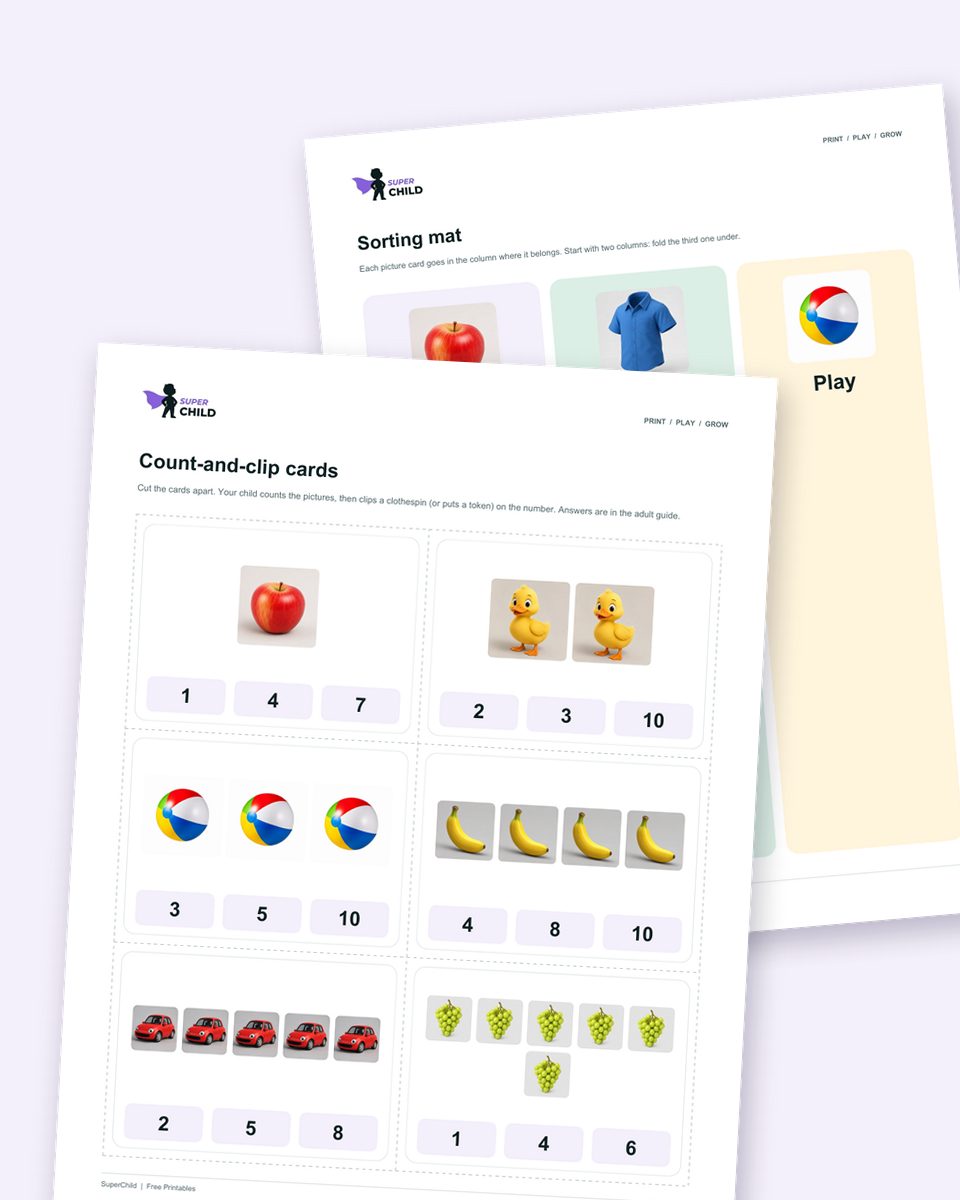
  • Task Box Cards: Picture Matching

    For independent work: 12 picture cards to stick onto the identical picture.

  • Match Identical Object Pictures

    Starter skill pack: find the same photo of a sock or a fork among four choices.

  • Recognize Everyday Objects

    Starter skill pack: point to a hat, a chair or a car when you name it.

  • Answer Yes/No Questions: Is This a...?

    Starter skill pack: look at one picture and answer “Is this a dog?” with YES or NO.

Fill in the short form at the top and the PDFs are yours.

Need different cards or your own photos?

The kit is ready to print. For your child’s own routine with your own photos, the free visual schedule maker builds a schedule in a few minutes.

Make your own visual schedule

For BCBAs, speech therapists and early intervention teams

The kit is a ready-made handout for a family at intake or right after a diagnosis: antecedent supports (activity schedules, first-then, social narratives), a simple token economy with no response cost, a low-tech picture exchange book for early manding, and three early-learner skill packs (matching to sample, receptive identification of objects, yes/no to “Is this a…?”).

Every PDF has a log, so families bring back a rough record of which support they used, when and with what result. Pick the one or two supports that fit the child’s program and tell the family which to start with; the week plan below assumes you do. For your own data, the ABA data sheets cover trial-by-trial, frequency and duration recording.

Common questions

What is in the autism starter kit?
Twelve PDFs: morning, bedtime and whole-day visual schedules, a first-then board, 3, 5 and 10 token boards, a picture exchange starter book, social stories for washing hands and waiting for a turn, a picture-matching task box, and starter skill packs for matching, recognizing everyday objects and yes/no questions.
Which visual support should I start with?
Start with the one for the hardest moment of your day. For most families that is the visual schedule for the morning or bedtime routine, or the first-then board for a task your child refuses. Add the next support only when the first one works.
What age is the starter kit for?
The supports suit autistic children from about two to eight, and older children with an intellectual disability or a language delay who still understand pictures better than words. Pick by what your child understands, not by age.
Do I need a diagnosis to use visual supports?
No. Visual schedules, first-then boards and picture cards help many young children with a speech or language delay, with or without an autism diagnosis. If your child has a therapist, ask which supports to start with so home and therapy match.
Is this the same as PECS?
The picture exchange book in the kit is a simple low-tech starter book for asking with pictures. PECS is a specific, trademarked program with six phases, usually taught by a trained speech therapist or BCBA. If your child is in a PECS program, use the cards their team gives you.
Can I make my own cards instead?
Yes. The free visual schedule maker, token board maker and first-then board maker build the same supports from your own photos and steps, as a PDF to print.

Practice without the printing

The same practice on a tablet, with every answer recorded.

SuperChild runs short daily practice from the goals your child’s therapist picks, and keeps the data for you. The therapist sees every answer.