What is motor imitation in the VB-MAPP?
Motor imitation is doing the same movement another person just showed, with the body, the hands or an object, when the model itself is the cue. It is one of the first learning-to-learn skills a young child needs.
Typically developing toddlers copy constantly, and much of what they learn comes from watching. Many autistic children copy far less, so they miss thousands of learning moments a day. Teaching imitation directly gives them a way to learn new actions from a quick model instead of from step-by-step physical help.
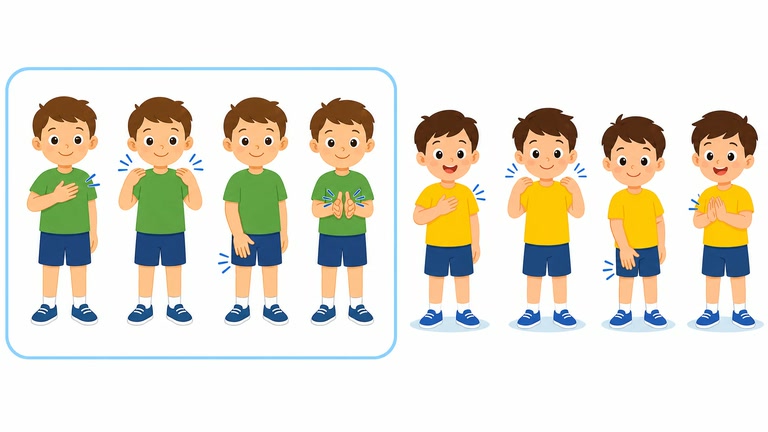
Teams split targets into gross motor (whole body and arms: clap, stomp, arms up), fine motor (hands and fingers: wiggle fingers, thumbs up, pinch), actions with objects (roll a car, stir with a spoon) and later drawing strokes and sequences. The goal is generalized imitation: the child copies new actions they have never been taught, on the first try.
Motor imitation also matters for speech. Copying mouth movements and sounds, the echoic domain, is a form of imitation, and children who imitate actions well often find vocal imitation easier to teach. For children who will use signs, motor imitation is the direct route to their first mands.
- Counts as motor imitation
The therapist says “Do this” and taps the table twice
The child taps the table twice
The child copied the model on the first try with no physical help. This is a scored gross motor imitation.
- Not motor imitation
The therapist says “Clap your hands” without moving
The child claps
There was no model to copy, only words. That is listener responding.
- Counts as motor imitation
Mom rolls a toy car on the floor and pushes a second car toward the child
The child rolls their car the same way
Copying an action with an object counts. It is one of the earliest forms of imitation children show.
- Not motor imitation
The therapist raises the child’s arms after modeling “arms up”
The child’s arms go up with full physical help
A fully prompted response shows the child’s current support level. Only responses without help count toward mastery.
- Counts as motor imitation
The teacher makes a thumbs up, then a peace sign the child has never practiced
The child copies both, including the new one
Copying an untaught action is the sign of generalized imitation that teams aim for in Level 2.
Motor imitation milestones, goals and activities by level
Each milestone area below is our own summary of a group of VB-MAPP milestones, with measurable practice goals, everyday activities and the sign that a learner is ready for the next step. Score the official protocol first; then use the area that matches.
Level 1 · 0–18 months
At Level 1 the child copies simple gross motor actions like clapping, waving and arms up, then copies actions with objects such as shaking a maraca or putting a block in a bucket.
Milestones 1–3
Copying simple body movements
The child copies simple, big movements like clapping or waving when an adult shows them, first with help and then on their own.
Practice goals
- Copies 5 gross motor actions (clap, wave, arms up) after a model, with no physical prompt, on 80% of trials.
- Copies 3 actions with 2 different adults across 2 sessions.
- Copies a movement during a song (“If You’re Happy”) on 4 of 5 opportunities.
Everyday activities
- Sing “If You’re Happy and You Know It” and model clapping and stomping for the child to copy.
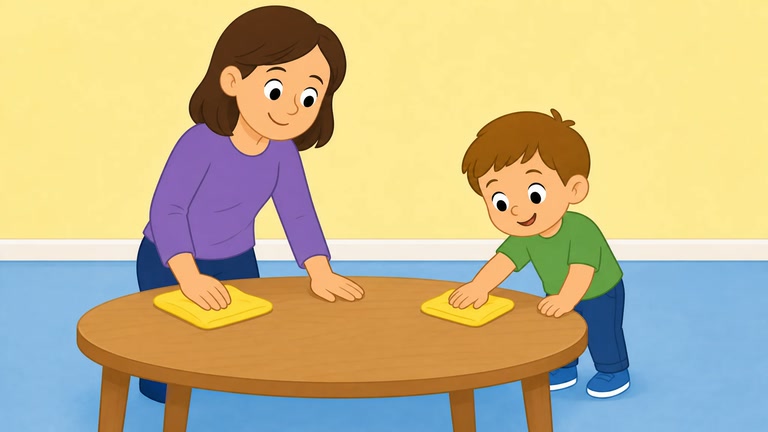
- Play a mirror game with simple moves like touching your head or patting the table.
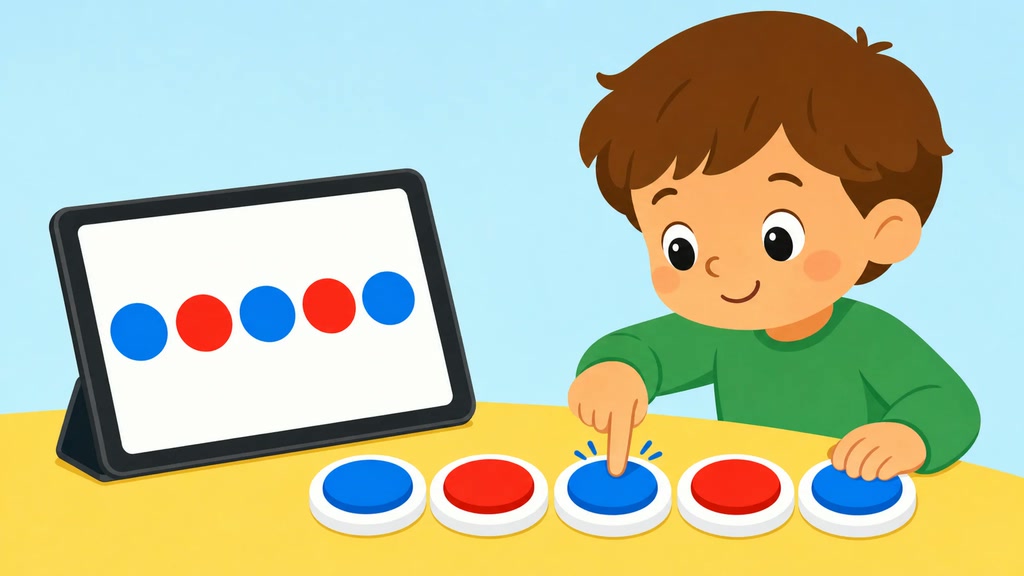
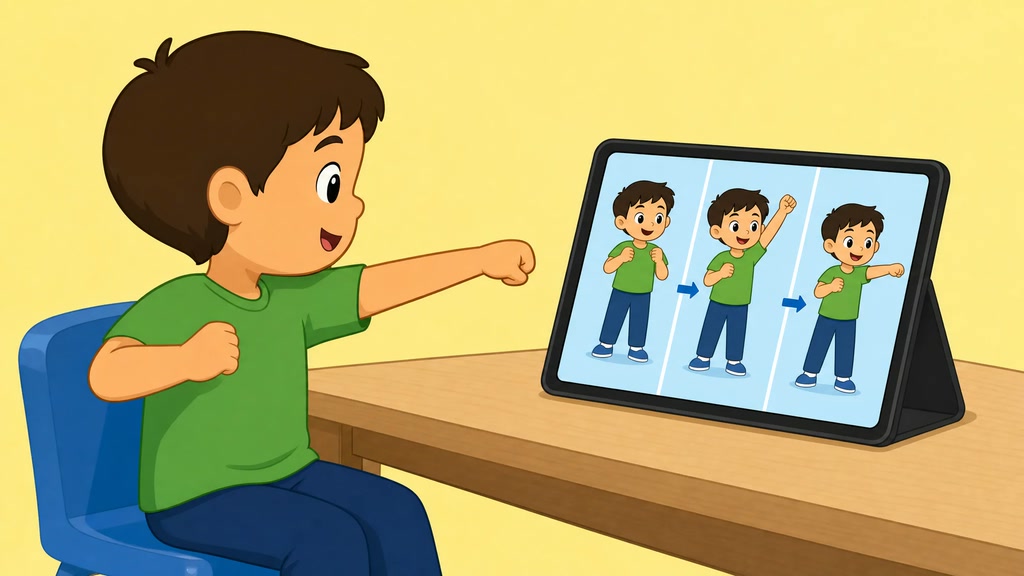
- Gross motor imitation stays with the team; the tablet’s touch-imitation training can add practice copying simple patterns on screen.
Ready to move on: Ready when the child copies new movements on the first attempt with different people.
SuperChild trainings: Touch Imitation: Action Patterns
Open in the goal mapperMilestones 4–5
Copying actions with objects
The child copies what an adult does with an object, like banging a drum or pushing a car, and copies more movements overall.
Practice goals
- Copies 8 different actions with objects (stir with spoon, push car) on 80% of trials.
- Copies at least 15 different movements across body and object actions over 2 weeks.
- Copies a new object action on the first model on 3 of 5 trials.
Everyday activities
- Set out 2 identical drums and model hitting fast, slow and loud for the child to copy.
- Use 2 toy cars: push yours down a ramp and hand the child theirs.
- Use the tablet’s object-action copying training, then copy the same actions with real household items.
Ready to move on: Look for imitation of new actions with new objects and spontaneous copying during play.
SuperChild trainings: Object-Action Copying: Household Items · Movement Actions: Body Scenes
Open in the goal mapper
Level 2 · 18–30 months
At Level 2 imitation gets finer and longer. The child copies hand and finger movements and drawing strokes, then new actions and short sequences of two or three steps without being taught each one.
Milestones 6–8
Copying fine motor actions and drawing strokes
The child copies small hand and finger movements and simple drawing strokes, and copies 2 actions in a row.
Practice goals
- Copies 5 fine motor actions (thumbs up, pinch, point) on 80% of trials.
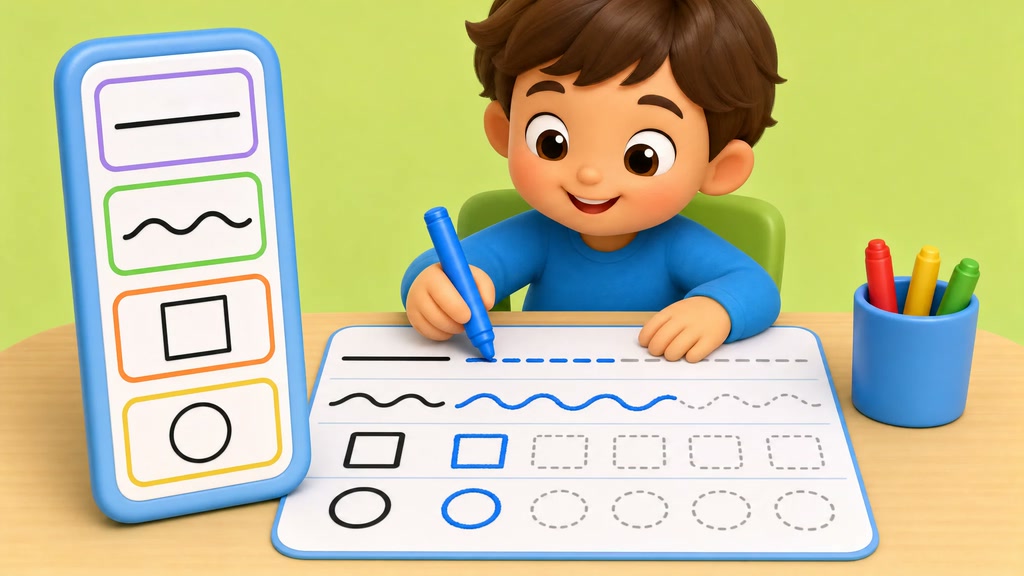
- Copies vertical, horizontal and circular strokes with a crayon on 4 of 5 trials.
- Copies a 2-action sequence (clap then touch nose) on 80% of trials.
Everyday activities
- Sing finger-play songs like “Itsy Bitsy Spider” with slow, clear hand movements.
- Draw a line on a whiteboard and hand the child the marker to copy it.
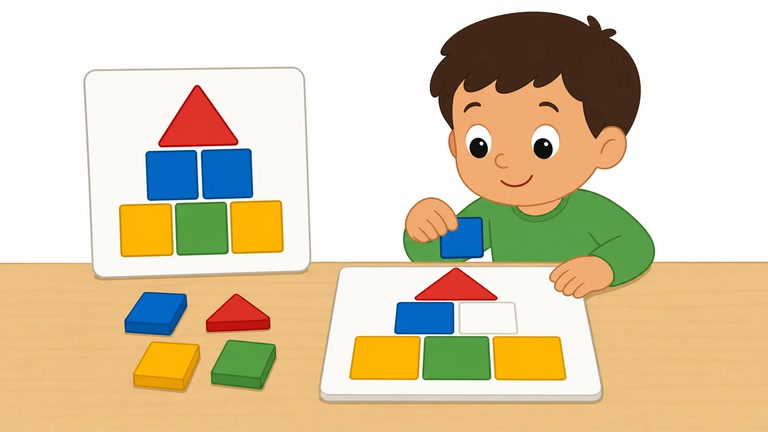
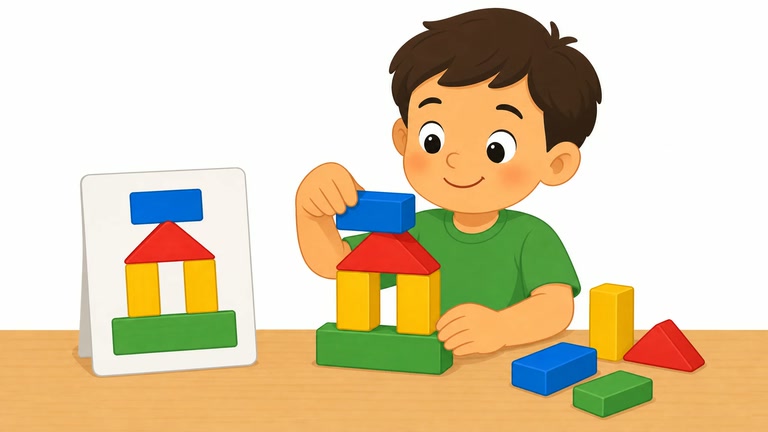
- Use the tablet’s stroke-imitation and block-copying trainings, then copy strokes in sand or shaving foam.
Ready to move on: Ready when the child copies new fine motor actions and short sequences without help.
SuperChild trainings: Stroke Imitation: Lines and Shapes · Block Design Copying: Shapes
Open in the goal mapperMilestones 9–10
Copying new actions and sequences on their own
The child copies new actions and longer sequences without teaching, and imitates peers and adults during real play.
Practice goals
- Copies 10 brand-new actions on the first model across 2 sessions.
- Copies a 3-step action sequence on 4 of 5 trials.
- Imitates a peer’s play action without adult prompting at least 3 times in a session.
Everyday activities
- Play follow-the-leader in a line with a peer leading simple moves.
- Build 3-piece block models side by side and let the child copy each one.
- Use the tablet’s novel-sequence and 3-piece model trainings, then copy movement sequences in a dance game with the team.
Ready to move on: Look for imitation of peers in the classroom and on the playground without prompts.
SuperChild trainings: Touch Imitation: Novel Action Sequences · Block Design Copying: Three-Piece Models
Open in the goal mapper
How to teach motor imitation
Our working target lists come first, then the procedure. They are SuperChild’s own lists for planning; your BCBA picks the order for each child.
- 1Choose from three lists and start with object actionsObject actions: put block in cup, roll car, bang drum, stir with spoon, hug doll, push button. Gross motor: clap, arms up, stomp, wave, tap table, touch head, turn around. Fine motor: wiggle fingers, thumbs up, point, pinch, open and close hands, touch fingertips, make a fist. Pick three to five targets that look clearly different.
- 2Get attention, model once, waitMake sure the child is looking, say “Do this” and show the action at a normal speed. Wait 2 to 3 seconds. Keep identical objects for you and the child so they can copy exactly.
- 3Prompt physically, then fadeIf the child does not copy, gently guide the movement from behind right after the model. Reduce help across trials, from full hand-over-hand to a touch at the elbow to nothing.
- 4Reinforce and mix targetsPraise and a favorite item follow every independent copy. Mix targets in random order so the child has to watch each model instead of repeating the last action.
- 5Test for new actionsEvery week, probe a few actions you have never taught. When the child copies most new ones on the first try, generalized imitation is in place and teaching can shift to fine motor, drawing and sequences.
Common mistakes, and what to do instead
- Adding words to the model
- Saying “clap hands” while clapping turns the task into listener responding. Use the same neutral cue (“Do this”) every time.
- Teaching only one action at a time
- Ten claps in a row teach the child to repeat the last action without looking at you. Mix two or more targets once the child has one.
- Keeping imitation at the table
- Imitation is meant to be used in play, songs and daily routines. Play copy games with siblings and peers so the skill spreads.
- Accepting rough versions forever
- A wave that is any arm movement is fine at first, but shape it toward the real action so the child’s signs and gestures are readable.
How to measure motor imitation progress
Record each model as independent, prompted or no response, and keep a separate column for probe actions the child has never practiced. The ABA data sheets have a trial grid that fits both columns.
How it connects to the other domains
- Echoic
Copying sounds and words is the vocal form of imitation, and many children learn it faster once motor imitation is solid.
- Mand
For children who sign, motor imitation is how the first signs are taught and prompted.
- Independent play
Copying how others use toys widens the child’s play and leads into pretend play.
- Social behavior & social play
Copy games are one of the easiest ways to start shared play with peers.
Printables and tools to practise with
- Free printableTeaching body partsBody part cards that double as targets for touch-your-head style imitation.
- Free printableTask boxesObject activities you can model first and let the child copy.
- Free toolABA data sheetsPrintable trial sheets for imitation probes and teaching.
Independent guide by SuperChild, not affiliated with the publisher or authors. Use the official protocol to administer and score.
Written from the publishers’ own materials and published research. Spotted an error? Email contact@superchild.ai and we’ll fix it.