What is listener responding in ABA?
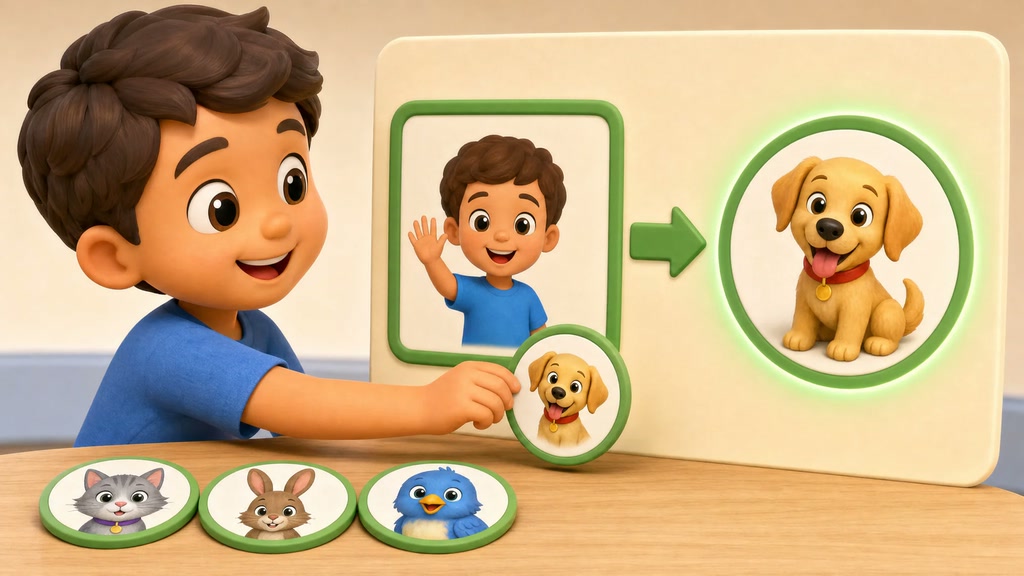
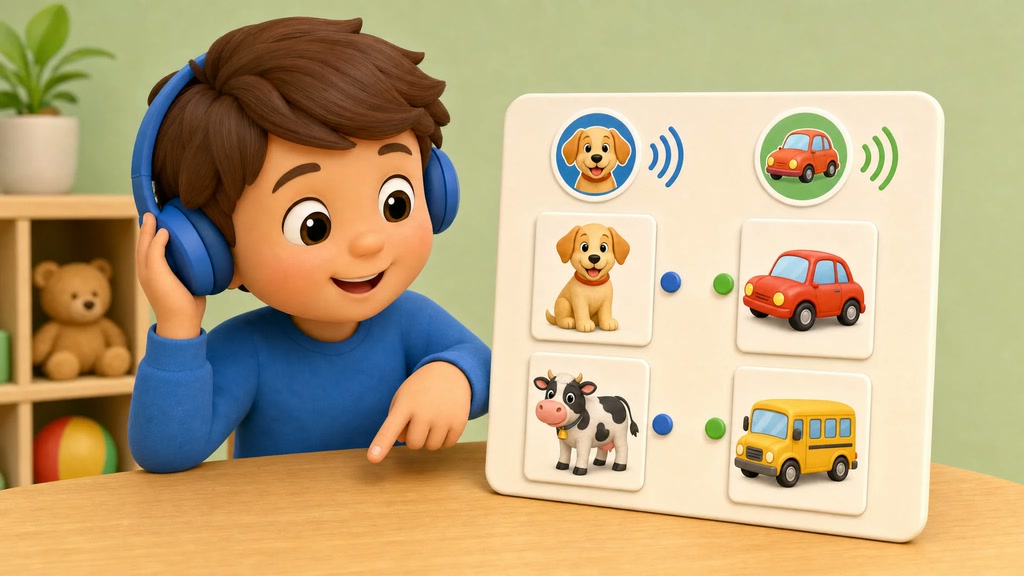
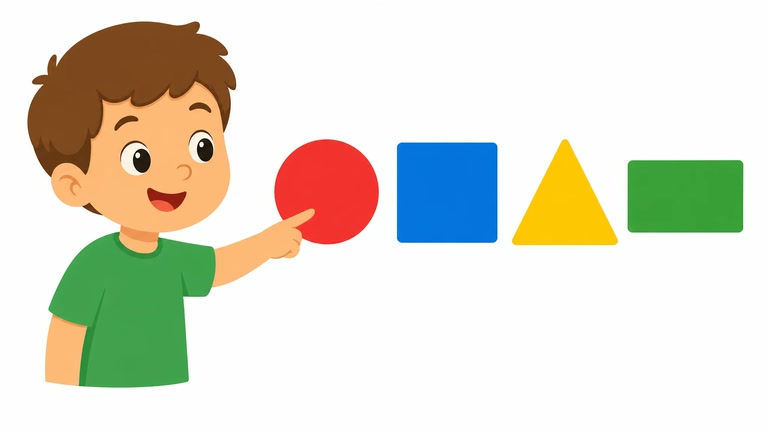
Listener responding is any nonverbal action a child makes because of someone else’s words, such as pointing to, touching, giving or doing what was named. The child is the listener, and the spoken word is what sets off the response.
Skinner described language as a two-person exchange, and the listener half matters as much as the speaker half. A child who can say “cup” but cannot find the cup when you ask for it has only one side of the word. Most teams teach both sides of each new word, though the order and timing are a judgment call for the analyst (see ABA therapy guide for how the verbal operants fit together).
Listener responding starts small. In the first months the target is simply orienting to voices and to the child’s own name. It then grows into picking named items from a group, following one-step directions, finding items in a busy picture, and later understanding colors, sizes, position words and directions with several steps. When the child has to find an item from a description of its function, feature or class (“find the one that flies”), the VB-MAPP scores that in a separate domain, LRFFC.
Strong listener skills make the rest of a day easier. A child who understands “wash hands” or “bring your coat” can join routines with less physical help, and group instruction becomes possible once the child responds to words spoken to the whole class.
- Counts as listener responding
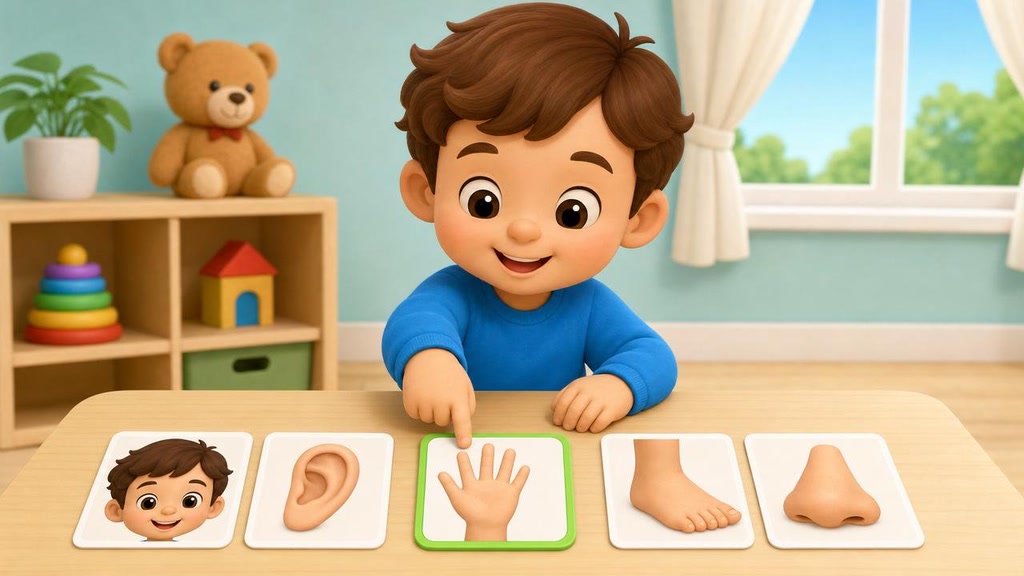
Dad says “Where’s your nose?” with no gesture
The child touches their own nose
The spoken words alone told the child what to do. That is a clean listener response.
- Not listener responding
Mom says “Give me the spoon” while holding out her hand toward the spoon
The child hands over the spoon
The reaching hand and the eye gaze may have done the work. Test again with hands still and eyes on the child before you count it.
- Counts as listener responding
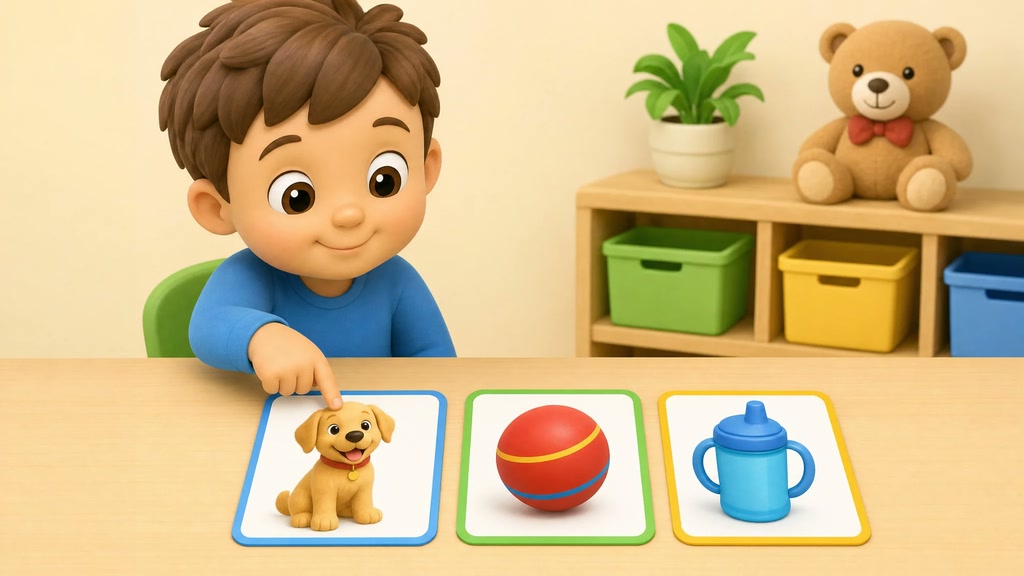
Three pictures on the table (car, apple, dog); the teacher says “Touch apple”
The child touches the apple, and keeps doing so when the pictures are reshuffled
Correct selection across changed positions shows the child is following the word and not a favorite spot on the table.
- Not listener responding
The therapist says “Clap hands” and claps at the same time
The child claps
This is motor imitation. The child copied the model, so you cannot tell whether the words mattered.
- Counts as listener responding
The child hears “Get your shoes” from the hallway, during play
The child stops playing, goes to the shoe rack and picks up their own shoes
A direction followed in a real routine, with no visual cue, is the kind of listener behavior teams want to see in daily life.
- Not listener responding
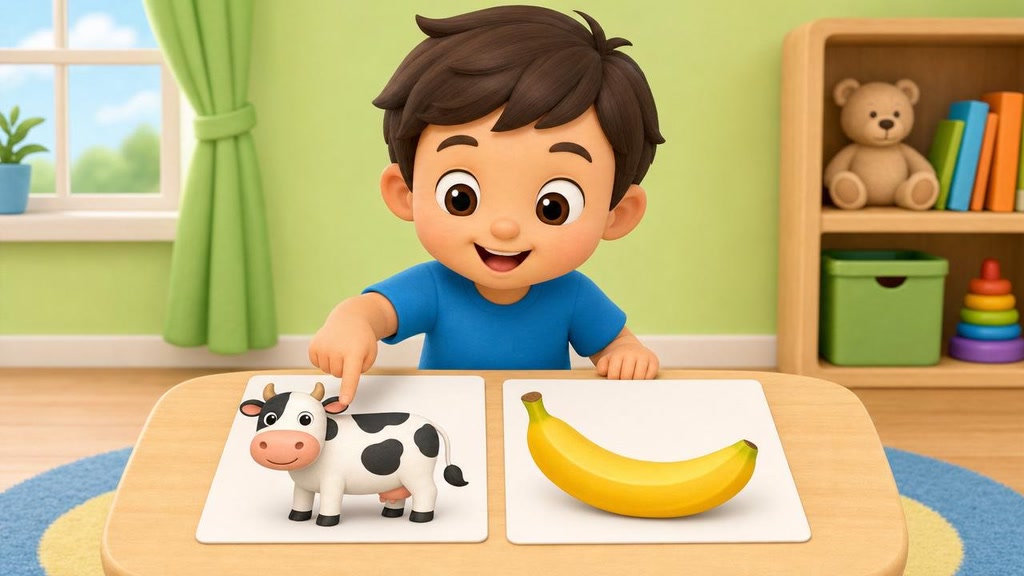
The teacher asks “Which one do you eat?” and the child picks the banana
Correct selection from a description of what an item does
This is a correct answer, but the VB-MAPP records it under LRFFC. Listener responding covers items selected by their name.
Listener responding milestones, goals and activities by level
Each milestone area below is our own summary of a group of VB-MAPP milestones, with measurable practice goals, everyday activities and the sign that a learner is ready for the next step. Score the official protocol first; then use the area that matches.
Level 1 · 0–18 months
At Level 1 the child starts to notice voices and turn when their name is called, then finds a handful of familiar people, body parts and favorite items when they are named. Early work happens with only two or three choices and lots of motivation.
Milestones 1–2
Noticing voices and responding to their name
The child orients to people’s voices and starts to look up or come over when their name is called.
Practice goals
- Turns toward an adult who calls their name from 1 meter away on 4 of 5 trials across 2 sessions.
- Responds to their name while engaged with a toy on 70% of trials with 2 adults.
- Looks toward a voice or familiar sound (a parent singing, a door) at least 5 times in a session.
Everyday activities
- Call the child’s name once while they play, and when they look, blow a bubble or start a favorite song right away.
- Play peekaboo behind a scarf, calling the child’s name before you pop out.
- Use the tablet’s name-call and eye-gaze trainings, then practice name response in the kitchen and the playground with family.
Ready to move on: Ready when name response holds up across rooms, with different people and when the child is busy with something they like.
SuperChild trainings: Name-Call Signal: Animal Friend · Social Cue Following: Eye Gaze
Open in the goal mapperMilestones 3–5
Finding familiar people and things by name
The child looks at, touches or picks the right person or object when it is named, and follows a few simple action instructions.
Practice goals
- Touches the named item from a group of 3 for 10 familiar objects on 80% of trials.
- Looks at or points to 3 named family members or pets on 4 of 5 trials.
- Follows 4 one-step action instructions (clap, stand up, wave) without a gesture on 80% of trials.
Everyday activities
- Put 3 favorite toys on a tray and ask “give me the ball,” then play with the one they hand you.
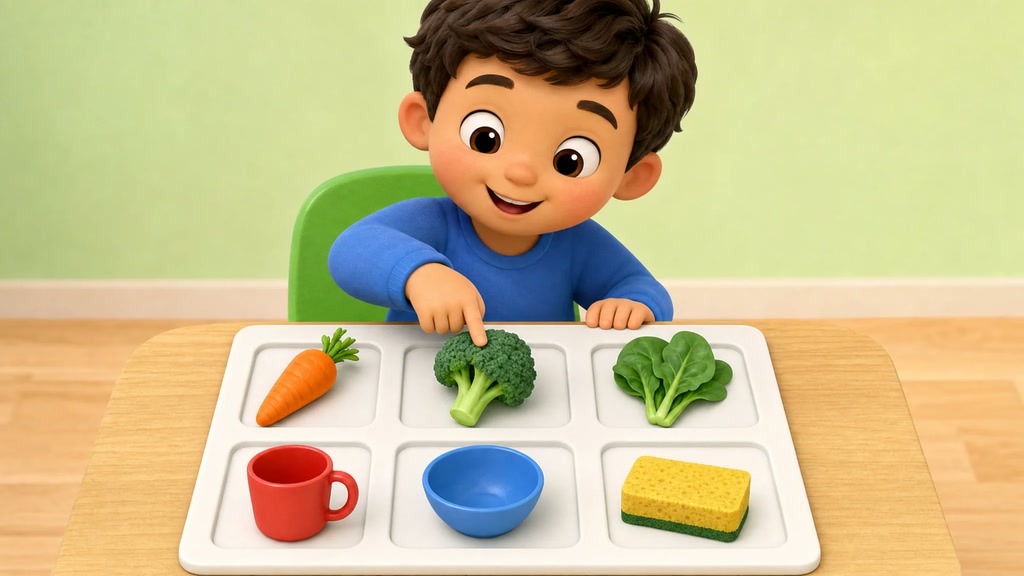
- At bath time, ask the child to find the duck, the cup or the sponge.
- Use the tablet’s first-object listener trainings, then ask for the same items from the toy box with the team.
Ready to move on: Look for correct selections when items are mixed with new ones and asked for by different adults.
SuperChild trainings: Listener Response: First Objects and Animals · Listener Response: Cow and Banana · Listener Response: Body Part Pictures
Open in the goal mapper
Level 2 · 18–30 months
At Level 2 the child picks named items from larger groups, follows everyday one-step directions without gestures, and finds things inside pictures and scenes. Vocabulary grows quickly here, often to a few hundred words the child understands.
Milestones 6–7
Picking items from bigger groups
The child finds named items among more choices and in more categories, including body parts and everyday objects.
Practice goals
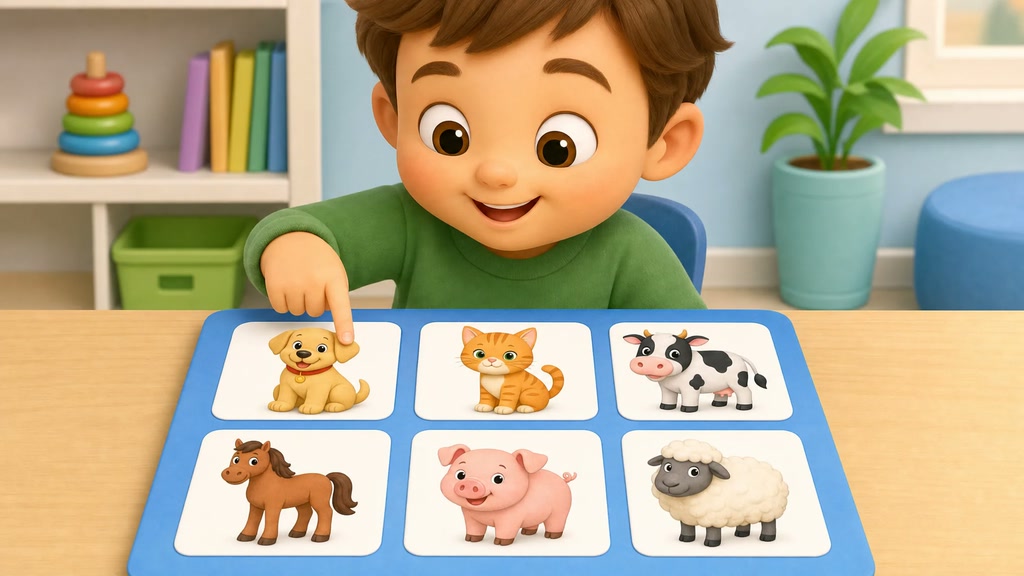
- Selects the named picture from a field of 6 for 30 targets on 80% of trials.
- Points to 8 body parts on themselves and on a doll on 4 of 5 trials.
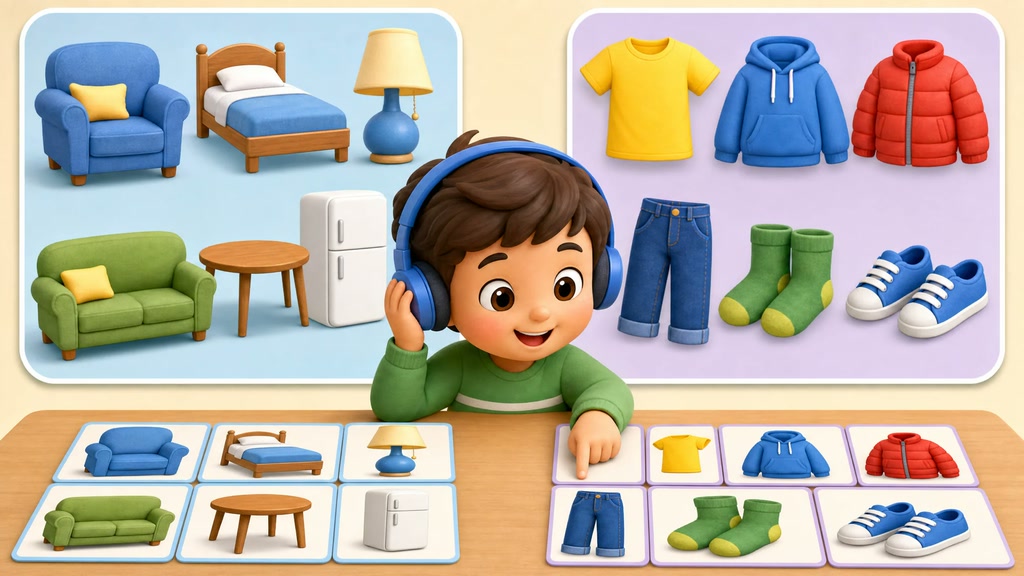
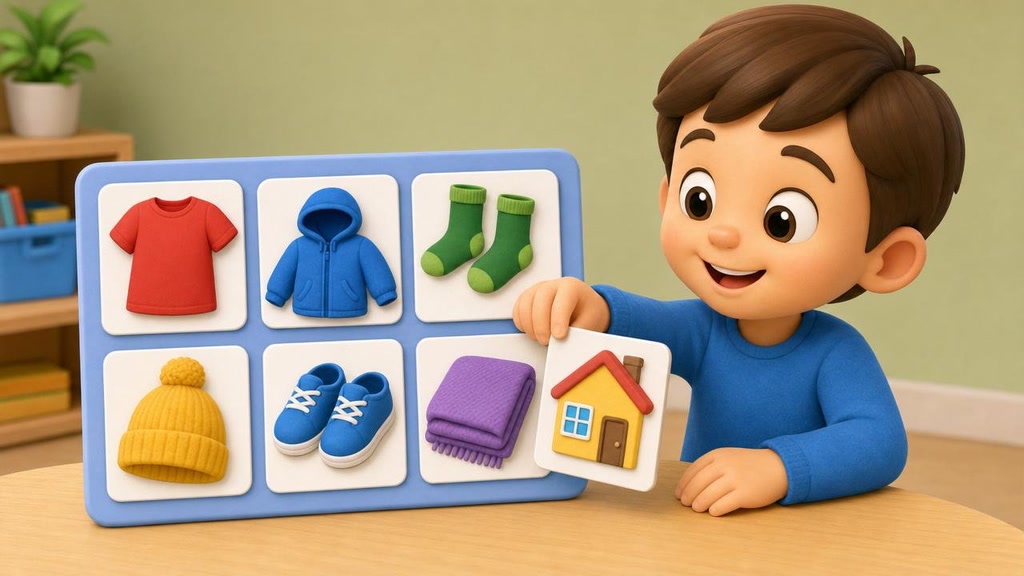
- Selects named clothing and household items from a mixed basket for 10 items with 2 adults.
Everyday activities
- Lay out 6 animal cards and ask the child to feed the named animal to a toy dinosaur.
- Sing a body-part song while dressing a doll and ask the child to point to each part.
- Use the tablet’s field-of-six trainings, then ask for items from a cluttered toy shelf at home.
Ready to move on: Ready when the child finds named items in real, messy settings, not only on a clean table.
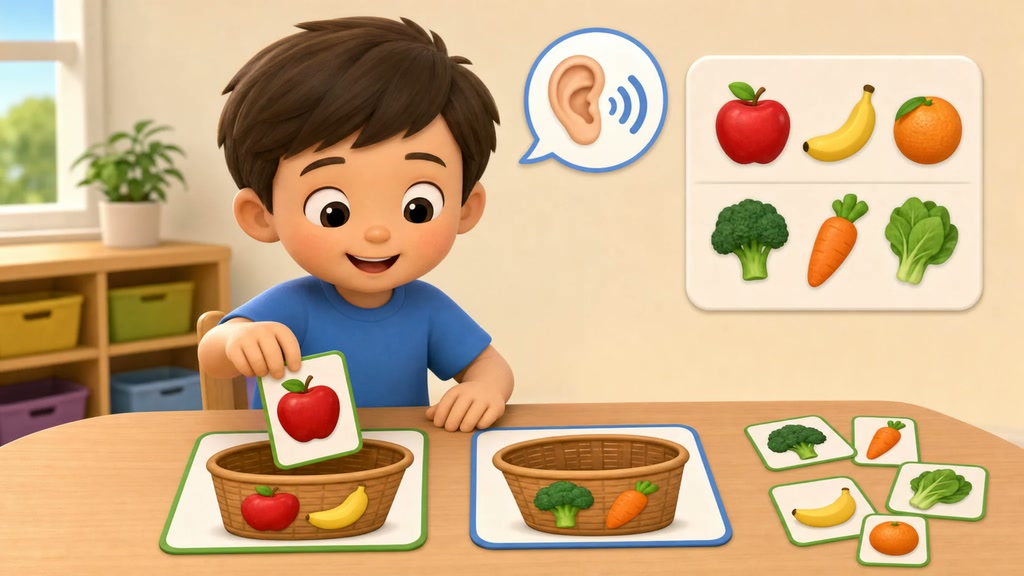
SuperChild trainings: Listener Response: Animals Field of Six · Listener Response: Clothing and Household Field of Six · Listener Response: Vegetables and Household Field of Six
Open in the goal mapperMilestones 8–10
Following directions and finding items in scenes
The child follows a wider range of action directions and finds items in books, pictures and the room, building a large listening vocabulary.
Practice goals
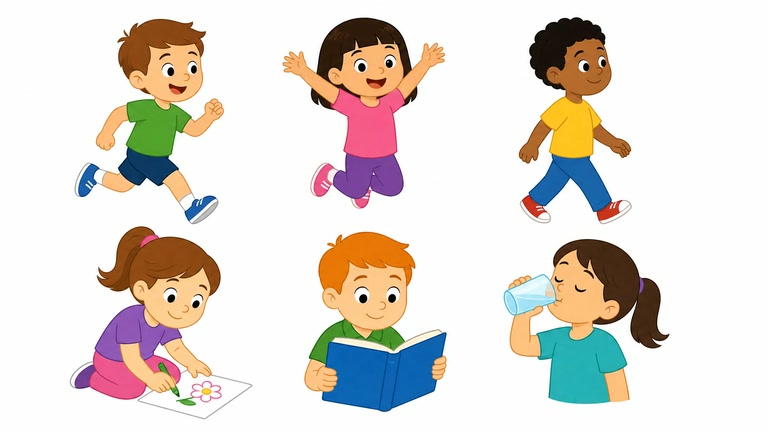
- Follows 20 different action directions (jump, hide, wash hands) on 80% of trials across 2 sessions.
- Finds named items in busy picture scenes for 15 targets on 4 of 5 trials.
- Keeps adding new named items they can find each week, tracked on a cumulative listener target list.
Everyday activities
- Play Simon Says with simple actions like clap, spin and touch your nose.
- Read a “seek and find” picture book and ask the child to find the dog, the ball or the cup.
- Use the tablet’s items-in-scenes and listen-and-respond trainings, then hide named items around the room.
Ready to move on: Look for the child following directions in group settings and with people who did not teach them.
SuperChild trainings: Listener Response: Items in Scenes · Listen and Respond: Animals and Vehicles · Listen and Respond: Household and Clothing
Open in the goal mapper
Level 3 · 30–48 months
At Level 3 listener skills move into concepts. The child selects by color, shape and size, understands position words like under and behind, and carries out directions with two or three steps in a row.
Milestones 11–12
Understanding colors, shapes and size words
The child picks items by color, shape and size, and understands combinations like a person doing an action.
Practice goals
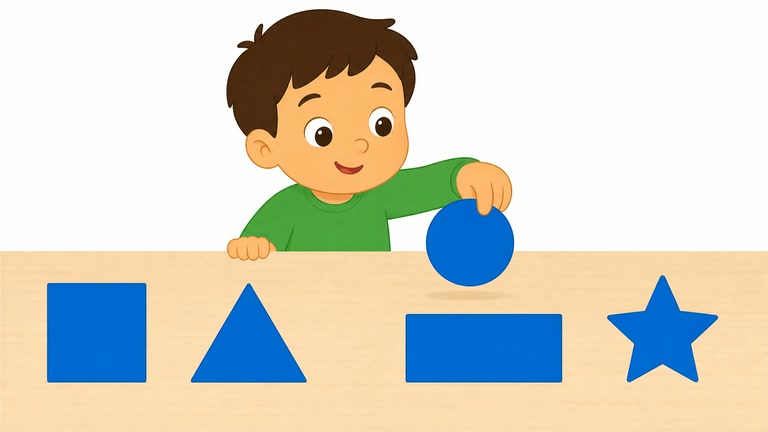
- Selects items by 6 colors and 5 shapes from a field of 4 on 80% of trials.
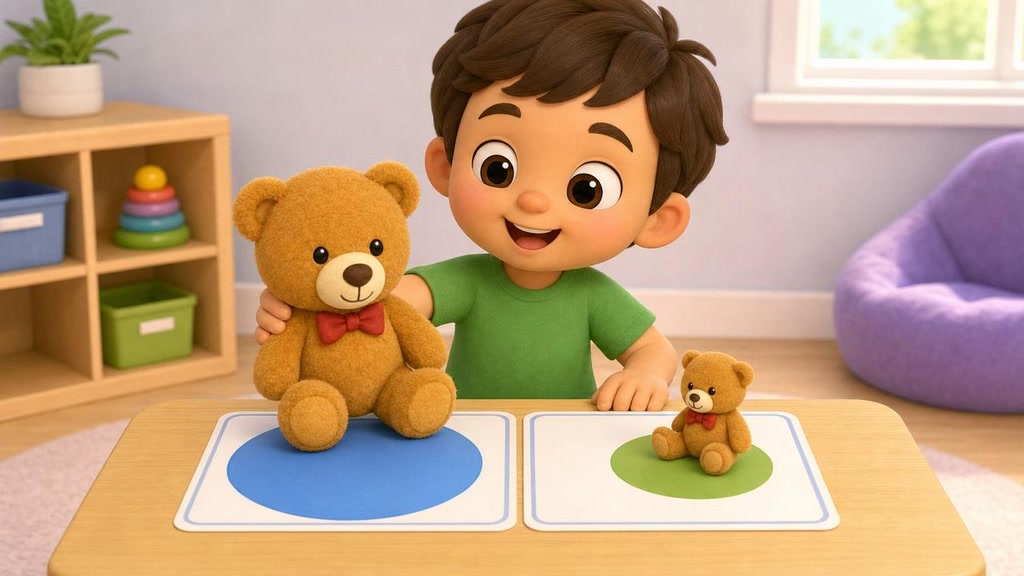
- Selects the big or little version of 8 items on 4 of 5 trials.
- Picks the picture that matches a person-plus-action phrase (“the girl is eating”) for 10 targets.
Everyday activities
- Build a block tower and ask for “the blue square” or “the big red one” for each piece.
- Act out actions with family photos or figures and ask “show me mom sleeping.”
- Use the tablet’s color, shape and size trainings, then ask for colors while coloring with crayons.
Ready to move on: Ready when the child responds to describing words on new items and in group instructions.
SuperChild trainings: Listener Response: Colors · Listener Response: Shapes · Listener Response: Big and Little
Open in the goal mapperMilestones 13–15
Position words and multi-step directions
The child understands position words, pronouns and other word classes, and follows directions with several steps.
Practice goals
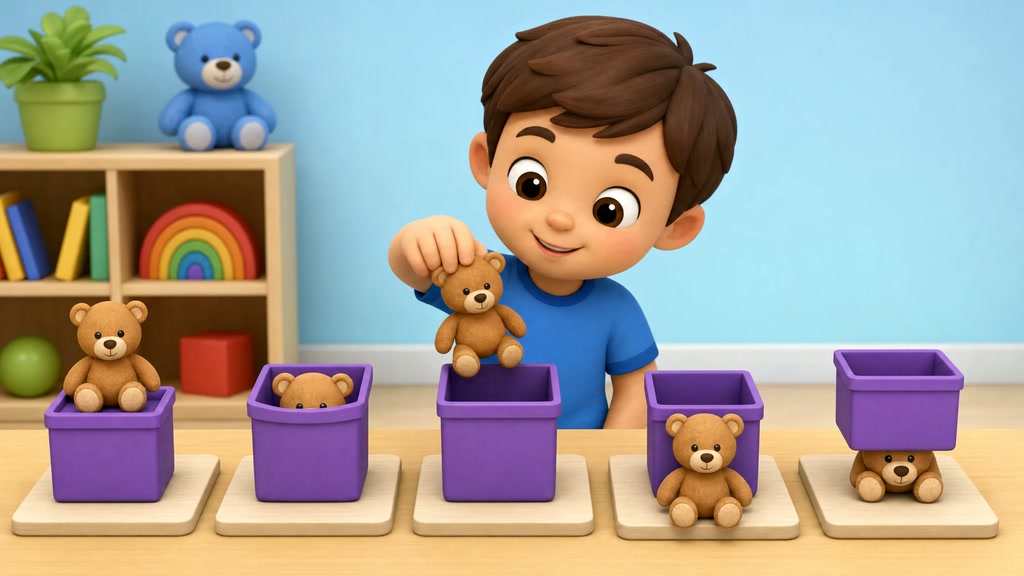
- Places an item in, on, under, next to and behind a container on 80% of trials.
- Follows 3-step directions (“get your cup, put it in the sink, then sit down”) on 4 of 5 trials.
- Responds to directions with pronouns and describing words (“give me her shoe”) for 10 targets across 2 adults.
Everyday activities
- Play “hide the teddy”: ask the child to put the teddy under the chair, on the bed or behind the door.
- During clean-up, give 3-step directions with a picture strip as support, fading the pictures over time.
- Use the tablet’s preposition and 3-step trainings, then practice the same steps in real routines like getting dressed.
Ready to move on: Look for multi-step directions followed in the classroom and at home without visual supports.
SuperChild trainings: Listener Response: Spatial Prepositions · Following Three-Step Directions · Listener Response: Core Word Classes
Open in the goal mapper
How to teach listener responding, step by step
This sequence follows the recommendations most behavior analysts use for receptive instruction. Your BCBA or speech therapist adapts the targets and the prompt type to the child.
- 1Pick targets the child cares aboutStart with a few people, body parts and items the child meets every day or loves. Choose targets that look and sound different from each other (for example “ball” and “banana,” not “bear” and “bed”).
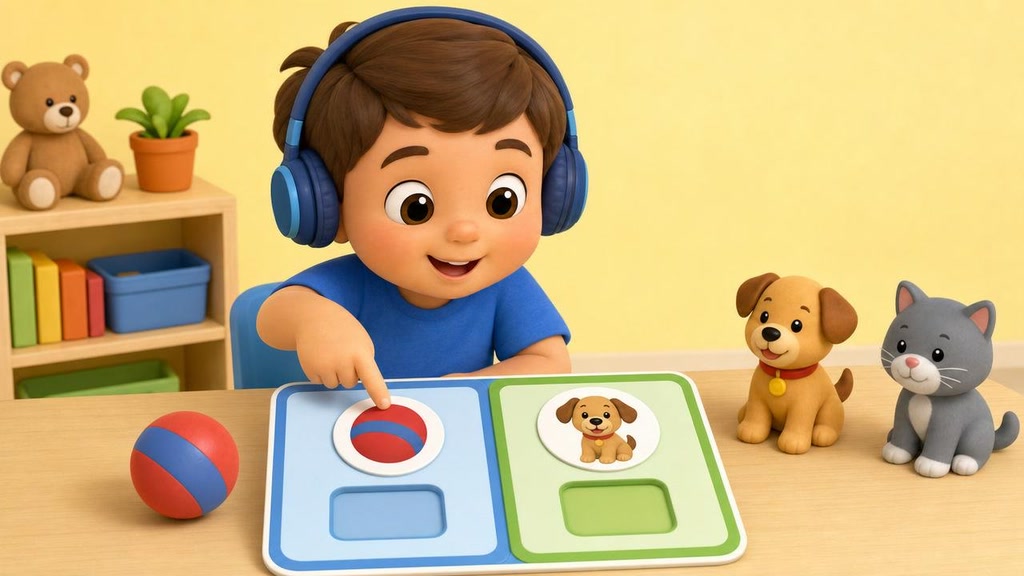
- 2Present a real array from the startPlace at least three items on the table so the child has to choose. Shuffle positions every trial, and rotate which item you ask for so no item gets asked twice in a predictable pattern.
- 3Say the instruction once, then promptGive the spoken direction a single time with neutral hands and face. If you need help, use a quick point or a light physical guide right after the instruction, then fade it across trials with a short delay of 2 to 3 seconds.
- 4Reinforce correct, independent answers mostA correct response without help earns the best praise or a turn with a favorite toy. Prompted responses get a smaller reaction, so the child has a reason to answer alone.
- 5Move it into routinesOnce a target is solid at the table, ask for it during snack, dressing, bath and play, from different adults and with real objects. Generalization is part of mastery, and an item mastered only with one set of flash cards does not count yet.
- 6Add the speaker sideWhen the child reliably finds an item, work on naming it as a tact. Many children learn the second side faster once the first one is in place.
Common mistakes, and what to do instead
- Accidental cues
- Looking at the right picture, leaning toward it or always placing it nearest the child gives the answer away. Keep your eyes on the child and use a fixed routine for shuffling.
- Only one or two items on the table
- With two choices a child is right half the time by guessing. Use three or more as soon as the child can scan them, and score the first response only.
- Repeating the instruction
- Saying “touch dog, touch dog, touch the dog” teaches the child to wait for the third version. Say it once, then prompt.
- Stopping at the table
- A child who points to the cat card in therapy may not find the real cat at home. Plan for different pictures, real objects and other adults before you call a target mastered.
How to measure listener responding progress
Record the first response on each trial as correct, prompted or incorrect, and graph percentage correct and independent per session. A cold probe at the start of the day, before any teaching, gives the clearest picture; the ABA data sheets include a trial-by-trial form you can print.
How it connects to the other domains
- Tact
Most teams teach each new word on both sides, finding it as a listener and naming it as a speaker.
- LRFFC (listener by function, feature & class)
Once the child finds items by name, the next step is finding them from a description of what they do, look like or belong to.
- Motor imitation
Copying actions helps prompt early listener tasks like “clap” or “stand up,” as long as the model is faded.
- Classroom routines & group skills
Following words said to the whole group grows out of strong one-to-one listener responding.
Printables and tools to practise with
- Free printableReceptive language activitiesPicture cards and arrays for finding named items, ready to print and cut.
- Free printableFollowing directions activitiesOne-step, two-step and three-step direction cards for home and class.
- Free printableTeaching body partsBody part cards for one of the first listener targets most children learn.
- Free printableTeaching prepositionsPosition word scenes for the Level 3 work on in, on, under and behind.
Independent guide by SuperChild, not affiliated with the publisher or authors. Use the official protocol to administer and score.
Written from the publishers’ own materials and published research. Spotted an error? Email contact@superchild.ai and we’ll fix it.