


On this page
- What does nonverbal autism mean?
- Does my nonverbal child understand what I say?
- How can I tell what my child understands?
- Will my autistic child ever talk?
- Will pictures or an AAC device stop my child from talking?
- How do I teach my nonverbal autistic child words at home?
- What can apps for nonverbal autism do, and what can’t they?
What does nonverbal autism mean?
Nonverbal autism is an everyday name for an autistic child who uses few or no spoken words. Clinicians often say “minimally verbal,” because many of these children do have a handful of words or sounds.
There’s no official line between the two terms, and research studies define them very differently. It isn’t a type of autism either. Our guides to speech delay and early intervention show where speech fits in.
A child who doesn’t speak still tells you things. Pulling you to the fridge is a request. So is putting your hand on the tap.


Does my nonverbal child understand what I say?
Maybe more than they can show, maybe less than it looks. Some nonverbal autistic children understand many words. Others follow the routine and your gestures more than the words. You have to check.
In autism, understanding and talking tend to grow together. One study followed autistic children from age 2 to 19 and found the two moved largely in step.
Context does a lot of quiet work. If you always say “bath time” while the water is running, your child may be reacting to the tap. That tells you which words to teach next.
Our article on receptive vs expressive language explains the difference between understanding a word and using it.
How can I tell what my child understands?
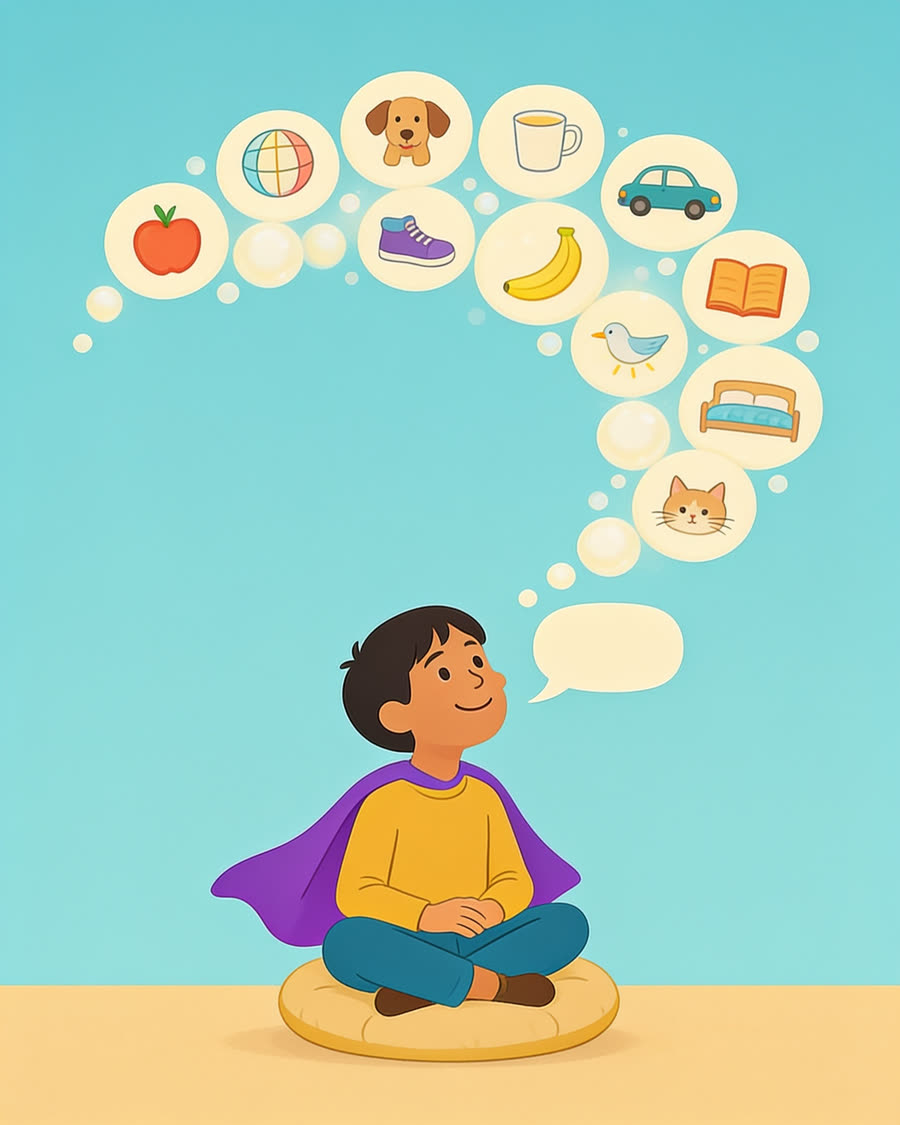
Ask your child to show you, so they don’t have to tell you. Keep your hands still and don’t look at the right answer.
Try one or two of these in play, when your child is calm. A miss is fine. You’ve found a word to practice.
- 1Choose between twoHold up an apple and a banana. Say “banana.” Swap hands and say it again. If your child reaches for the banana both times, they know the word.
- 2Give mePut a cup, a spoon and a sock on the table. Say “give me the spoon.”
- 3Point in a bookOpen a favorite picture book and ask “where’s the dog?” A point counts. So does a touch, or a long look.
- 4Go and getSit on the sofa and say “get your shoes.” If your child walks to the shoes by the door, they did it from the words alone.
- 5The silly testAsk for something odd: “put the spoon on teddy.” The routine can’t help here, so you see whether your child is hearing the words.


Will my autistic child ever talk?
Many do. In a study of 535 autistic children who had no phrases at age 4, 70% were using phrases and 47% were speaking fluently by age 8 or later. About 3 in 10 autistic children stay minimally verbal at school age and communicate in other ways. These numbers describe groups. They can’t tell you what one child will do.
Nobody can promise you speech. Nobody should tell you it will never come, either.
For children who stay minimally verbal, pictures, signs, a device or typing are how they talk.
In one long-term study, the biggest differences in progress showed up between ages 2 and 6. That’s one reason teams start early. Children kept learning after that too.
Will pictures or an AAC device stop my child from talking?
No. Reviews of the research found no cases where AAC (pictures, signs or a speaking device) reduced speech, and most children in those studies said more words afterwards. ASHA says early AAC use can help speech and language grow.
AAC is any way to communicate besides speech. In one trial with 61 minimally verbal children aged 5 to 8, the children whose therapy included a speaking device used more spoken words than the children taught with speech alone.
Our AAC for autism guide goes through the options. With the PECS book printable you can start picture exchange this week.
How do I teach my nonverbal autistic child words at home?
Say one clear word at a time about what your child is doing, and use the same words in the same routines every day. Give your child time to answer in whatever way they can.
A few minutes is enough. An SLP can fit this to your child, and our autism speech therapy article shows what therapy works on.
- 1Follow their leadIf your child lines up cars, sit down and line up cars beside them. Words stick to what your child is looking at.
- 2Say one word, and show itKeep it short: “car.” “Go.” “More bubbles.” Point to a picture or use a simple sign as you say it. Don’t ask your child to copy you.
- 3Offer two choicesAt snack, hold up the crackers and the apple. “Cracker or apple?” A reach is an answer. So is a look.
- 4Use the same words every dayIn the bath: “water on,” “splash,” “towel.” By the door: “shoes on,” “out.”
- 5Practice finding picturesLay out two or three picture cards and say one word: “dog.” Help gently if your child needs it.
- 6WaitCount to five in your head before you help. It feels long.
What can apps for nonverbal autism do, and what can’t they?
There are two kinds. With an AAC app, your child taps a picture and the device says the word, so they can ask, refuse and comment. A practice app helps a child recognize and understand words. Neither kind teaches a child to speak by itself.
An AAC app is best chosen with an SLP. In a practice app, your child hears “dog” and taps the picture of the dog. That shows they understand the word. Asking for the dog is another skill, and so is saying “dog.”
Skip apps with ads, apps that lock after a few minutes, and apps that buzz loudly at a mistake. Our best apps for autistic children comparison sorts the options by what each one is for.
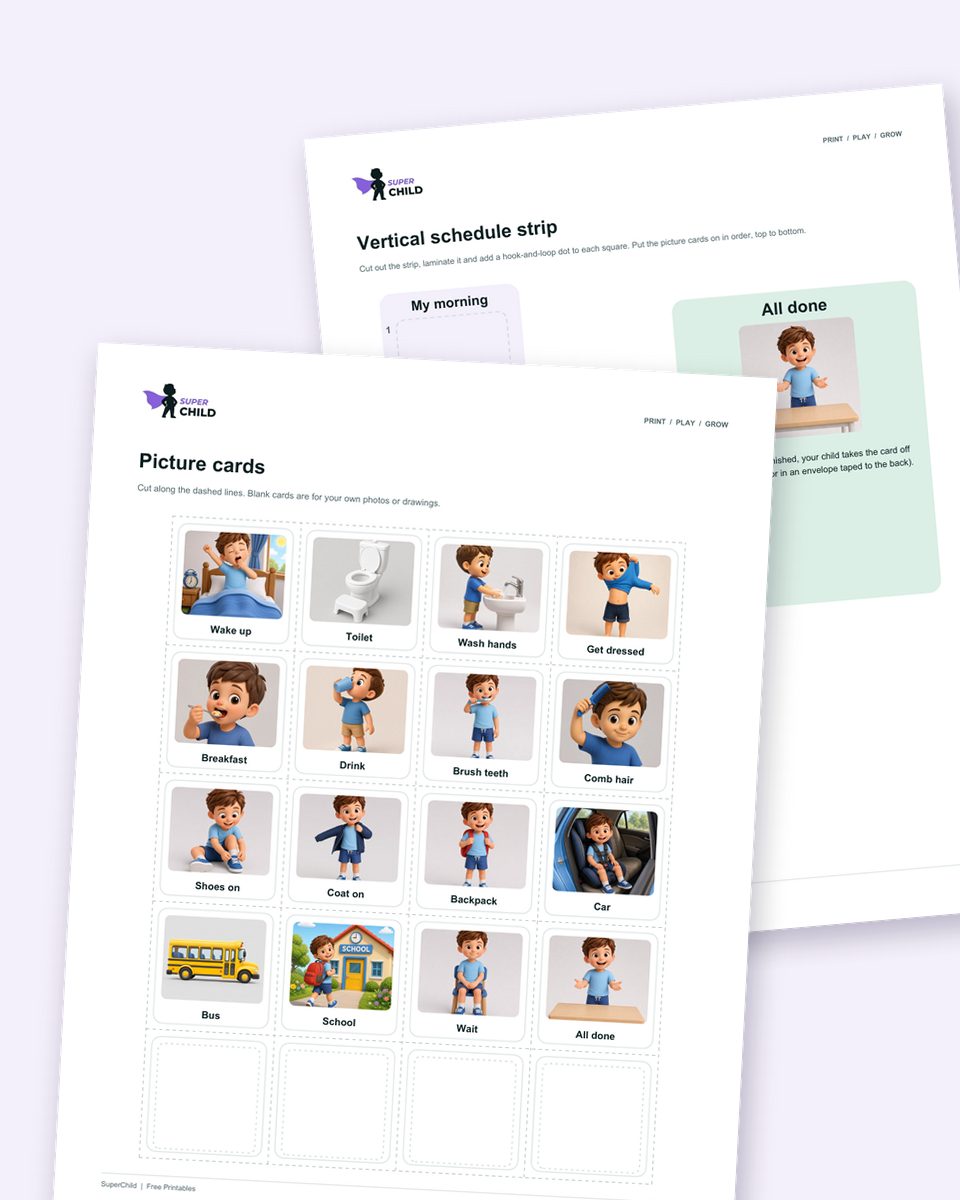
Free download1 PDF · 25 pages
Get the free visual schedule printable
Morning and bedtime routines plus picture cards for the whole day, with strips, a parent guide and a log.
Sources
- Wodka, Mathy and Kalb (2013). Predictors of phrase and fluent speech in children with autism and severe language delay. Pediatrics
- Tager-Flusberg and Kasari (2013). Minimally verbal school-aged children with autism spectrum disorder: the neglected end of the spectrum. Autism Research
- Pickles, Anderson and Lord (2014). Heterogeneity and plasticity in the development of language: a 17-year follow-up of children referred early for possible autism. J Child Psychol Psychiatry
- Koegel et al. (2020). Definitions of nonverbal and minimally verbal in research for autism: a systematic review. J Autism Dev Disord
- Millar, Light and Schlosser (2006). The impact of AAC intervention on the speech production of individuals with developmental disabilities: a research review. JSLHR
- Kasari et al. (2014). Communication interventions for minimally verbal children with autism: a sequential multiple assignment randomized trial. JAACAP
- ASHA Practice Portal: Augmentative and Alternative Communication
Cite this page
Citation (APA style)
SuperChild. (2026). Nonverbal autism: how to teach words to a child who isn’t talking. Retrieved from https://superchild.ai/blog/nonverbal-autism
Link for your website
<a href="https://superchild.ai/blog/nonverbal-autism">Nonverbal autism: how to teach words to a child who isn’t talking</a> (SuperChild)