
Autism experience games
Autism simulator: three short games about what autism can feel like for a young child
What does autism feel like? Nobody can show you all of it, because every autistic person is different. These three short games show one moment each in the day of a young autistic child who says few or no words: a kitchen that is too loud, a wish nobody understands and a routine that suddenly breaks. Each one ends with what helps.
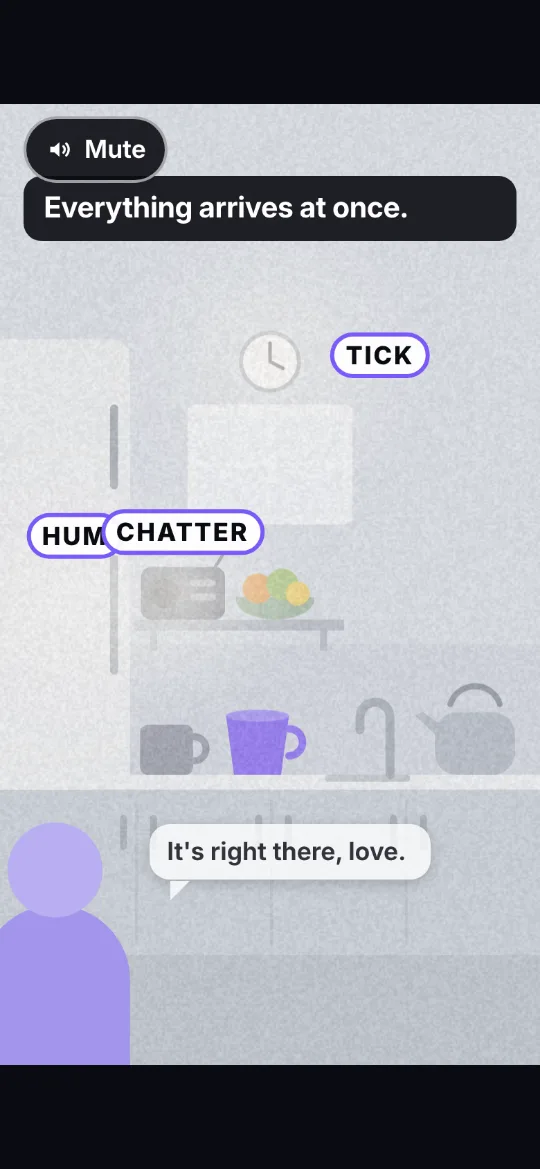
Sensory overload · 40 seconds
Too Loud, Too Bright
- The sound gets loud on purpose: a humming fridge, a ticking clock and a radio, all at once. The Mute button stays at the top of the game.
- The light turns harsh and grainy, slowly. Nothing flashes more than three times a second.
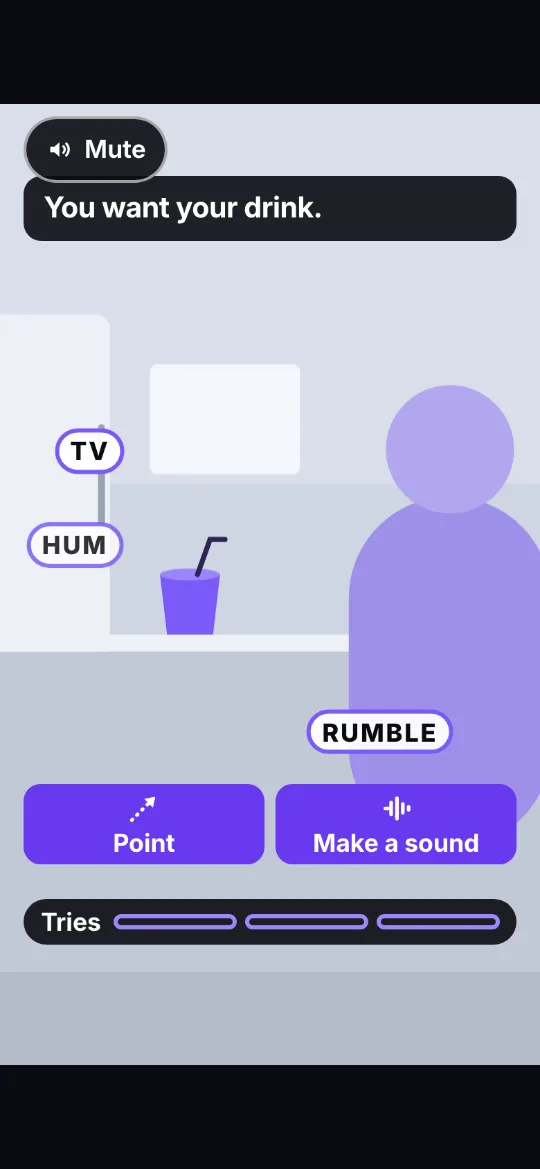
Communication and AAC · 40 seconds
Words I Can’t Reach
- A TV, a washing machine and a hum play at once, and build as you try. The Mute button stays at the top of the game.
- The screen changes slowly. Nothing flashes more than three times a second.
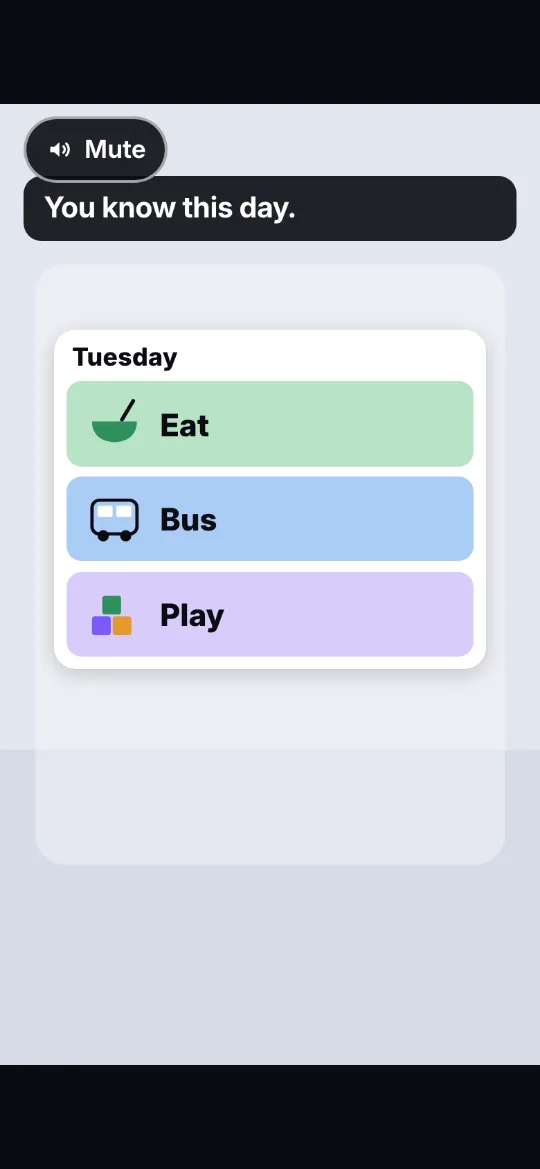
Routines and change · 40 seconds
The Day Changed
- An engine and other sounds grow after the change, then calm down. The Mute button stays at the top of the game.
- The cards and colors change slowly. Nothing flashes more than three times a second.
This is one child’s experience, not every autistic person’s.
Each game plays full screen, warns you before it starts, has a Mute button and never flashes more than three times a second. Close it any time with the button in the corner. Each game’s own page also describes it step by step, if you’d rather read.
What helps
Every game ends the same way: with support that starts early
None of these moments is about a child doing something wrong. Each one gets easier when the world around the child changes: a calmer room, a way to say what they want, a warning before the day changes.
- What helps with sensory overload: Early support for sensory differences starts with the room, not with asking the child to cope.
- What helps a child communicate without speech: AAC, augmentative and alternative communication, means any way to communicate besides speech: pictures, signs, gestures, a choice board or a device that speaks. Speech-language pathologists (speech and language therapists in the UK) recommend starting early; research has not found that AAC stops a child from learning to talk.
- What helps with changes in routine: Visual supports show a child what is happening and what comes next, in pictures they can look at again and again.
Early, evidence-based support for young autistic children includes visual supports, AAC and play-based practice with parents and the people the child knows. Our guide to early intervention explains where to start.
For parents
Worried, or just starting out?
You don’t need every answer to start. Our guide walks you through the first steps, from the first conversation with your doctor to small things you can do at home.
For professionals
Using this with families or a team?
Share a game with a family, a new colleague or a classroom team before you talk about sensory needs, AAC or visual supports. SuperChild gives young children short, playful practice every day, while you stay in charge.
FAQ
Questions about the autism experience games
Can a game really show what autism feels like?
Only a small part of it. Each game shows one moment in one child’s day. Autism is different for every person: some find sound hard, some find it easy; some talk a lot, some never use speech. Treat the games as a way to start understanding, and listen to autistic people for the rest.
Who are the autism experience games for?
For anyone close to a young autistic child: grandparents, siblings, family friends, babysitters, teachers, classmates’ parents and new team members in a clinic or school. A hard moment can be easier to explain to someone who has felt a little of it first.
Is it safe to play if loud sound or flicker is hard for me?
Each game warns you before it starts. The sound grows on purpose, and there is a Mute button at the top of the screen the whole time. The light changes slowly and never flashes more than three times a second. If you would rather not play, each page describes the game step by step.
What helps a young autistic child in these moments?
Early support that fits the child: a calmer room and a quiet corner, a way to communicate without speech such as a choice board or other AAC, visual schedules and first-then boards, and play-based practice with the people they know. Our guide to early intervention explains where to start.
Can I share the games or use them in a training?
Yes. Each game has its own link that you can share or post. Please share the page rather than a screen recording without context, so people also see the note that this is one child’s experience and what helps.
Sources
- Hume K. et al. (2021). Evidence-Based Practices for Children, Youth, and Young Adults with Autism: Third Generation Review. Journal of Autism and Developmental Disorders.
- ASHA Practice Portal: Augmentative and Alternative Communication.
- National Autistic Society: Sensory differences.
- NICE guideline CG170: Autism spectrum disorder in under 19s, support and management.
Keep exploring
- GuideEarly intervention for autismWhere to start when your young child may be autistic: getting support early, what helps at home and how speech, play and visual supports fit in.
- GuideAAC for autismWhat an AAC device is, low-tech to high-tech options with typical costs, how to get one funded, how to start at home and how PECS differs from other AAC.
- Free toolFirst-then board makerA first-then board, or a now and next board, with two pictures or your own photos, side by side or one above the other, ready to print.
- ArticleNonverbal autismWhat nonverbal autism means, how to check what your child understands, what the research says about talking later, and what to do at home.
- Free printableAutism starter kitFree autism starter kit: where to start with a visual schedule, first-then board, token board, picture exchange book and social stories, with a first-week plan.
- SuperChildFor parentsDaily practice at home that follows your child’s therapy plan.
Small steps, big progress
Daily practice for young children, with the professional in charge.
SuperChild gives young children short, playful practice every day, guided by an AI coach while their therapist, teacher or parent stays in charge.