
Autism experience · Sensory overload
Too Loud, Too Bright: what sensory overload can feel like for an autistic child
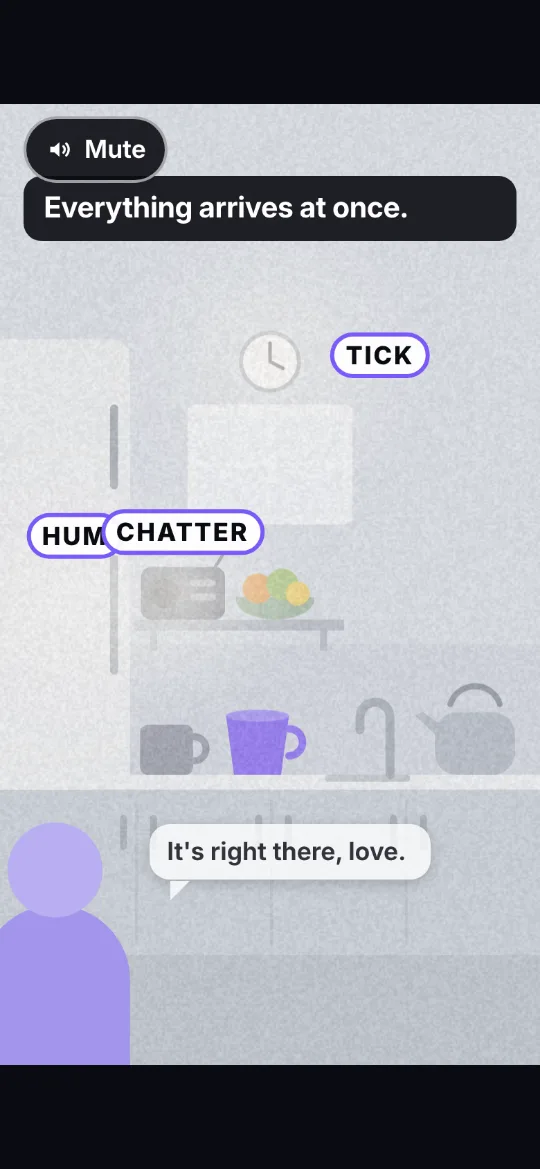
Sensory overload is when more sound, light or touch comes in than the brain can sort, so everything arrives at once. In this 40-second game you try to find one cup in an ordinary kitchen while the fridge hums as loud as a voice and the light keeps getting harsher. Then you play the same kitchen again, set up differently.
40 seconds, on a phone or a computer
Sensory overload · 40 seconds
Too Loud, Too Bright
- The sound gets loud on purpose: a humming fridge, a ticking clock and a radio, all at once. The Mute button stays at the top of the game.
- The light turns harsh and grainy, slowly. Nothing flashes more than three times a second.
This is one child’s experience, not every autistic person’s.
Read instead of play
What happens in the game
- 1You are a young child in a kitchen. The task is simple: find your cup.
- 2The fridge hum, a clock and a radio come in one by one, and none of them fades into the background. Someone says “It’s right there, love,” but the words get lost in the noise.
- 3Every wrong tap makes the light harsher. Finding the cup takes far more effort than it should.
- 4Then the same kitchen again, set up differently: one soft hum instead of three noises, and softer light. One tap, and the cup is found.
The game ends: “Early, evidence-based support can start with the room itself.”
Why sensory overload happens
Many autistic people sense the world differently. A sound others stop noticing, such as a fridge or a ventilation fan, can stay just as loud as a voice. Bright or flickering light, a scratchy label or a strong smell can be hard to ignore.
When too much comes in at once, a child has no room left for the task, for listening or for words. A young child who cannot yet say “it’s too loud” may cover their ears, run, cry or shut down. That is overload, not naughtiness.
It goes both ways: the same child may seek out other sensations, such as spinning, deep pressure or a favorite sound. Every child’s mix is different.
What helps
What helps with sensory overload
Early support for sensory differences starts with the room, not with asking the child to cope.
Change the room first
Turn off the radio, dim harsh light, close a door. Fewer things competing for attention leaves room for the task.
A quiet corner the child can choose
A tent, a beanbag or a corner with noise-canceling headphones, always in the same place, that the child can go to before overload builds.
Notice the early signs
Covered ears, fast movements or going quiet often come before a meltdown. Lower the demands then, not after.
Sensory play that the child enjoys
Play with the sensations your child seeks out. If they enjoy it, it can also be a relaxed moment to offer choices. Our sensory activities for autism go sense by sense.
Ask an occupational therapist
An OT can look at your child’s sensory profile and suggest changes at home, at daycare, preschool and school.
For parents
Worried, or just starting out?
You don’t need every answer to start. Our guide walks you through the first steps, from the first conversation with your doctor to small things you can do at home.
For professionals
Using this with families or a team?
Share a game with a family, a new colleague or a classroom team before you talk about sensory needs, AAC or visual supports. SuperChild gives young children short, playful practice every day, while you stay in charge.
FAQ
Questions about sensory overload
What is sensory overload in autism?
Sensory overload is when more sound, light, touch or smell comes in than a person can process, so it all arrives at once and becomes overwhelming. Many autistic people experience it, though what triggers it differs from person to person.
What does sensory overload feel like?
Some autistic adults describe it as every sound being turned up with no way to turn any of it down, or as light that hurts. Thinking, listening and talking get harder. The game gives a short taste of the noise, but in real life it can last much longer and feel far stronger.
What are the signs of sensory overload in a young child?
Covering ears or eyes, running off, crying, hitting out, freezing or suddenly going quiet. A child who says few words often shows it with their body first. If you see these signs often, mention them to your child’s doctor, therapist or an occupational therapist.
How can I help a child with sensory overload right now?
Lower the input first: less noise, softer light, fewer people talking. Use few words, offer a quiet place and wait. Talk about what happened later, when the child is calm, and plan the room so it happens less often.
Sources
- Hume K. et al. (2021). Evidence-Based Practices for Children, Youth, and Young Adults with Autism: Third Generation Review. Journal of Autism and Developmental Disorders.
- ASHA Practice Portal: Augmentative and Alternative Communication.
- National Autistic Society: Sensory differences.
- NICE guideline CG170: Autism spectrum disorder in under 19s, support and management.
Keep exploring
- HubAutism experience gamesThree 40-second games: one moment in a young autistic child’s day, and what helps.
- ArticleSensory activities for autismActivities for all eight senses, calming vs alerting, seekers vs avoiders, and a sample sensory-break day for preschool.
- GuideEarly intervention for autismWhere to start when your young child may be autistic: getting support early, what helps at home and how speech, play and visual supports fit in.
- Free toolVisual schedule makerBuild a visual schedule (or visual timetable) for one routine or a whole day: the toilet, brushing teeth, a school morning. Pick pictures or add photos, reorder the steps, print and laminate.
- ArticleLevel 3 autismWhat “requiring very substantial support” means, what a day can look like, and how a child with high support needs keeps learning.
- SuperChildFor parentsDaily practice at home that follows your child’s therapy plan.
Small steps, big progress
Daily practice for young children, with the professional in charge.
SuperChild gives young children short, playful practice every day, guided by an AI coach while their therapist, teacher or parent stays in charge.