On this page
What is independent practice?
Independent practice is a child doing a skill they have already learned, from start to finish, with no adult prompting each step. It is short, it has a clear end, and its job is fluency and confidence, not teaching something new.
In an ABA program a skill is first taught with prompts, then the prompts fade until the child responds on their own. Independent practice picks up there. The child gets the many extra repetitions a skill needs to stick, without an adult sitting in front of them, and the adult gets a few minutes back.
Teachers call the same idea independent work, and special education classrooms often run it as a TEACCH-style work system: a set place, a set order and a visible end to every task.
- Mastered
- Correct without help across several sessions. Ready for independent practice and maintenance.
- Nearly mastered
- Mostly correct, with the odd self-corrected error. Fine for short independent blocks if the team agrees.
- Still being taught
- Needs prompts or a model. Keep it at the table with an adult.
Which skills suit independent practice, and which do not
Skills with a clear right answer and a clear end suit independent practice: matching, sorting, receptive identification, sequencing and familiar routines. New skills, anything that still needs prompting, and skills that only work with a person, like manding, do not.
A good test: could the child finish this right now, alone, and would you know afterwards whether they got it right? If either answer is no, it is not ready.


Which skills a young autistic child can practice alone
Matching identical and similar pictures
- Independent practice?
- Yes
- Example
- Picture cards onto a base board in a task box
Sorting by category
- Independent practice?
- Yes
- Example
- Things we eat, wear and play with into three columns
Receptive identification
- Independent practice?
- Yes, once mastered
- Example
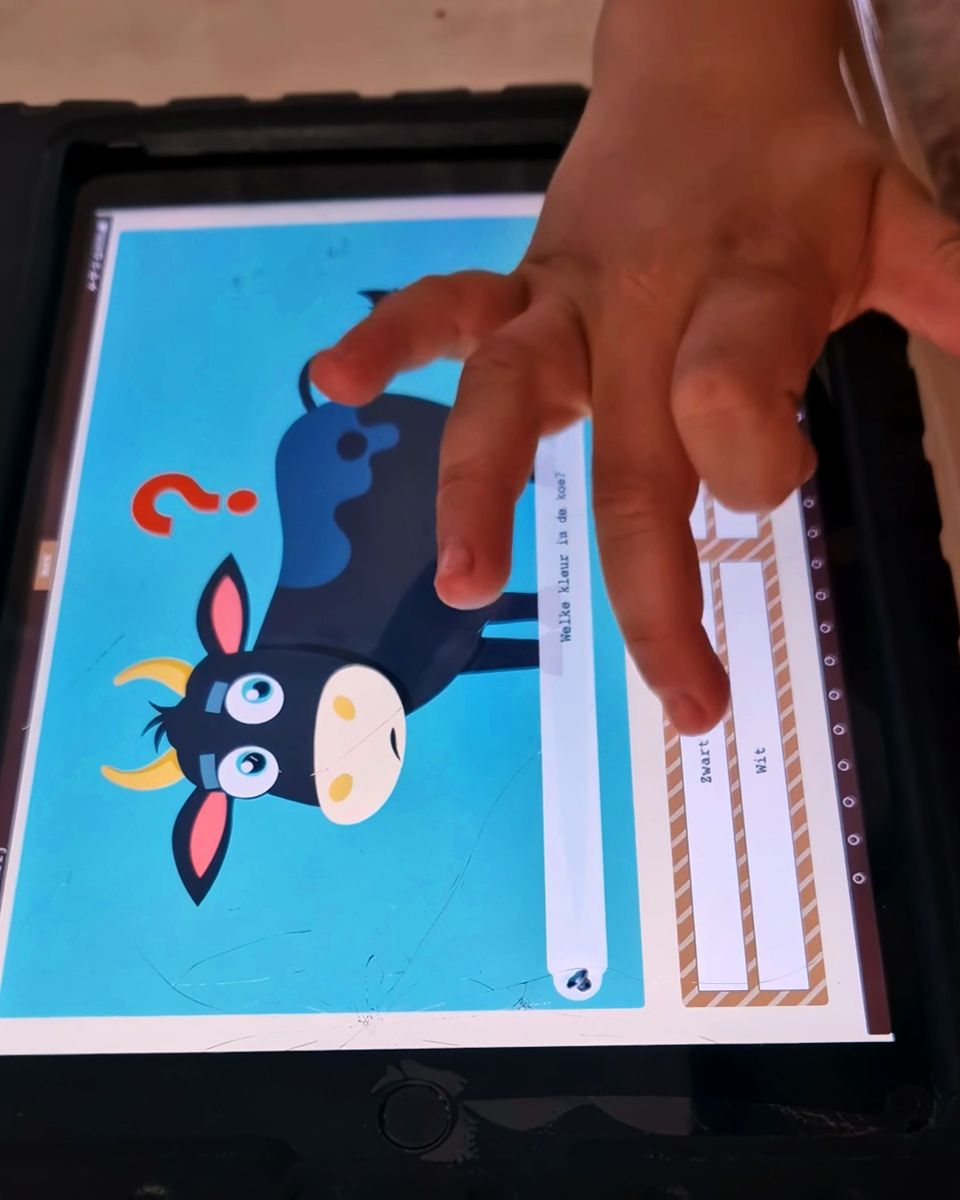
- Touch the dog among three pictures on a tablet
Sequencing
- Independent practice?
- Yes, once mastered
- Example
- Three picture cards of washing hands put in order
Familiar routines
- Independent practice?
- Yes, with a visual schedule
- Example
- Unpack the bag, hang the coat, sit at the table
A brand-new skill
- Independent practice?
- No
- Example
- The first week of any new target
Anything still prompted
- Independent practice?
- No
- Example
- Pointing that still needs a gesture prompt
Manding (requesting)
- Independent practice?
- No
- Example
- Asking for juice: someone has to hear it and hand it over
Conversation and play with peers
- Independent practice?
- No
- Example
- Turn-taking, answering a friend
| Skill | Independent practice? | Example |
|---|---|---|
| Matching identical and similar pictures | Yes | Picture cards onto a base board in a task box |
| Sorting by category | Yes | Things we eat, wear and play with into three columns |
| Receptive identification | Yes, once mastered | Touch the dog among three pictures on a tablet |
| Sequencing | Yes, once mastered | Three picture cards of washing hands put in order |
| Familiar routines | Yes, with a visual schedule | Unpack the bag, hang the coat, sit at the table |
| A brand-new skill | No | The first week of any new target |
| Anything still prompted | No | Pointing that still needs a gesture prompt |
| Manding (requesting) | No | Asking for juice: someone has to hear it and hand it over |
| Conversation and play with peers | No | Turn-taking, answering a friend |
The child’s BCBA, teacher or therapist decides when a target moves from “still taught” to “practice alone”.
Five ways to practice independently, compared
The five common options are task boxes and work systems, visual schedules and first-then boards, parent-run practice, tablet practice apps where the professional sets the targets, and general learning apps. They differ most in who chooses the targets and whether the professional sees the results.
Most children use two or three at once: a work system at school, a first-then board at home and a short tablet block. Mix them by job, not by preference for paper or screens.
Options for independent practice compared (last checked 9 November 2026)
Task boxes and work systems
- What the child does
- Finishes boxes left to right, then gets something they enjoy
- Who sets the targets
- Teacher or parent, from the program
- Data for the team
- A paper log if someone fills it in
- Main limit
- Prep time; the same cards get learned by heart
Visual schedules and first-then boards
- What the child does
- Follows a routine or finishes one step before a reward
- Who sets the targets
- Parent or teacher
- Data for the team
- Rarely recorded
- Main limit
- Supports routines, does not teach skills
Parent-run practice
- What the child does
- Short drills with a parent nearby
- Who sets the targets
- BCBA, in parent training
- Data for the team
- Parent’s tally sheet
- Main limit
- Parent time and energy; easy to over-prompt
Tablet app with professional targets (for example SuperChild)
- What the child does
- Short sessions on targets the team chose
- Who sets the targets
- BCBA, therapist or teacher
- Data for the team
- Every answer recorded on a dashboard
- Main limit
- A screen; needs tapping or dragging; not for AAC or speech sounds
General learning apps (for example Otsimo Special Education)
- What the child does
- Games on a curriculum the app sets
- Who sets the targets
- The app
- Data for the team
- Parent reports in the app
- Main limit
- Not tied to the child’s ABA targets
| Option | What the child does | Who sets the targets | Data for the team | Main limit |
|---|---|---|---|---|
| Task boxes and work systems | Finishes boxes left to right, then gets something they enjoy | Teacher or parent, from the program | A paper log if someone fills it in | Prep time; the same cards get learned by heart |
| Visual schedules and first-then boards | Follows a routine or finishes one step before a reward | Parent or teacher | Rarely recorded | Supports routines, does not teach skills |
| Parent-run practice | Short drills with a parent nearby | BCBA, in parent training | Parent’s tally sheet | Parent time and energy; easy to over-prompt |
| Tablet app with professional targets (for example SuperChild) | Short sessions on targets the team chose | BCBA, therapist or teacher | Every answer recorded on a dashboard | A screen; needs tapping or dragging; not for AAC or speech sounds |
| General learning apps (for example Otsimo Special Education) | Games on a curriculum the app sets | The app | Parent reports in the app | Not tied to the child’s ABA targets |
Where SuperChild fits, and where it does not
SuperChild is a tablet practice app in which the child’s professional picks the targets and sees every answer, and an AI coach guides the child through short sessions. It adds practice; it does not teach new skills on its own or replace the BCBA.
The professional chooses from 342 trainings aligned to the VB-MAPP and ABLLS-R, with more than 130,000 exercises. Each training climbs 10 levels, three of them with new pictures for generalization, and the dashboard shows which targets are stuck or mastered. At Emirsfoundation, 23 children completed 50,194 trials, about 44 times more targeted practice per child than in standard group care (case study).
Limits: the child has to tap or drag, it is screen time, and it does not cover AAC, visual schedules, speech sounds or manding with a real listener. Paper task boxes and a parent still do things it cannot. The best apps for autistic children compares it with ten other apps.
How to set up independent practice in five steps
Ask the team which targets are mastered, pick a format, make the end visible, teach the routine with help and then fade it, and record each session. Start with one task the child can already finish.
The first week is about the routine of starting, working and finishing, not the skill inside the task. Keep it easy on purpose.
- 1Ask the team for two or three mastered targetsThe BCBA or teacher names skills the child gets right without help, such as matching animals or sorting by color.
- 2Pick a format for eachA task box for hands-on work, a tablet block for listener and matching targets, a visual schedule for routines.
- 3Make the end visibleBoxes on the left, a finished basket on the right, a timer or a last card, then a first-then board showing what comes next.
- 4Teach the routine, then step backShow it once or twice, help from behind rather than in front, then sit further away each day.
- 5Record every sessionAlone, with help or not yet, per task. Share it with the BCBA each week.

How to keep data and make the skill generalize
Mark each independent task as done alone, done with help or not yet, and graph the share done alone each week. Then change the materials, the place and the person, because a skill that only works with one set of cards is not learned yet.
A box that slips from “alone” to “with help” two sessions running goes back to the table. A box that stays at “alone” for a week or two moves to maintenance, once or twice a week. A free ABA data sheet and the ABA graph maker are enough to start.
For generalization, keep the task and change one thing at a time: new pictures, real objects, another room, another adult. Matching animals on a tablet, then toy animals at the table, then the dog in a picture book on the sofa is one target in three forms.
What parents and professionals each do
The professional chooses the targets, decides when a skill is ready to practice alone, and reads the data. The parent or classroom runs the practice, keeps it short and reports back.
Parents: ask the BCBA at the next session which two skills your child can practice alone, and in what format. Ten minutes a day spread over two or three short blocks beats one long one. Our page for parents explains how professional-led home practice fits around family life, and pairing keeps practice time something your child wants.
Professionals: put independent practice in the treatment plan with its own mastery criteria, so it is maintenance you planned rather than homework that drifts. See how SuperChild works for one way to set targets once and see the results from home and class.
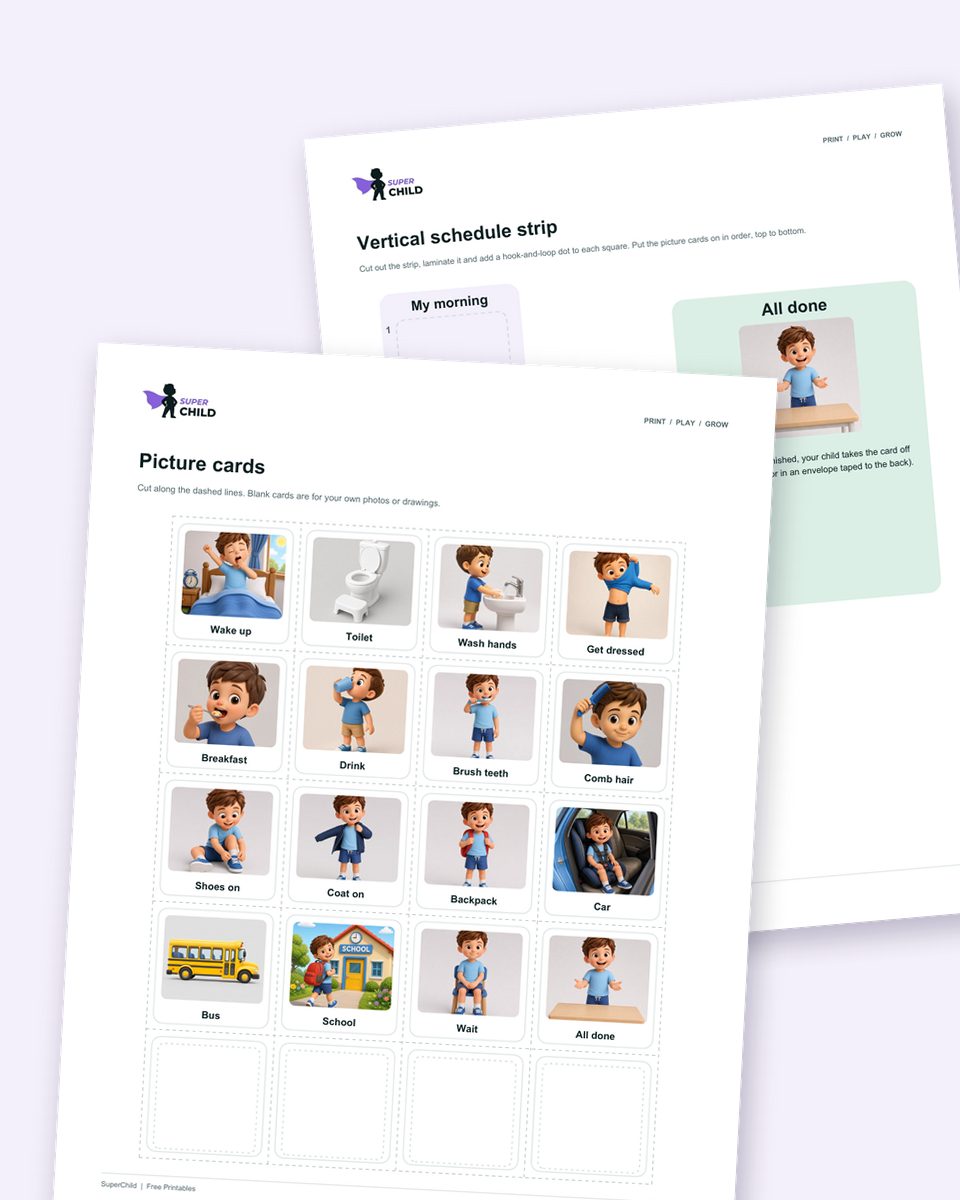
Free download1 PDF · 25 pages
Get the free visual schedule printable
Morning and bedtime routines plus picture cards for the whole day, with strips, a parent guide and a log.
Sources
- Hume & Odom: Effects of an individual work system on the independent functioning of students with autism (Journal of Autism and Developmental Disorders, 2007)
- Hume, Loftin & Lantz: Increasing independence in autism spectrum disorders: a review of three focused interventions (Journal of Autism and Developmental Disorders, 2009)
- Steinbrenner et al.: Evidence-Based Practices for Children, Youth, and Young Adults with Autism (NCAEP, 2020)
- Otsimo | Special Education, US App Store
- SuperChild: Emirsfoundation case study
Cite this page
Citation (APA style)
SuperChild. (2026). How can a young autistic child practice skills independently between ABA sessions? Retrieved from https://superchild.ai/blog/independent-practice-autism
Link for your website
<a href="https://superchild.ai/blog/independent-practice-autism">How can a young autistic child practice skills independently between ABA sessions?</a> (SuperChild)