On this page
- Six ways to add practice without adding RBT hours
- More trials per minute inside the sessions you already run
- Natural environment teaching embedded in routines
- Peer and small-group instruction
- Parent-implemented practice between sessions
- Independent work systems and task boxes
- Child-facing practice software where the BCBA sets the targets
- How to choose: match the lever to the target
Six ways to add practice without adding RBT hours
A center has six real levers: faster pacing inside sessions, NET embedded in routines, peer and small-group instruction, parent-implemented practice, independent work systems, and child-facing practice software. They differ in how much practice they add, how much staff time they still need, and how good the data is.
Skills like tacts, listener responding and matching are learned trial by trial, and most learners need many more trials than a session holds. Hiring more RBTs is slow and expensive, and asking the ones you have to run more programs per hour burns them out. The levers below add practice in other ways. None of them is new; most centers use two or three already without counting what they add.
All six fit inside a normal ABA program. The BCBA still writes the goals, decides which targets go to which lever, and reviews the data. The table compares them on the four things a clinic owner asks about.
Six ways to add practice, compared on extra practice, RBT time, data quality and setup effort
Faster DTT pacing and leaner data sheets
- Extra practice
- Medium: more trials in the same minutes
- RBT time needed
- None extra, after a short retraining
- Data quality
- Good, if the sheet matches the pace
- Setup effort
- Low
NET embedded in routines
- Extra practice
- Medium, spread across the day
- RBT time needed
- Low: practice rides on routines staff already run
- Data quality
- Fair: easy to miss trials
- Setup effort
- Low to medium
Peer and small-group instruction
- Extra practice
- Medium: one adult, two or three learners
- RBT time needed
- Less per learner
- Data quality
- Fair: per-learner scoring is harder
- Setup effort
- Medium
Parent-implemented practice
- Extra practice
- High, on days without a session
- RBT time needed
- None; BCBA time for parent training
- Data quality
- Low to fair: parent report
- Setup effort
- Medium
Independent work systems and task boxes
- Extra practice
- Medium, for mastered skills
- RBT time needed
- Setup and checking only
- Data quality
- Fair: finished work is the record
- Setup effort
- Medium at the start
Child-facing practice software
- Extra practice
- High, on targets that fit a screen
- RBT time needed
- Low once targets are set
- Data quality
- High: every trial logged automatically
- Setup effort
- Medium: devices and targets
| Lever | Extra practice | RBT time needed | Data quality | Setup effort |
|---|---|---|---|---|
| Faster DTT pacing and leaner data sheets | Medium: more trials in the same minutes | None extra, after a short retraining | Good, if the sheet matches the pace | Low |
| NET embedded in routines | Medium, spread across the day | Low: practice rides on routines staff already run | Fair: easy to miss trials | Low to medium |
| Peer and small-group instruction | Medium: one adult, two or three learners | Less per learner | Fair: per-learner scoring is harder | Medium |
| Parent-implemented practice | High, on days without a session | None; BCBA time for parent training | Low to fair: parent report | Medium |
| Independent work systems and task boxes | Medium, for mastered skills | Setup and checking only | Fair: finished work is the record | Medium at the start |
| Child-facing practice software | High, on targets that fit a screen | Low once targets are set | High: every trial logged automatically | Medium: devices and targets |
Ratings are a general guide for a typical early-learner caseload. Your learners, targets and staff decide the real numbers.
More trials per minute inside the sessions you already run
The cheapest extra practice is inside the session: shorter pauses between trials, materials ready before the session, and data sheets that take one mark per trial. Studies of discrete trial teaching found that short intertrial intervals produced more correct responding than long ones.
Watch one session with a stopwatch and you will usually find long gaps: hunting for the next card, writing a note after each trial, switching programs. A one-second pause instead of four, and a materials bin per program, adds a lot of trials to a block without making it harder for the child.
Data collection is the other half. A DTT data sheet with one box per trial and a short code (+, -, P) is faster than a narrative note. Some teams run first-trial probes on well-known targets and keep trial-by-trial data for new ones; the BCBA decides where each fits.
- Prepare a bin or folder per program before the session starts.
- Keep the pause between trials short on known targets, longer only when the child needs it.
- Intersperse quick mastered trials between hard ones to keep momentum and reinforcement high.
- Graph session data every week with the ABA graph maker, so faster pacing is checked against accuracy.
Natural environment teaching embedded in routines
NET turns snack, arrival, play and clean-up into practice: the snack sits in a closed box so the child mands, the puzzle piece is missing so the child asks. It adds trials without adding sessions, and it is strong for generalization, but those trials are easy to forget to record.
Pick two or three targets per learner and post them where the routine happens: on the snack table, the cubby, the play mat. Any adult in the room, including a lead teacher or a parent at drop-off, can then take the opportunity. A tally with a clicker or a sticky note is enough data for most NET targets.
NET is how mands, social skills and following directions in real settings get practised. It is not a fast way to add a hundred trials of a new tact; that still needs structured trials somewhere.
Peer and small-group instruction
Teaching two or three learners together lets one adult deliver more trials per staff hour, and children also learn some targets by watching each other. It works best for learners with similar targets who can wait a turn and attend to a peer.
A small group at a table, with each child taking turns on their own targets and sometimes answering the same question together, is common in early learner classrooms. Research on small-group instruction with autistic children found that some learners picked up targets taught to the peer next to them.
The cost is in planning and data. Grouping needs learners at similar levels, and scoring each child per trial in a group takes practice. Start with a group of two and a simple sheet with one column per child.
Parent-implemented practice between sessions
Parent-implemented practice is the lever with the most hours available: evenings, weekends and days without a session. It costs no RBT time, but it needs BCBA time for parent training and gives you weaker data than a session does.
Keep it small and specific. One or two mastered or nearly mastered targets, five to ten minutes in a routine the family already has, and a one-line log on the fridge. A parent who practises "first-then" at bath time or names animals at breakfast is adding real trials.
Parent-implemented intervention is on the list of evidence-based practices for autism. The catch is consistency: families are busy, and practice that is not checked tends to drift. Review the log at each parent training meeting and drop what is not happening.
Independent work systems and task boxes
An independent work system shows a child what to do, how much, when it is finished and what comes next, so they can complete tasks with no adult at their side. It is for skills the child has already learned: fluency and maintenance, not teaching something new.
A shelf of three task boxes on the left, a finished bin on the right and a picture of the reward at the end is the classic setup. Studies of individual work systems with autistic students found more time on task and fewer teacher prompts. Once it runs, one adult can supervise several children working on their own.
Use only mastered tasks, so the child succeeds without help, and rotate them so they stay interesting. The finished work is your data: count completed boxes, or note any task the child could not finish. Our task boxes printable has ready-made cards, and a visual schedule shows the order. For the child’s side, see independent practice between ABA sessions.
Child-facing practice software where the BCBA sets the targets
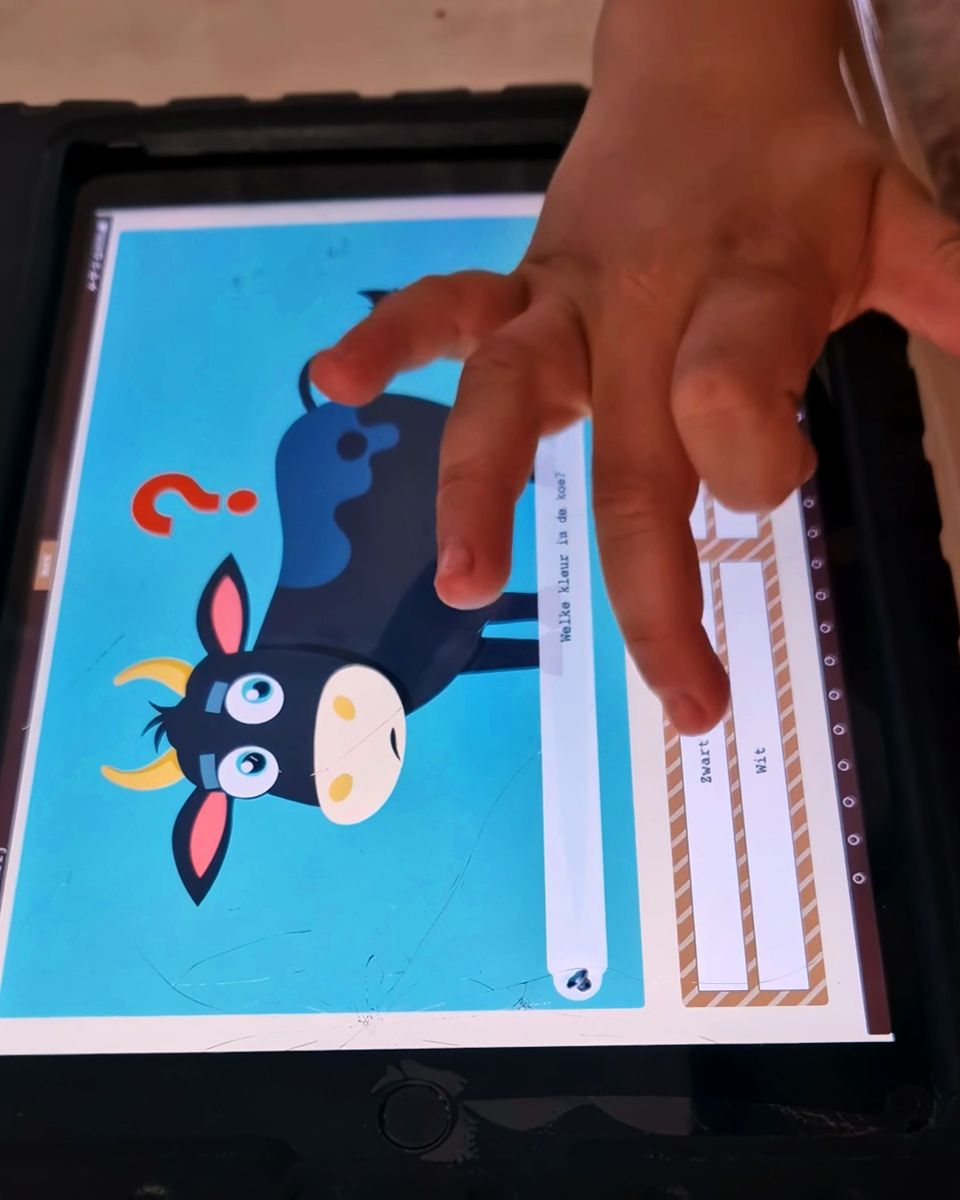
Practice software lets a child run trials on a tablet on targets the BCBA assigns, with every trial recorded automatically. It adds the most practice per staff minute, but only on targets that work on a screen, and only for children who can already tap or select.
Look for three things: the BCBA chooses the targets and mastery criteria, every trial is visible in a dashboard, and the steps run from prompted to independent rather than one level of difficulty. A game the child plays alone, with nobody seeing the data, is screen time, not practice.
SuperChild is one option. Young children with autism, intellectual disability or developmental delay practise on a tablet with an AI coach, in small methodical steps from 342 trainings aligned with the VB-MAPP and ABLLS-R. At Emirsfoundation, a Dutch youth-care provider, 23 children completed 50,194 learning trials, 44 times more practice per child than in standard group care, with the same staff. That was group care alongside staff-led treatment, not a US ABA clinic, so treat it as a sign of the volume possible rather than a forecast for your center. The case study has the details.
How to choose: match the lever to the target
Start from each learner’s targets, not from a tool. New skills need adult-run trials, mastered skills can move to independent work or software, and skills that must happen with people and in real places belong in NET and parent practice.
The matrix below is a starting point for a case review. Go through one learner’s target list with the BCBA, tag each target with the lever that fits, and keep the RBT’s session time for what only an RBT can do.
Measure practice volume before and after
Count learning trials per learner per hour for one week before a change and one week after, and graph accuracy next to it. More trials at the same or better accuracy means the lever works.
Use the same definition of a trial everywhere: one instruction, one response, one consequence. Session trials come from your data sheets, software trials from the dashboard, parent trials from the log. Check that two people score a session the same way with the IOA calculator before trusting a jump in numbers.
If you already use a data collection platform, see our ABA data collection software comparison for how practice software sits next to it.
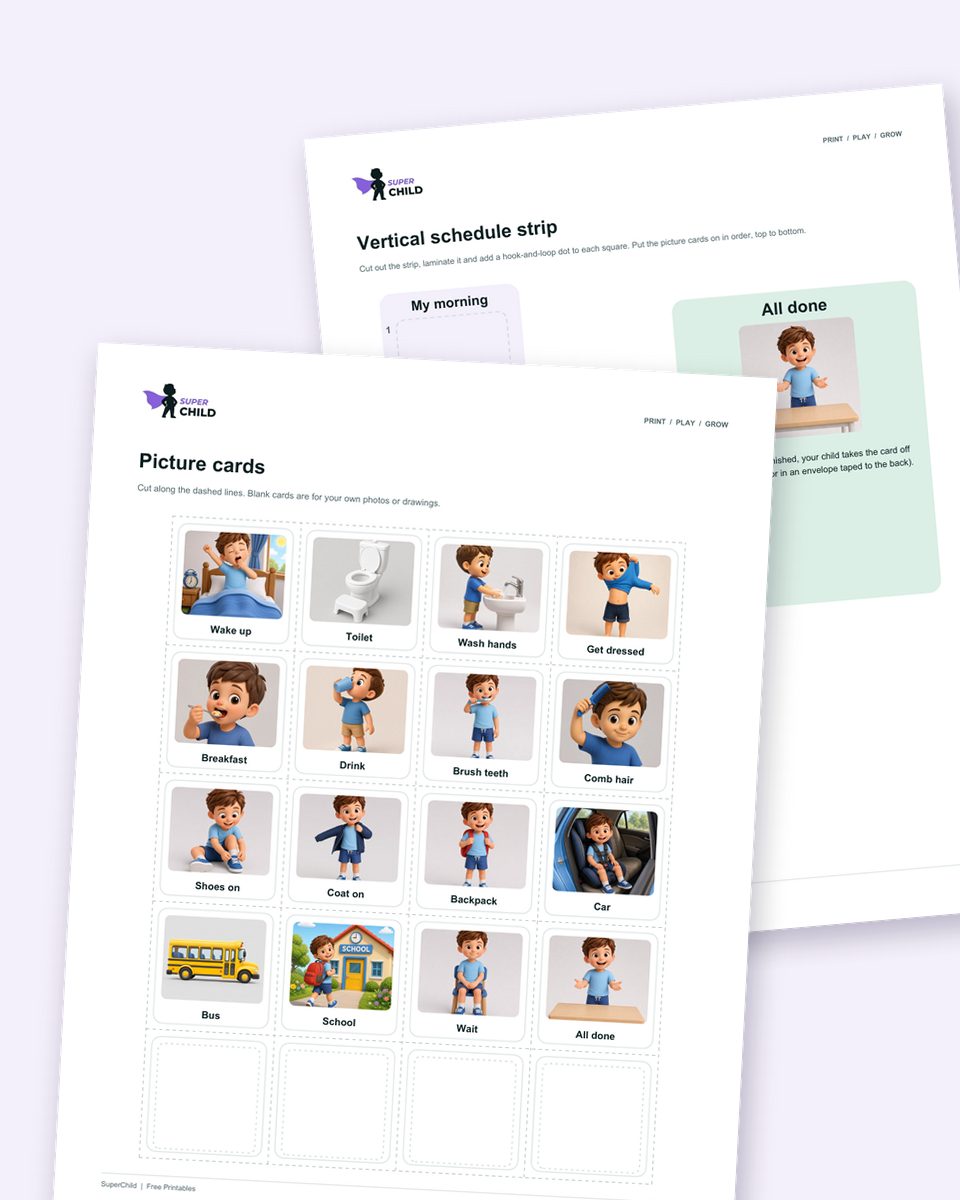
Free download1 PDF · 25 pages
Get the free visual schedule printable
Morning and bedtime routines plus picture cards for the whole day, with strips, a parent guide and a log.
Sources
- Koegel, Dunlap & Dyer: Intertrial interval duration and learning in autistic children (Journal of Applied Behavior Analysis, 1980)
- Hume & Odom: Effects of an individual work system on the independent functioning of students with autism (Journal of Autism and Developmental Disorders, 2007)
- Ledford, Gast, Luscre & Ayres: Observational and incidental learning by children with autism during small group instruction (Journal of Autism and Developmental Disorders, 2008)
- Steinbrenner et al.: Evidence-Based Practices for Children, Youth, and Young Adults with Autism (NCAEP, 2020)
- Wong et al.: Evidence-Based Practices for Children, Youth, and Young Adults with Autism Spectrum Disorder (J Autism Dev Disord, 2015)
- SuperChild: Emirsfoundation case study (Dutch youth care, 2026)
Cite this page
Citation (APA style)
SuperChild. (2026). How can ABA centers give children more practice time without adding RBT workload? Retrieved from https://superchild.ai/blog/more-practice-without-more-rbt-hours
Link for your website
<a href="https://superchild.ai/blog/more-practice-without-more-rbt-hours">How can ABA centers give children more practice time without adding RBT workload?</a> (SuperChild)