
What is a social story?
A social story is a short, personalized picture story that describes one situation from a child’s point of view: what usually happens, who is there, why, and one or two things the child can try. Carol Gray developed Social Stories in the early 1990s for autistic children. Parents and teachers read them together with the child on calm days, before the situation, so it feels familiar when it happens.
 Told by the child“I” and “my”, short and literal.
 Mostly describesAt least 2 describing sentences per “I can try…”.
 Read beforehandOn a calm day, a few times before it happens.
How to write a social story
To write a social story, pick one situation, tell it in order from your child’s point of view, keep one idea and one picture per page, describe much more than you direct, and end on a calm, positive page. The maker above does the layout; these steps are about the words.
- Pick one situation. Choose the moment that is hard right now, such as the barber, a fire drill or a change of plan, and start from the closest template, or from a blank story.
- Make it true for your child. Change each page to match what really happens: the real place, the real people, the real order. Swap a picture for a photo of the actual waiting room, classroom or chair where you can.
- Write as your child. Use “I” and “my”, short literal sentences, and one idea per page. Say “usually” and “sometimes” instead of “always”, because real life changes.
- Describe more than you direct. Most sentences should say what happens, who is there and how people feel. Keep “I can try…” sentences to one or two, and watch the story checker: it wants at least two describing sentences for each coaching one.
- End on a reassuring page. Finish with something true and calm, like “Most visits are short. Then we go home.”
- Print it and read it on a calm day. Choose a booklet (one or two pages per sheet) or a strip, set the font size, then download the PDF or print. Read it together a few times before the day itself.
The 2:1 rule: describe more than you direct
Carol Gray, who created Social Stories, asks writers to describe more than they direct. Her guideline is at least two descriptive sentences for every coaching sentence, and a story may have no coaching sentences at all.
Descriptive sentences say what happens, where, who is there and why: “The hairdresser puts a cape around me.” They also include perspective sentences about what other people think or feel (“My grown-up is proud of me”) and affirmations (“That is okay”). Coaching sentences suggest what the child, or the people around them, can do: “I can try to keep my head still.”
The ratio matters because a story full of instructions turns into a rule sheet, and many autistic children hear a list of “I must” lines as pressure. A story that mostly explains gives the child the missing picture of the situation, and that is usually what lowers the stress.
The story checker in the maker counts both kinds with simple rules: a sentence with “I can”, “I will try”, “should”, “must”, “need to”, “have to” or “don’t” counts as coaching, everything else as descriptive. It cannot tell a perspective sentence from a description, and it will call “I can see the doctor” coaching, so read its count as a hint and use your own judgment.
When to read a social story
Read a social story when your child is calm, before the situation, not during it. A good rhythm is a few times in the week before, again the day before, and once more on the day, a little while before you leave.
- Sit side by side, read slowly and let your child turn the pages. Pointing at the pictures is plenty of participation.
- Bring the booklet along, so you can open it to the page for the part that is happening.
- Read the last page again afterwards and talk about what went well.
- Never use the story as a consequence after a hard moment, and don’t introduce a new story in the middle of a meltdown.
- Once the situation is easy, read it less often. Keep it on the shelf for the next time it comes up.
Social story vs visual schedule
A visual schedule shows the steps of a routine in order, so your child can follow along while it happens: toilet, wash hands, get dressed. A social story is read beforehand and explains a situation: what usually happens, why, how it might feel and what helps.
They work well together. Read the haircut story in the days before, then use a short visual schedule at the salon (chair, cape, scissors, mirror, all done), or a first-then board with “first haircut, then playground”.
Social story examples
Three of the ten templates, as they print. The coaching sentences are in purple: each story has at most two of them, against seven or more that describe what happens. Use any of them as a social story template and change it to fit your child.
A social story about personal space
For a child who stands very close, hugs classmates or touches people to say hello. It explains the “bubble” first and suggests what to do instead.
- 1Everyone has a little bubble of space around their body.
- 2This bubble is called personal space.
- 3Most people feel comfortable when others stay about one arm away.
- 4When I stand very close, some people may feel squished.
- 5Hugs are for family and good friends, when they say yes.
- 6I can try to stand one arm away when I talk to someone.
- 7I can wave or say hello instead of touching.
- 8When I give people space, they feel comfortable near me.
- 9Other people give me space too. That feels good.
A social story for when plans change
For a child who finds surprises hard. It names the feelings, says they are okay and gives one question to ask.
- 1Most days, I know what is going to happen.
- 2Sometimes plans change.
- 3We might plan to go to the park, and then it rains.
- 4When plans change, I may feel sad, angry or surprised. Those feelings are okay.
- 5My grown-up tells me what we are doing instead.
- 6I can try to take a deep breath and listen.
- 7I can ask, “What happens next?”
- 8Often we do the first plan on another day.
- 9Changes happen to everyone. They usually turn out okay.
A social story about a fire drill
For a child who is frightened by loud alarms. Read it in the week before a planned drill and pair it with headphones.
- 1Sometimes at school, we have a fire drill.
- 2A fire drill is how we practice getting outside safely.
- 3The alarm is very loud, and the lights may flash.
- 4The sound tells everyone it is time to go outside.
- 5I can try to cover my ears or wear my headphones.
- 6My teacher shows us where to go, and we walk outside in a line.
- 7I can try to stay with my class and follow my teacher.
- 8We wait outside together until the teacher says it is time to go back.
- 9When the drill is over, the alarm stops and it is quiet again.
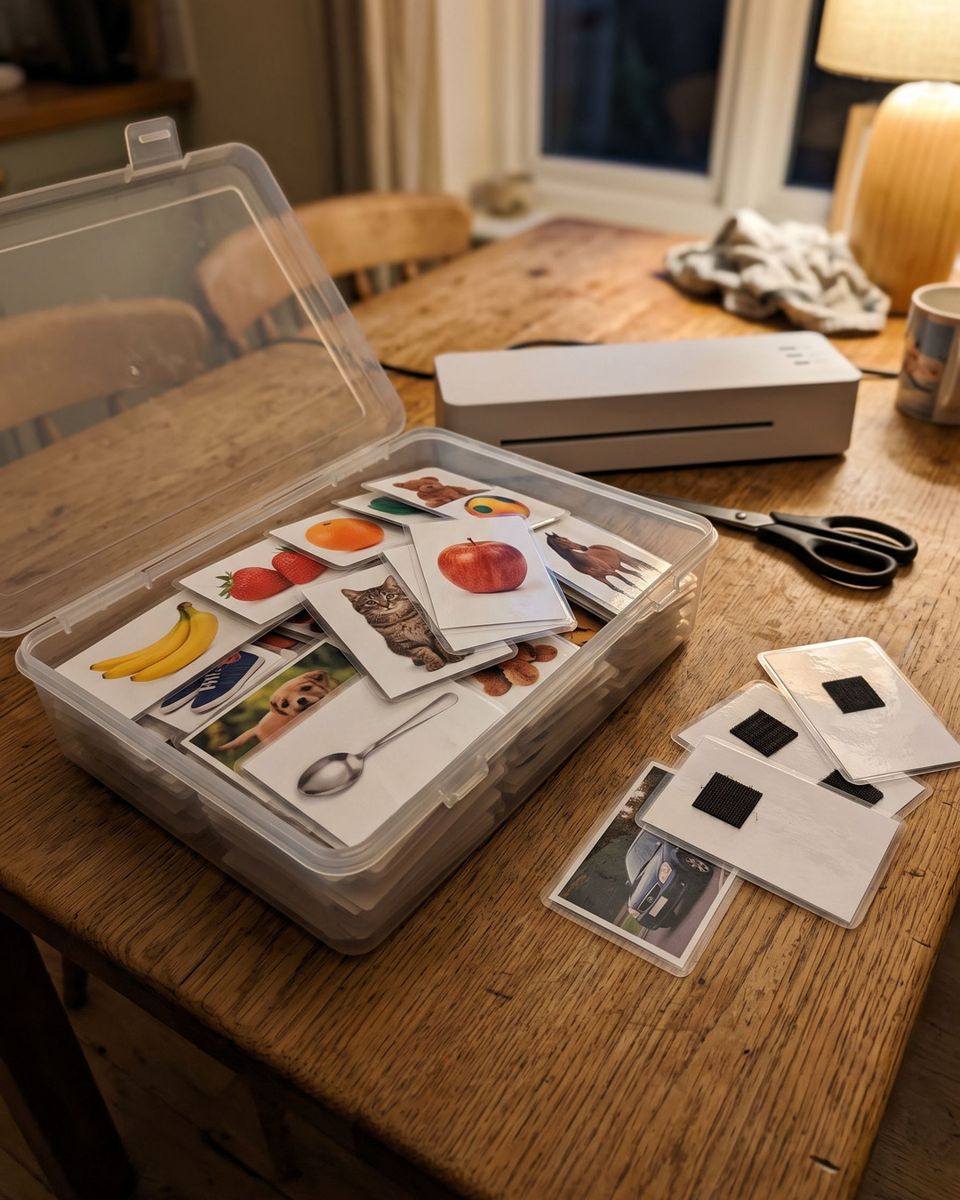
Free download1 ZIP · 94 packs
All 94 printable skill packs, free
Listening, matching, math, reading and more, one skill per pack, each with an adult guide, practice rounds and a log.
Cite this page
Citation (APA style)
SuperChild. (2026). Social story maker: 10 free social story templates to edit and print. Retrieved from https://superchild.ai/free-tools/social-story-maker
Link for your website
<a href="https://superchild.ai/free-tools/social-story-maker">Social story maker: 10 free social story templates to edit and print</a> (SuperChild)