


On this page
- Can a nonverbal autistic child read?
- How do you know a child can read if they can’t read aloud?
- What does the research on nonverbal autism and reading say?
- Where do I start teaching a nonverbal child to read?
- What should I avoid?
- My child reads words but doesn’t talk. Is that hyperlexia?
- Who can help, and what do I ask for at school?
Can a nonverbal autistic child read?
Many can learn to. Reading means looking at a written word and knowing what it means. Saying the word out loud is a separate skill. Children who speak few or no words have learned to read words, and some read sentences and stories. How far a child gets differs a lot.
You may have seen hints already. Your child picks the right cereal box, or brings you the book with their name on it. That may be reading, or it may be the logo and the colors.
For a long time people assumed speech had to come first. Janice Light and David McNaughton at Penn State have spent years showing otherwise with children who use AAC, which is any way to communicate besides speech. Our AAC for autism guide explains the options, and our article on nonverbal autism covers what “nonverbal” means.
How do you know a child can read if they can’t read aloud?
You ask the child to show it. Give them a written word and a few pictures, and let them put the word on the right picture. Or lay out a few written words, say one, and let them point. A child who gets it right again and again, with the cards in new places, is reading that word.
The Penn State literacy program lists three ways a learner can answer: say the word, sign it, or match it to a picture or symbol. Researchers work the same way: one study of an early literacy program used a reading measure that needed no speech.
At home, a few habits keep the check honest. Shuffle the cards each time, so “apple” isn’t always on the left. Keep your eyes on your child and off the right answer. Use plain cards in the same lettering, so the word is the only clue.
Our article on receptive vs expressive language explains why showing and saying are two different things.


What does the research on nonverbal autism and reading say?
It is hopeful and still thin. A 2018 review found nine studies with 24 people who used aided AAC, including autistic children. Teaching improved their single-word reading across the studies. The authors asked for caution because the studies were few and small.
In that review, letter sounds helped, whole words by sight helped, and so did a mix of the two. Single studies point the same way. An 8-year-old girl who used AAC learned letter sounds and began to read simple texts. Five autistic people who couldn’t rely on speech all got better at picking out written words in a matching task. Each study is a handful of people, so it can’t tell you what your child will do.
A 2021 review of early reading instruction in autism says many autistic children can learn to read when they are taught well. It also names a gap: very little research is about children who don’t use spoken language. There are too few studies, which says nothing about what these children can learn.
Where do I start teaching a nonverbal child to read?
Start with a few whole words your child cares about: their own name, a favorite food, a pet, a favorite character. Pair each written word with its picture, then practice putting the word on the picture. Add letters and their sounds alongside.
The Penn State program suggests teaching a few high-interest words by sight early on, because it keeps a child keen. Keep it to a few minutes at a time.
- 1Pick three to five words that matterTheir name. “Banana.” “Bus.” The dog’s name. Things your child would walk across the room for.
- 2Show the word with its pictureWrite the word in clear lowercase letters under a picture. Say it once as you point.
- 3Match the word to the pictureLay out two pictures. Help your child put a word card on the right one. Help less each day, then add a third picture.
- 4Take the picture awayLay out two word cards with no pictures. Say “banana” and let your child point or hand you the card. Shuffle every time.
- 5Put words where life happensA name card on the coat hook. “Milk” on the fridge shelf. Point to the word when you say it.
- 6Add letters and soundsPlay with the first letter of their name and say its sound. Letter sounds are what later let a child work out new words.
- 7Keep reading books togetherRun your finger under the words now and then. Your child doesn’t have to say anything.

What should I avoid?
Avoid checking reading only by asking your child to read aloud. Also avoid waiting for speech before you start, and clues that let your child get it right without reading.
- Testing only by speech
- “What does this say?” has no answer a child without speech can give. Ask “which one says milk?” and let them show you.
- Waiting until your child talks
- Reading doesn’t have to come after speech. Words on cards, books and a few letters can be part of the day now.
- Clues that do the reading
- A red card for “apple,” or the same spot on the table each time. Keep the cards plain and shuffle them.
- Words without meaning
- A word your child can match should also show up in life. After the “shoes” card, go to the shoes by the door.
My child reads words but doesn’t talk. Is that hyperlexia?
It might be. Hyperlexia means a child reads words early, usually without being taught, is strongly drawn to letters and print, and reads better than they understand. It is closely linked to autism and isn’t a diagnosis in itself.
Reading and understanding can sit far apart. In a study of 41 autistic children, some read words accurately and understood little of what they read.
So if your child reads signs, labels and subtitles, enjoy it and use it. Then check meaning: can your child put the word on the right picture?
Most nonverbal autistic children are not hyperlexic. They can still learn written words step by step.
Who can help, and what do I ask for at school?
Ask for reading to be part of your child’s plan now, with a way to answer that doesn’t need speech. A speech-language pathologist can set up how your child responds, and the teacher can adapt the reading lessons.
In an IEP meeting you can ask for reading goals that are measured by pointing, matching or choosing on a device. See our IEP goals guide and, for high support needs, our article on level 3 autism. Questions to bring:
- “How will my child show you what they can read?”
- “Which words and letters are you working on this month?”
- “Can the written word be on my child’s AAC buttons and picture cards?”
- “What can we do at home in five minutes a day?”
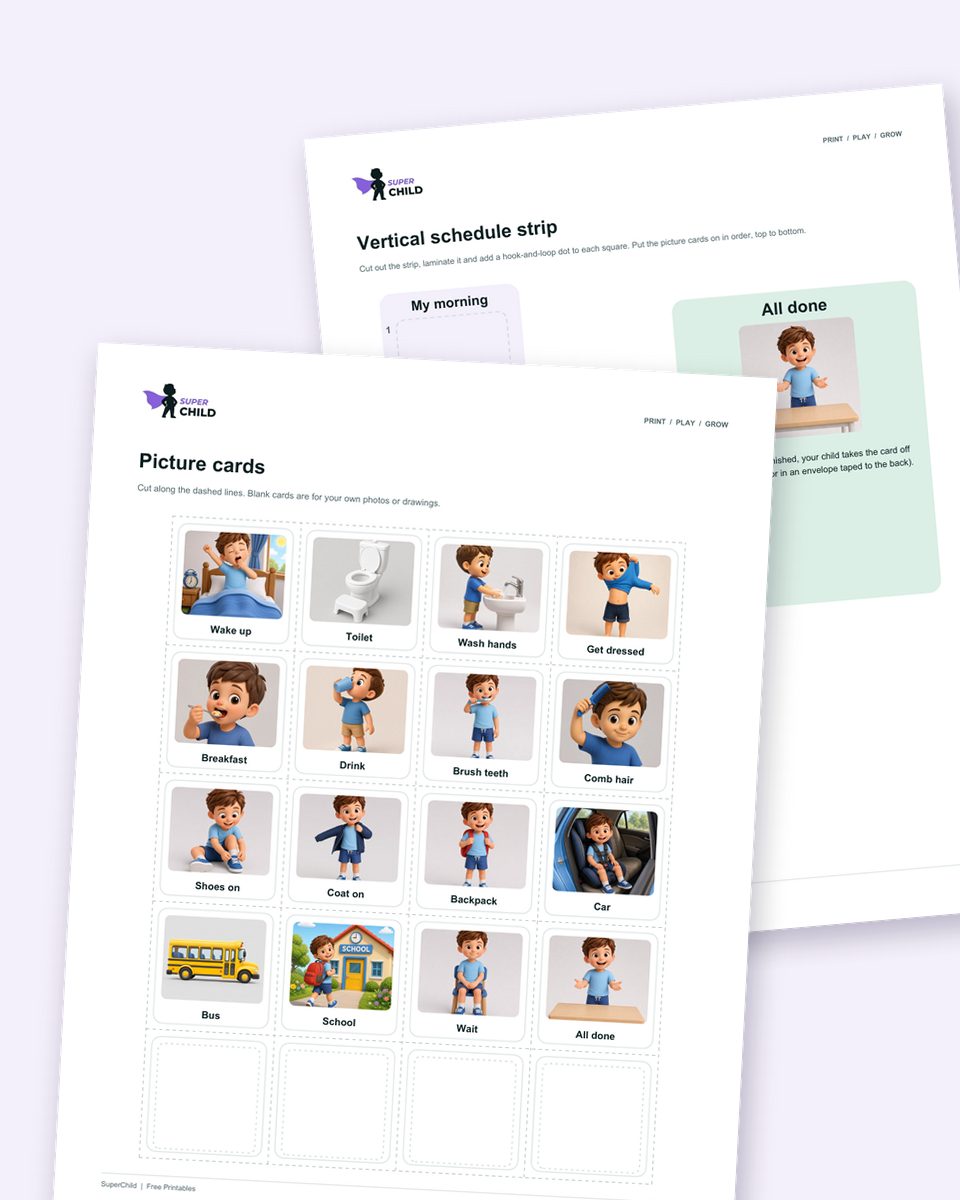
Free download1 PDF · 25 pages
Get the free visual schedule printable
Morning and bedtime routines plus picture cards for the whole day, with strips, a parent guide and a log.
Sources
- Mandak, Light and Boyle (2018). The effects of literacy interventions on single-word reading for individuals who use aided AAC: a systematic review. Augmentative and Alternative Communication
- Light, McNaughton, Weyer and Karg (2008). Evidence-based literacy instruction for individuals who require augmentative and alternative communication: a case study of a student with multiple disabilities. Seminars in Speech and Language
- Caron, Light, Holyfield and McNaughton (2018). Effects of dynamic text in an AAC app on sight word reading for individuals with autism spectrum disorder. Augmentative and Alternative Communication
- Arciuli and Bailey (2021). The promise of comprehensive early reading instruction for children with autism and recommendations for future directions. Language, Speech, and Hearing Services in Schools
- Browder, Ahlgrim-Delzell, Courtade, Gibbs and Flowers (2008). Evaluation of the effectiveness of an early literacy program for students with significant developmental disabilities. Exceptional Children
- Light and McNaughton. Literacy instruction for individuals with autism, cerebral palsy, Down syndrome and other disabilities (Penn State)
- Ostrolenk et al. (2017). Hyperlexia: systematic review, neurocognitive modelling, and outcome. Neuroscience and Biobehavioral Reviews
- Nation, Clarke, Wright and Williams (2006). Patterns of reading ability in children with autism spectrum disorder. J Autism Dev Disord
Cite this page
Citation (APA style)
SuperChild. (2026). Can a nonverbal autistic child learn to read? Retrieved from https://superchild.ai/blog/can-nonverbal-autistic-children-read
Link for your website
<a href="https://superchild.ai/blog/can-nonverbal-autistic-children-read">Can a nonverbal autistic child learn to read?</a> (SuperChild)