


On this page
- What is skill acquisition in ABA?
- The parts of a skill acquisition program
- Teaching formats for skill acquisition
- Stages of learning: acquisition, fluency, maintenance, generalization
- How to write measurable skill acquisition goals
- Data and mastery criteria
- What to check when a skill acquisition target stalls
What is skill acquisition in ABA?
Skill acquisition is the part of an ABA program that teaches new behavior: communication, social, play, learning, self-care and academic skills. It sits next to behavior reduction, which decreases behavior that is harmful or gets in the way of learning.
The two are not separate tracks. A good behavior reduction plan almost always includes a skill acquisition target: a child who screams to get a break learns to ask for one (functional communication training). And a child with a large repertoire of useful skills often has less reason for the behavior in the first place.
In a typical early intervention plan, most session time goes to skill acquisition targets chosen from an assessment such as the VB-MAPP or ABLLS-R and from what matters to the family. The ABA therapy guide explains how sessions and goals fit together; this article is about the program behind each target.
The parts of a skill acquisition program
A skill acquisition program has eight parts: the target and its operational definition, the instruction (SD) and materials, the prompt hierarchy and fading plan, error correction, reinforcement, the mastery criterion, the data method, and a generalization and maintenance plan.
The test of a program is whether two RBTs who read it would run the same trial. If one says “Touch dog” and the other says “Where is the dog? Show me”, or one prompts after 2 seconds and the other after 5, the data reflects the adults, not the learner.
- Target and operational definition
- What the response looks like and what does not count: “Touches the named picture within 3 seconds, in an array of 3. Touching two pictures is incorrect.”
- SD and materials
- The exact instruction and the stimuli, including how many exemplars and how the array is rotated.
- Prompt hierarchy and fading
- Which prompts are used (model, gesture, positional, physical), in what order, and the rule for fading them, such as a progressive time delay from 0 to 2 to 4 seconds.
- Error correction
- What happens after an error or no response, for example: block, re-present with an immediate prompt, a distractor trial, then the SD again.
- Reinforcement
- What follows a correct response and on what schedule, with a plan to thin it toward natural reinforcement.
- Mastery criterion
- When the target counts as learned, for example 90% correct on first-trial probes across 3 sessions with 2 different adults.
- Data method
- Trial-by-trial, first-trial probe, rate per minute or task analysis steps, and how often it is graphed.
- Generalization and maintenance
- Which people, places and materials the skill must transfer to, and when maintenance probes are run.
Teaching formats for skill acquisition
Most skill acquisition targets are taught with discrete trial training, natural environment teaching or chaining, and many programs use more than one. The format follows the skill: trial-based skills fit DTT, spontaneous skills like manding fit NET, and multi-step routines fit chaining.
The ABA therapy guide explains DTT and NET in detail, and task analysis in ABA covers chaining with eight worked routines. The short version, by skill:
Which teaching format fits which kind of skill acquisition target
Discrete trial training (DTT)
- Fits targets like
- Receptive identification, tacts, imitation, matching, intraverbal fill-ins
- Data you usually take
- Trial-by-trial or first-trial probe, % correct
Natural environment teaching (NET)
- Fits targets like
- Mands, play, social initiations, using skills in routines
- Data you usually take
- Frequency or opportunities with independent response
Chaining (task analysis)
- Fits targets like
- Handwashing, dressing, toileting, packing a bag
- Data you usually take
- % of steps independent per session
Fluency practice
- Fits targets like
- Skills that are accurate but slow: matching, reading, motor sequences
- Data you usually take
- Correct responses per minute
| Format | Fits targets like | Data you usually take |
|---|---|---|
| Discrete trial training (DTT) | Receptive identification, tacts, imitation, matching, intraverbal fill-ins | Trial-by-trial or first-trial probe, % correct |
| Natural environment teaching (NET) | Mands, play, social initiations, using skills in routines | Frequency or opportunities with independent response |
| Chaining (task analysis) | Handwashing, dressing, toileting, packing a bag | % of steps independent per session |
| Fluency practice | Skills that are accurate but slow: matching, reading, motor sequences | Correct responses per minute |
Spontaneous behavior such as manding cannot be counted in trials alone: track it in the natural environment, as frequency.
Stages of learning: acquisition, fluency, maintenance, generalization
A new skill moves through acquisition (learning to do it correctly), fluency (doing it accurately and without hesitation), maintenance (still doing it weeks later) and generalization (doing it with new people, materials and places). Each stage needs different teaching and different data.
This sequence comes from the instructional hierarchy of Haring and Eaton (1978), which names acquisition, fluency, generalization and adaptation; ABA programs often add maintenance as its own check. The practical point is that teaching which works in acquisition, such as immediate prompts and dense reinforcement, holds a learner back in fluency, where the goal is speed and fewer adult cues.
- Acquisition: prompts, errorless teaching on new targets, reinforcement for every correct response. Measure % correct.
- Fluency: short timed practice, prompts faded, reinforcement for speed and accuracy together. Measure correct per minute.
- Maintenance: mastered targets mixed into sessions and probed at 2 and 4 weeks. Measure % correct on probes.
- Generalization: new exemplars, new adults, new rooms, planned from the start rather than hoped for at the end.
How to write measurable skill acquisition goals
A measurable skill acquisition goal names the learner, the observable behavior, the condition it happens under and the criterion, and adds where and with whom it must generalize: “Given an array of 3 pictures and the instruction to touch one, the learner will touch the named picture in 9 of 10 opportunities across 3 sessions, with 2 adults.”
Avoid verbs you cannot see (“understands”, “knows”, “is aware of”). Replace them with what the learner does: touches, says, hands, signs, completes. Keep the criterion the same in the goal and on the data sheet, so mastery is not a judgment call.
The VB-MAPP goal mapper turns a level, domain and milestone area into practice goals written this way, and IEP goals for autism shows the same structure for school goals.
Vague goals rewritten as measurable skill acquisition goals
Will know colors
- Measurable
- Will touch the named color (red, blue, yellow) in an array of 3, 9 of 10 opportunities across 3 sessions
Will communicate wants
- Measurable
- Will mand for 10 different items with a word, sign or device, without an echoic prompt, across 2 settings
Will improve imitation
- Measurable
- Will imitate 10 actions with objects within 3 seconds of a model, 90% across 3 sessions with 2 adults
Will wash hands
- Measurable
- Will complete all 11 steps of handwashing independently across 5 consecutive days
| Vague | Measurable |
|---|---|
| Will know colors | Will touch the named color (red, blue, yellow) in an array of 3, 9 of 10 opportunities across 3 sessions |
| Will communicate wants | Will mand for 10 different items with a word, sign or device, without an echoic prompt, across 2 settings |
| Will improve imitation | Will imitate 10 actions with objects within 3 seconds of a model, 90% across 3 sessions with 2 adults |
| Will wash hands | Will complete all 11 steps of handwashing independently across 5 consecutive days |
Data and mastery criteria
Skill acquisition data is usually taken trial by trial or as a first-trial probe at the start of the session, graphed as % correct per session, and compared with a mastery criterion set before teaching starts. In a study comparing criteria, higher ones held up better at maintenance checks than 80%.
First-trial (cold) probes are quick and show what the learner does without warm-up; trial-by-trial data shows how the learner responds to prompting within a session. Many clinics probe every target and take full data on the few that are newest. Whatever you use, graph it each session with a phase change line whenever the teaching changes.
On criteria: a study comparing mastery levels with children with developmental disabilities found that the common 80% correct across 3 sessions did not hold up at later maintenance checks for some learners, while higher criteria did better in that small sample (Richling, Williams and Carr, 2019). Set the criterion with your BCBA, write it in the program and change it only as a planned decision.
What to check when a skill acquisition target stalls
When a target has not moved for 3 to 5 sessions, check motivation, prerequisites, prompt dependence, step size and procedural fidelity, in that order, before you add more trials. Treat a stalled target as a teaching problem first, not a learner problem.
Look at the data by trial type and by staff member first. A target that is at 90% with one RBT and 40% with another is a fidelity issue; a target that is correct only in position 1 of the array is a side bias, not a learned discrimination.
- 1MotivationRun a fresh preference assessment. Is the reinforcer still strong, and is it delivered within a second or two?
- 2PrerequisitesCan the learner scan an array, match identical pictures, wait for the SD? If not, teach that first.
- 3Prompt dependenceDoes the learner wait for the prompt? Lengthen the time delay or switch to a prompt that fades more easily, such as a gesture instead of a vocal cue.
- 4Step sizeSplit the target: fewer pictures in the array, one exemplar before many, or an easier discrimination first.
- 5Procedural fidelityWatch two staff run it. Same SD, same prompt timing, same error correction? Retrain on the program, not the learner.
- 6Data qualityCheck interobserver agreement before you change anything else; a stall in the data can be a stall in the recording.
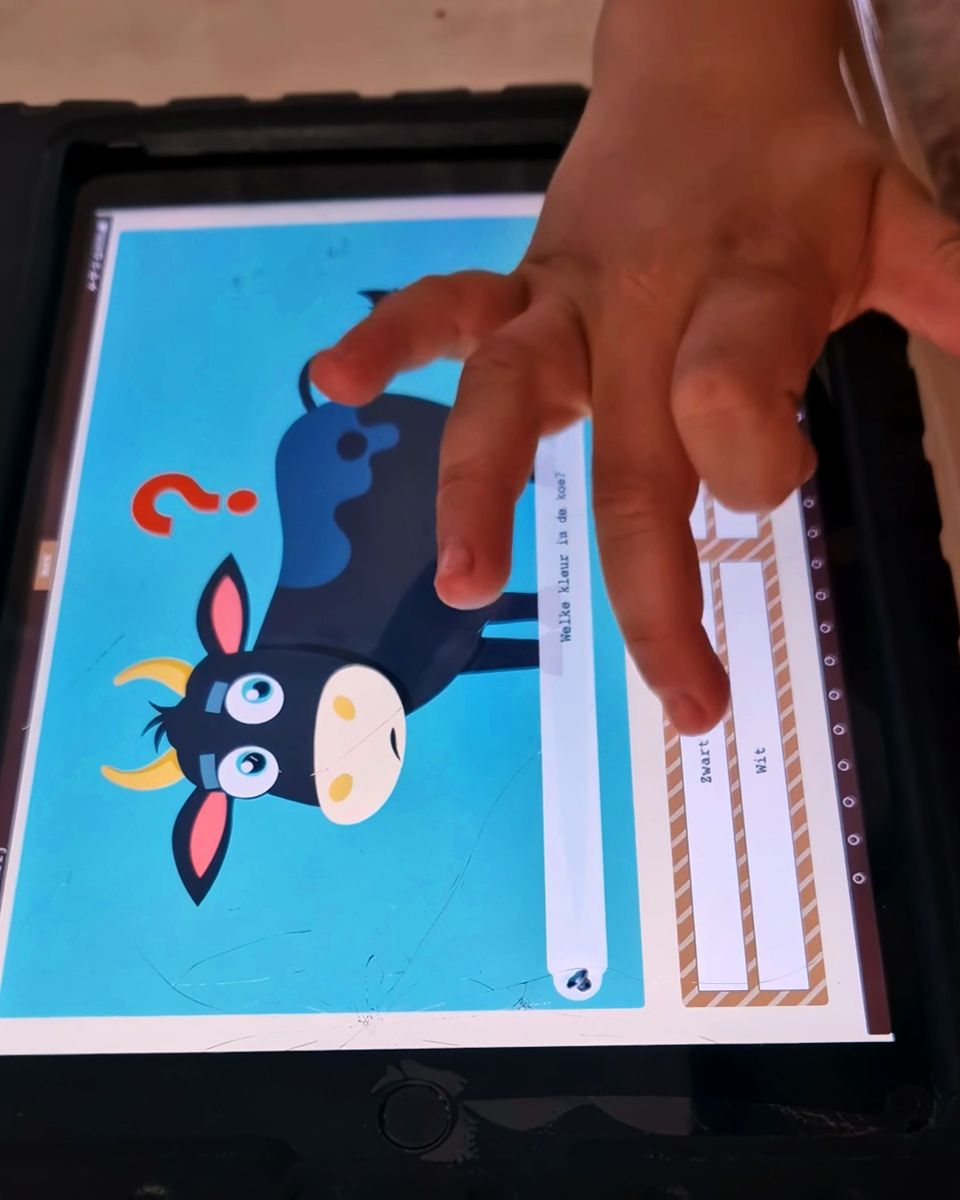
For professionalsLive demo
What if this sheet filled itself?
SuperChild records every trial while a child practises on their own with an AI coach. You keep the targets and the decisions. See it with one of your own goals.
Book a demoSources
- Cooper, Heron & Heward: Applied Behavior Analysis, 3rd edition (Pearson, 2020)
- Haring & Eaton: Systematic instructional procedures: an instructional hierarchy, in The Fourth R: Research in the Classroom (1978)
- Richling, Williams & Carr: The effects of different mastery criteria on the skill maintenance of children with developmental disabilities (Journal of Applied Behavior Analysis, 2019)
- Behavior Analyst Certification Board: RBT Test Content Outline (skill acquisition)
Cite this page
Citation (APA style)
SuperChild. (2026). Skill acquisition in ABA: how to write, teach and measure a program. Retrieved from https://superchild.ai/blog/skill-acquisition-aba
Link for your website
<a href="https://superchild.ai/blog/skill-acquisition-aba">Skill acquisition in ABA: how to write, teach and measure a program</a> (SuperChild)